
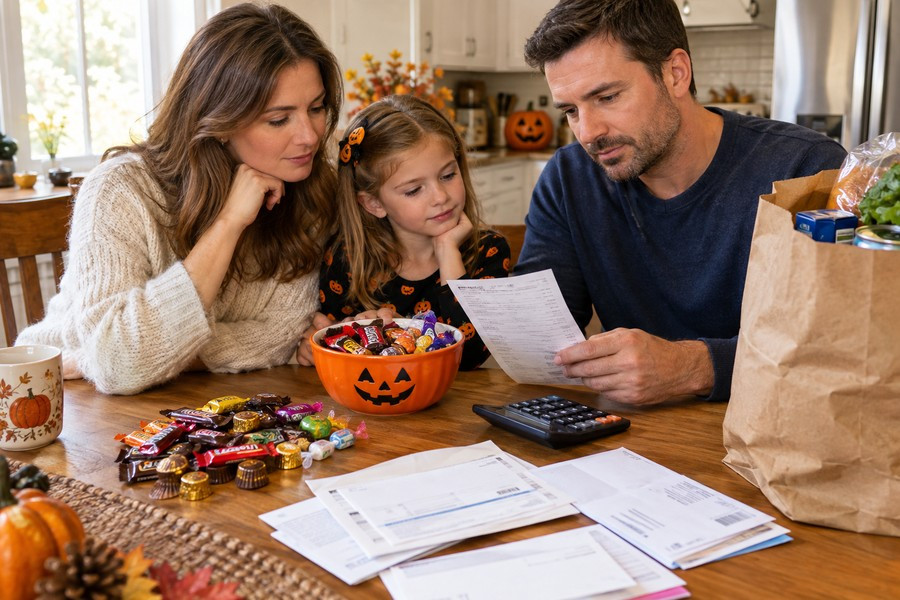
Halloween Candy Remains a Treat as Household Costs Rise
For many Americans, everyday costs are changing what they buy. Higher bills for food, fuel, and power are leading people to save where they can. Some are walking instead of driving or packing lunch from home. One worker said her electric bill has climbed by $150 a month.
Even with tighter budgets, many shoppers still plan to buy Halloween candy. For some, handing out treats is a small joy they want to keep, even when other expenses are harder to manage.
Chocolate Prices Have Climbed
Candy costs more than it did before. The average price of gum and candy rose 8.1% over the past year. One market estimate puts the average price of nonchocolate candy at $3.31, up 1.8%. Chocolate has seen a bigger increase: an average package costs $5.67, up 15.5%.
Another measure shows a smaller rise. It found that chocolate prices overall were up 9.4% from a year earlier, while Halloween-themed chocolate was up 1.7%. The estimates differ, but both show that candy shoppers are facing higher prices.
One major reason is the cost of cocoa, the main ingredient in chocolate. Extreme weather in Côte d’Ivoire and Ghana, two important cocoa-growing countries, sent world cocoa prices sharply higher. From January 2023 to January 2025, those prices quadrupled.
Chocolate makers often buy cocoa months or even years before shoppers see the finished candy in stores. That means higher ingredient costs can take time to show up on store shelves. Cocoa prices have since fallen by about half, but that drop is not expected to lower candy prices in time for this Halloween season.
New import taxes have added to manufacturers’ costs, too. The United States placed tariffs ranging from 10% to 12.5% on 60 trading partners in July. Since chocolate ingredients and products come from other countries, those added charges can make production more expensive.
Shoppers Make Room for Small Joys
Despite rising prices, Halloween candy remains part of many families’ plans. A college student in Tennessee said she usually spends about $50 on treats and expects to spend a little more this year. As a child, she looked forward to getting chocolate cups on Halloween. Now she wants to give neighborhood children that same feeling.
She said her budget feels more strained, but small pleasures still seem worth paying for. That choice reflects a wider pattern: some people are cutting back on large purchases while continuing to spend on modest treats, such as makeup, movie tickets, or seasonal snacks.
A national retail group expects Halloween spending to reach $13.5 billion. It also estimates that 96% of people shopping for Halloween plan to buy sweets.
Still, not everyone intends to spend as much as they once did. A 36-year-old Delaware resident plans to buy candy but may choose less. He wants to keep money available for other needs. One way he saves is by shopping after Halloween, when stores often lower prices on leftover candy.
Higher Costs Reach Beyond the Candy Aisle
Concern about candy prices is part of a larger worry about the cost of living. Consumer prices have risen 3.4% over the past year, with higher energy costs playing a major role. Wages have grown by 3% over the same period, leaving paychecks struggling to keep pace with prices.
That gap is pushing people to rethink daily spending and delay larger purchases. Housing is one example. Home prices are close to record highs, and mortgage rates have climbed during the war with Iran. The rate for a 30-year fixed mortgage topped 7.6% earlier this month, its highest level in nearly three years. Together, high home prices and costly loans are making homeownership harder to reach for many people.
A Little Extra for the Neighborhood
A New York City nanny who loves Halloween says she may choose less expensive candy but still wants neighborhood children to feel welcome. She wants her home to be one of the good places to visit, especially because there are not many children in her area.
She also buys small treats for herself, including dark chocolate, coffee, and pumpkin-spice items. Rising costs are taking a large share of her paycheck, and she worries that buying a home may never be possible. But she still sometimes spends a little money on something that lifts her mood, such as a fun pair of socks or an extra treat for her dog.
For these shoppers, Halloween candy is more than a purchase. It is a small tradition they are trying to protect while managing bills, saving where possible, and facing a future that feels less affordable.