
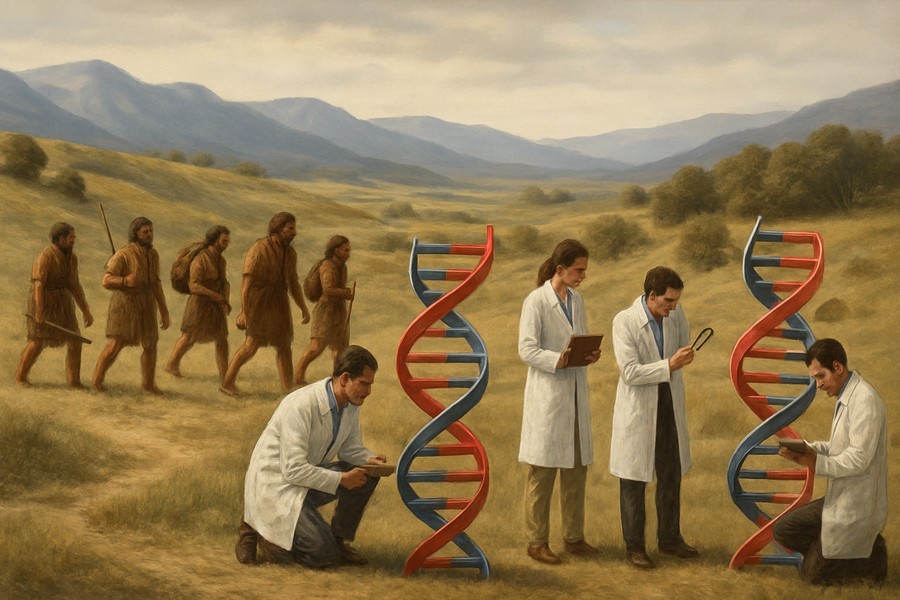
Unravelling the History of Human Genetic Evolution in West Eurasia
Recent research into human genomics has unveiled fascinating insights into our ancient past. By studying old DNA, scientists are able to discover the routes our ancestors took across continents and the genetic adaptations they developed along the way. One region that's been a particular focus of such studies is West Eurasia.
Following the Genetic Footprints of our Ancestors
By examining the genomes of hundreds of ancient Eurasians, researchers have uncovered patterns of selection that have shaped our species over time. They have managed to uncover the genetic legacy of those who lived in the region thousands of years ago, revealing how our ancestors adapted to their environment and the pathogens they encountered.
Genetic Adaptation and Health Risks
Interestingly, these genetic adaptations are not without their drawbacks. Some of the genetic changes that helped our ancestors survive harsh conditions or resist diseases have also increased the risk of certain inflammatory disorders in modern-day populations. This is especially evident in Europe, where the shift from a nomadic to a settled, farming lifestyle led to significant changes in diet, population density, and exposure to new pathogens.
Genetic Tools for Medical Research
Scientists are now using ancient DNA as a tool for medical research. By comparing the genomes of ancient and modern humans, they can track the evolutionary path of various traits and diseases. This has significant implications for understanding the genetic basis of diseases and developing new treatments.
Understanding Natural Selection
Studying ancient DNA also gives researchers insights into the process of natural selection. It helps them identify the genes that have been favored by natural selection and understand how allele frequencies have changed over time. Some research has suggested that classic selective sweeps, where a beneficial mutation rapidly increases in frequency until it becomes fixed in a population, were rare in human evolution. Instead, changes in gene frequencies are thought to be more gradual, influenced by factors such as gene flow, genetic drift, and geography.
Genetic Signatures and Disease Risk
One of the intriguing aspects of this research is the discovery of genetic signatures associated with disease risk. These are regions of the genome where variation is associated with the risk of certain diseases. For example, researchers have found genetic signatures associated with multiple sclerosis, an autoimmune disease that affects the nervous system. Such discoveries can provide valuable insights into the genetic basis of disease and inform the development of new treatments.
Looking to the Future
As more and more ancient genomes are sequenced, our understanding of human genetic history and evolution continues to grow. This research not only illuminates the past but also sheds light on present-day genetic diversity and disease risk. As scientists delve deeper into the ancient DNA, we can expect many more fascinating insights into our ancestral past and its influence on our health today.