
Finding Answers in the Deep-Sea Mystery of Antarctic Sea Ice
For years, the sea ice around Antarctica has been behaving in a puzzling manner. From the 1970s until about ten years ago, despite climate change, the sea ice was growing. Then, in an unexpected twist, it dramatically reduced in size and hasn't shown signs of recovery. This isn't just a local problem, as the disappearance of Antarctica's ice sheet could cause sea levels to rise by 190 feet.
Scientists have now shed some light on this mystery, with help from underwater robots. The research highlights the significant role played by the ocean, salinity, winds, and churn in determining yearly and decadal variations in sea ice.
Robotic Assistants in Research
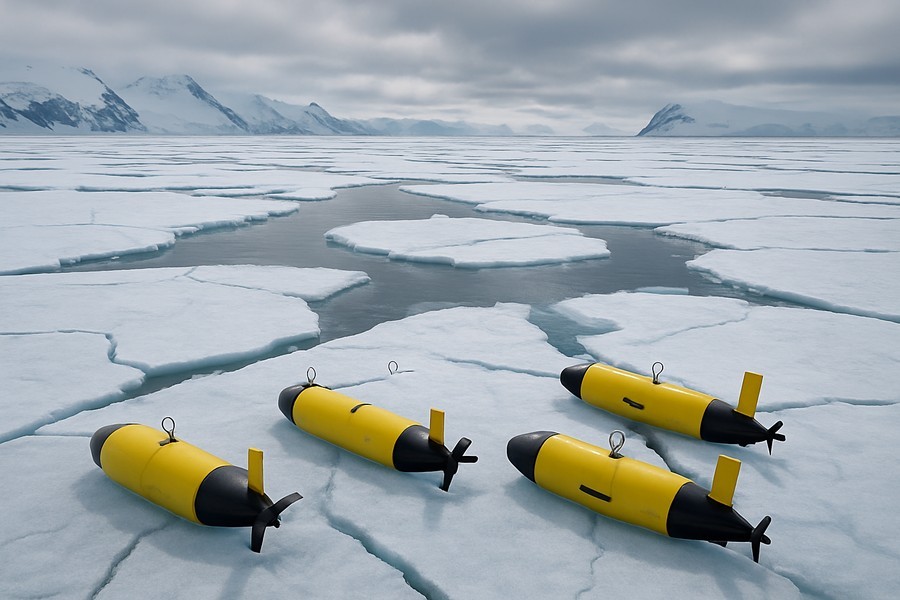
These underwater robots, known as Argo floats, were instrumental in gathering data. These torpedo-shaped machines, about the size of a person, dive thousands of feet to collect information on temperature and salinity. They then resurface and transmit the data to a satellite. Over the years, they have been able to passively gather data to track the changing conditions.
A Deep Dive into the Findings
Consider diving into a lake. The surface is warm due to the sun, while the depths are colder. A similar phenomenon occurs in the world's oceans, but the cold water extends much deeper. However, the waters surrounding Antarctica behave differently. The air cools the ocean surface, while warmer waters exist below. These warmer waters are kept away from the surface, promoting the formation of more sea ice.
Before 2016, as sea ice was expanding, increased rainfall made the surface waters fresher compared to the salty waters below, causing stratification. The saltier the water, the denser it gets. This trapped the warmth in the depths, allowing it to build up.
Then, changes in wind patterns pushed surface waters away from Antarctica, stirring up the trapped warmth. This sudden release of pent-up heat from below is believed to have contributed to the decline in sea ice.
Climate Change and Its Impact
Climate change is likely a factor in these changes. As the planet warms, temperature gradients in the atmosphere increase, which can strengthen winds and alter their patterns. Scientists are still trying to determine how much of these changes would have naturally occurred without human-induced carbon emissions.
Regardless, around 2016, the system underwent a shift. The strong winds may have broken up the ice, either by pushing blocks together or by creating waves. Both atmospheric and oceanic warming have likely contributed to the sudden decrease in the extent of Antarctic sea ice since 2016. This research emphasizes the role of deeper ocean warmth in these changes.
The Domino Effect of Declining Sea Ice
The decline of sea ice has dire implications beyond its direct impact. The Antarctic ice sheet, which is on land, is supported by ice shelves that float along the coast. These ice shelves are already under threat from warming seas and violent underwater storms. The loss of sea ice further weakens them, as the floating chunks of ice absorb wave energy and provide a buffer. Furthermore, sea ice reflects the sun’s warmth into space, reducing local temperatures. Loss of these ice shelves could accelerate the decline of the vast amount of frozen water on the continent.
Looking to the Future
While the data gathered by the Argo floats is invaluable, scientists are eager for more. They need to continue monitoring both the ocean and the atmosphere across the Antarctic polar region. This is crucial given the rapid changes being seen in this part of the world due to climate change, which could have significant global impacts, particularly on sea level rise.
One of the biggest questions now is whether we are witnessing a permanent state of low sea ice, or if the conditions might swing back to promote growth. This research will aid in refining models that predict how and when the waters around Antarctica might change. There might be years of sharp decline followed by years of growth, but the long-term trend is likely to be negative.