
Can Baking Soda Help Clean Pesticides Off Apples?
Before eating an apple, it is a good idea to wash it. A quick rinse can remove dirt and some germs, but it may not take away every pesticide. Research suggests that a baking soda soak can reduce certain pesticide chemicals on an apple’s surface. It takes time, though, and it cannot remove chemicals that have moved inside the fruit.
What the Apple Test Found
Researchers tested three ways to wash organic Gala apples: tap water, a sanitizing solution made with bleach, and a solution containing 1% baking soda. Before washing, they put two pesticides on the apples. One was a fungicide used to fight plant diseases. The other was an insecticide used to control pests such as the codling moth.
The baking soda solution worked best on the pesticide residues that were still on the apple’s surface. After a 12-minute soak, it removed the surface residue from the fungicide. It took 15 minutes to remove the surface residue from the insecticide.
But removing chemicals from the surface did not mean the whole apple was free of them. Tests showed that some pesticide had already passed through the skin and into the fruit. After 24 hours, about 20% of the fungicide and 4.4% of the insecticide had entered the apples.
The fungicide moved about four times deeper into the apple’s skin than the insecticide. That made it harder to remove by washing. Water and the bleach-based solution were much less effective than baking soda in this test. Even baking soda did little to lower the total amount of pesticide after only a two-minute wash.
Baking soda may help because it changes the chemical conditions around the pesticide and can help break it down. Still, washing can only reach what is on the outside. It cannot reliably remove chemicals that have already seeped into the fruit.
Other Washing Tests
Later research tested more ways to wash fruit, including household ingredients and store-bought produce cleaners. One home method used a soak in a 2% cornstarch solution, followed by a soak in a 5% baking soda solution. In the test, this removed about 92% to 94% of the fungicide from fruit surfaces, depending on the conditions.
Some commercial products performed about as well. The methods were also tried on grapes, lemons, and strawberries, suggesting that they may work on more than apples. However, the test looked at only one pesticide. The results do not show how well these methods work on every chemical used on crops.
A Practical Way to Wash Apples
For everyday cleaning, hold fresh produce under running water and gently rub the surface. Then dry it with a clean cloth or paper towel. Drying can help remove bacteria that remain after rinsing.
Soap, dish detergent, and commercial produce washes are not needed for routine cleaning. They may leave unwanted residues, and washing with them is not a better everyday choice than using clean running water.
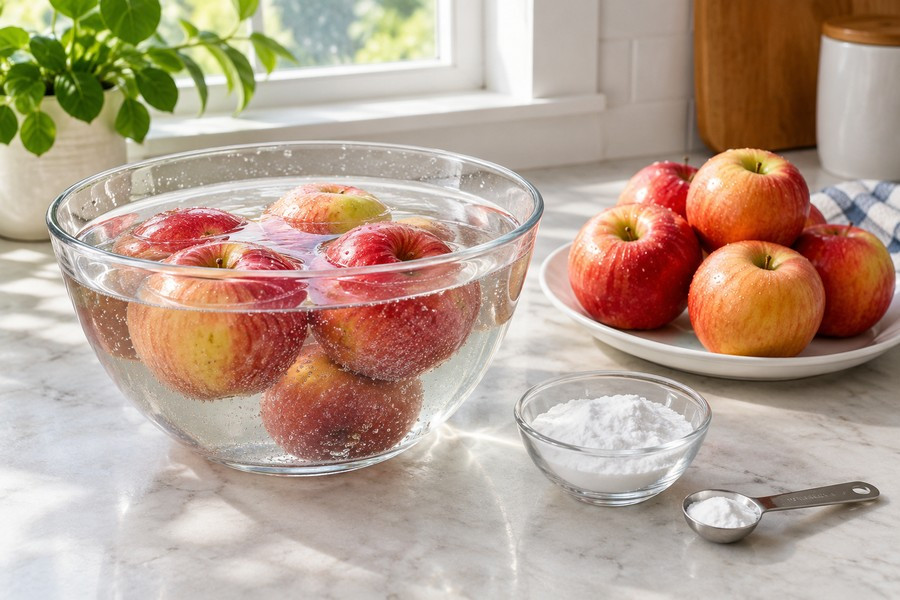
If you want to try the baking soda method for certain pesticide residues, the apple test used a 1% solution for about 15 minutes, followed by a thorough rinse with clean water. That mixture is roughly one teaspoon of baking soda in two cups of water.
Keep in mind that the test took place under controlled laboratory conditions. It does not prove that every apple needs a long soak, or that baking soda removes every pesticide. Peeling an apple can remove more residue from its skin, but it also takes away fiber and helpful plant compounds found in the peel.
The simple choice is to wash apples under running water before eating them. A baking soda soak may remove more of some pesticides from the surface, but it is not a complete solution. A quick wipe on a shirt is not a replacement for washing.