
California Attorney General Challenges Federal Review of Suspected Noncitizen Ballots
State Leaders Question the Federal Demand
California Attorney General Rob Bonta has criticized the federal government’s push to investigate suspected noncitizen voting in the state. He said the effort turns the law into a political tool and could harm legitimate voters.
Bonta argued that the Justice Department acted under President Donald Trump’s direction. He said the federal government was using its power to target political opponents instead of protecting the election process in a fair way.
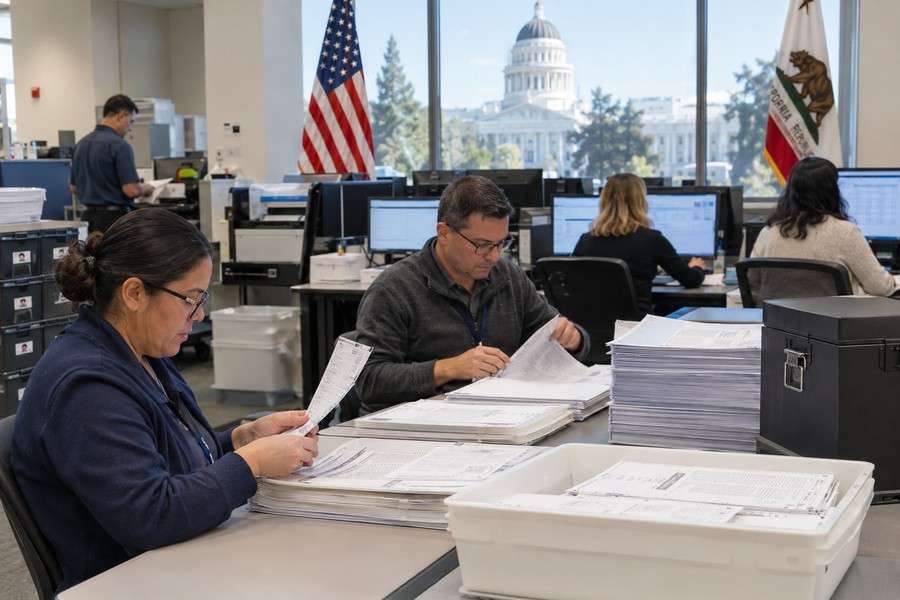
The dispute began when federal prosecutors asked California election officials to review about 20,000 ballots linked to people suspected of not being U.S. citizens. The request gave counties only 48 hours to check the records.
Noncitizen voting is rare. Still, the federal government has increased efforts to find and prosecute people accused of registering or voting illegally while lacking U.S. citizenship.
State Officials Warn of Possible Voter Disenfranchisement
California election workers have warned that the federal request could cause eligible citizens to lose their right to vote. They said the list may contain errors and could lead to confusion during a busy election period.
Los Angeles officials said that a large share of the people listed were actually born in the United States. That finding raised questions about how the names were selected and whether the list was accurate.
California Governor Gavin Newsom also criticized the federal action. He said the list included people who had never voted and people connected to the wrong county. He argued that the federal government was trying to create the appearance of widespread election fraud without reliable evidence.
Representative Pete Aguilar, who represents part of southwestern San Bernardino County, said efforts that frighten or pressure voters have no place in a democratic election.
Federal Officials Defend the Investigation
The federal government has asked every California county to share information that could help verify the citizenship status of voters. The Justice Department said cooperation from local election offices would help create a more secure election.
Federal officials have made election fraud a major focus, especially cases involving undocumented immigrants. The effort is part of a broader Republican campaign to identify and punish people who are accused of voting without legal permission.
Bonta has questioned whether the federal government has enough evidence to justify the review. He said the counties received names but were not given details explaining why the people were believed to be ineligible.
The attorney general said California would review any clear evidence presented by federal investigators. However, he argued that officials cannot fairly investigate the list without knowing how the names were chosen or what information supports the accusations.
Federal Charges Add to the Dispute
The Justice Department has also charged 28 foreign nationals with allegedly committing fraud by registering to vote. The government claims the defendants broke federal law by taking part in the voting system without being citizens.
Bill Essayli, a senior federal prosecutor, said the arrests supported the government’s claim that noncitizens were being allowed to receive ballots in California. He said the voting rights of American citizens must be protected and that noncitizens are barred from voting in federal elections.
The people charged are lawful permanent residents. They are legally allowed to live in the United States, but they are not U.S. citizens and therefore cannot vote in federal elections.
Legal Fight Moves Toward Appeals Court
Some California county officials did not immediately act on the federal letters. They pointed to the short amount of time available and the approaching election as reasons for waiting.
The disagreement has developed into a legal battle between California and the federal government. An appeals court is expected to consider the dispute, including whether federal prosecutors can require counties to review the voter information so quickly.
The case has raised broader concerns about election security, voter privacy, and the risk of removing eligible citizens from the voting process. California leaders say fraud should be investigated when there is strong evidence, but they argue that unsupported lists could intimidate voters and damage public trust.
The federal government maintains that checking citizenship records is necessary to enforce voting laws. California officials respond that election reviews must be accurate, supported by evidence, and careful not to punish citizens who are legally allowed to vote.