
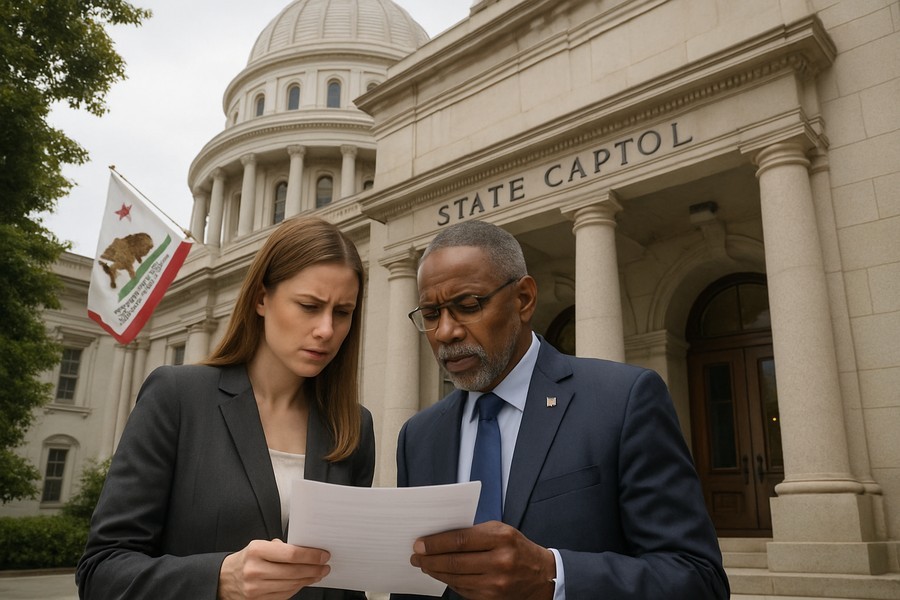
Tougher Penalties Proposed for Fraudulent Claims against Public Figures and Businesses
A California legislator has proposed a new law to combat the issue of sham legal claims, often known as liens, filed against public figures, court officers, and businesses. These misleading claims can result in victims having to pay hefty sums in legal costs to restore their good names and credit scores.
A Solution to the Rising Issue of 'Paper Terrorism'
The proposed legislation is a response to the ever-growing problem of false liens being used by anti-government individuals, including groups known as "sovereign citizens", as a form of harassment. Such practices have been described by the U.S. Justice Department and the nonpartisan Congressional Research Service as a form of "paper terrorism". The proposed law aims to address this issue, which can cause serious harm to an individual's reputation and credit standing.
The Problem with Current Liens System
Liens are officially recorded in statewide Uniform Commercial Code (UCC) databases across the country. They are public filings designed to standardize interstate transactions and inform creditors about business debts and financial commitments. However, the system is prone to misuse. A single fraudulent filing can falsely claim that an individual or company owes debts amounting to hundreds of millions or even trillions of dollars. Some victims are bombarded with numerous fraudulent filings, giving the impression of complicated financial disputes.
In California, it costs a mere $5 to record a lien with the secretary of state, but removing a bogus one requires a court order, which can cost thousands in legal and court fees. The state does not inform a person when a lien names them as the debtor, which allows false filings to stay in California's public record for years before a victim discovers them.
The Proposed Measures to Counteract Fraudulent Liens
The proposed law, known as Assembly Bill 501, would require the secretary of state's office to notify individuals within 21 days if they are named as a debtor in a lien filing. The legislation would also postpone court fees until the conclusion of judicial proceedings.
If a lien is found to be fraudulent, the guilty party would be required to compensate the victim for three times the amount of court fees paid. The law would also raise the maximum civil penalty for filing a fraudulent lien to $15,000, a significant increase from the current $5,000. California law already considers it a criminal offense to knowingly file a fake lien.
The Impact of Fraudulent Filings
Victims of these deceptive filings often remain oblivious until significant damage has been done. This damage can manifest as ruined credit, failed background checks, or rejected mortgage applications, while those committing the fraud face relatively little risk or consequence.
There have been instances where the home addresses of high-ranking public officials and influential individuals have been listed in these fraudulent filings, thus turning the state's public record into a tool for revealing private information.
In these false debt claims, individuals allege that government officials owe them money or property, sometimes even claiming ownership of the official's home. Other counterfeit filings target businesses with claims of being owed money and vehicles. In some cases, individuals file dozens or even hundreds of fraudulent liens.
Industry Opinions on the Proposed Bill
Legal and industry professionals have voiced their support for the proposed law. A San Diego attorney who represents car dealers targeted by fraudulent filings stated that the law would significantly reduce the systemic abuses used by the sovereign citizen movement and others who file unsupported or fraudulent lien notices.
A consumer credit expert warned that liens can complicate a person's ability to secure a mortgage or a company's chances of obtaining lines of credit. In some cases, these filings can even jeopardize job applications for positions that require thorough background checks.
Restoring Trust in the UCC System
The California lawmaker believes her proposed law would restore "balance and accountability" to the UCC system, ensuring it remains a reliable commercial tool while offering protection for Californians targeted by fraudulent filings.