
California Residents Say Voter Fraud Charges Came as a Shock
Several lawful permanent residents facing federal charges in California say they do not remember registering to vote. One woman says she has never voted. Their cases are part of a group of 28 people accused of election-related crimes, including illegal voter registration and false statements on citizenship applications.
Families Waited for Court Hearings
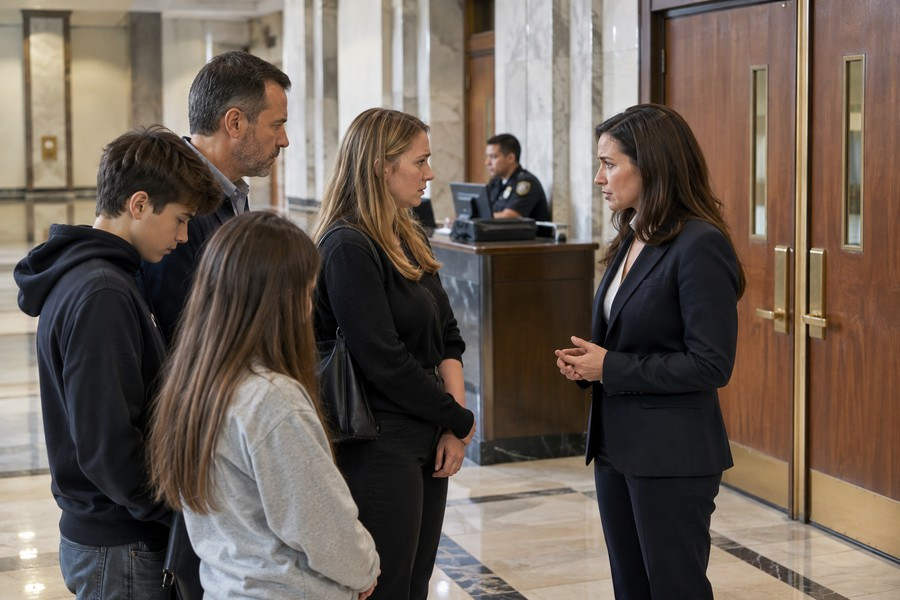
Four of the defendants appeared in a federal courtroom in downtown Los Angeles. More than a dozen relatives waited nearby, worried about what would happen.
Ana Domínguez, 60, lives in Long Beach and was born in El Salvador. She is accused of registering to vote and later giving false information on her application for U.S. citizenship. Domínguez said she has no memory of registering. She also said she has never voted.
Before the hearing, her daughter cried in the courthouse hallway. Domínguez stood before the judge wearing a back brace, with her legs in cuffs. She blew a kiss to her husband and daughter as they watched from the courtroom.
Another defendant, 72-year-old Omar Muñoz, is a lawful permanent resident who came to the United States from Belize. He is accused of registering to vote, voting in several elections, and lying on his citizenship application. He denies wrongdoing. As he entered court in the pajama pants he had been wearing when arrested, he waved to his family with a hand over his heart.
José Antonio Bañuelos-Díaz, 42, is a Mexican national who lives in West Adams. He was arrested while on his way to work, dressed in a reflective work vest, jeans, and boots with an American flag design.
Defendants Released Without Supervision
During the hearings, the four defendants spoke only to confirm they had read and understood the charges. The prosecutor said the government was not asking to keep them in jail. The judge released all four on their promise to return to court, without requiring supervision. They are scheduled for preliminary hearings.
Federal prosecutors say the cases are meant to protect the votes of eligible U.S. citizens. They argue that people must take deliberate steps to register, so defendants should have known what they were doing. In a public presentation, the government claimed that 21 of the 28 people charged had voted. Domínguez was not among them.
State leaders have said that a small number of cases, even if proven, do not show that voter fraud is widespread. California has about 23 million registered voters. The state’s attorney general called the 28 cases a tiny share of that total and said the evidence should be tested in court. He said illegal voting is wrong and isolated cases should be prosecuted.
Election experts have also warned that registration mistakes can happen. Some may result from confusion or errors during government transactions, rather than a plan to break the law. A person can be convicted only if the government proves the person knowingly violated federal law.
Families Question Arrest Tactics
Muñoz’s daughter, Lliani Orantes, said officers surrounded and blocked off the family’s street before taking her father from their home. She said relatives were trying to find out whether he might have been confused with younger family members who share his name, including a U.S.-born son who is registered to vote.
Orantes said her father was recovering from neck surgery, shoulder surgery, and two knee replacements. She described the arrest as frightening and said it felt like her father was being used to make a public example. She questioned why officers did not first try a less forceful approach, such as asking him to meet with immigration officers.
Muñoz said he heard a commotion early in the morning and was told officers would break down the door if he did not open it. He recalled seeing helicopters, at least eight vehicles, and agents from several agencies. He said he wondered, “What movie am I in?”
Muñoz said he entered the United States legally, has paid his taxes, and had undergone several recent surgeries. He said the officers did not seem concerned about his health, and that he did not learn what he was accused of until hours after the arrest. He also questioned the cost of sending so many officers, saying a letter asking him to come to court could have been enough.
His son said the family understands that the case must go through court, but objected to the early-morning arrest and the way it affected both his father and mother. Muñoz’s wife also questioned why so many officers were sent to arrest an elderly man.
Domínguez Says She Was Still Waiting for Citizenship
After her release, Domínguez wiped away tears and showed bruises on her wrists from the handcuffs. She said she had been a lawful permanent resident since the late 1980s and had recently applied to become a U.S. citizen.
During that process, she said, she told an immigration worker that the only people in her household registered to vote were her husband, who is a citizen, and her U.S.-born daughter. Domínguez said she had been waiting for a citizenship ceremony when she was arrested as she prepared to leave for her job as an administrative assistant.
She said the accusation made little sense to her: if she had registered and voted, she asked, why had she never voted in all those years? The cases will now move through court, where the charges and evidence will be examined.