
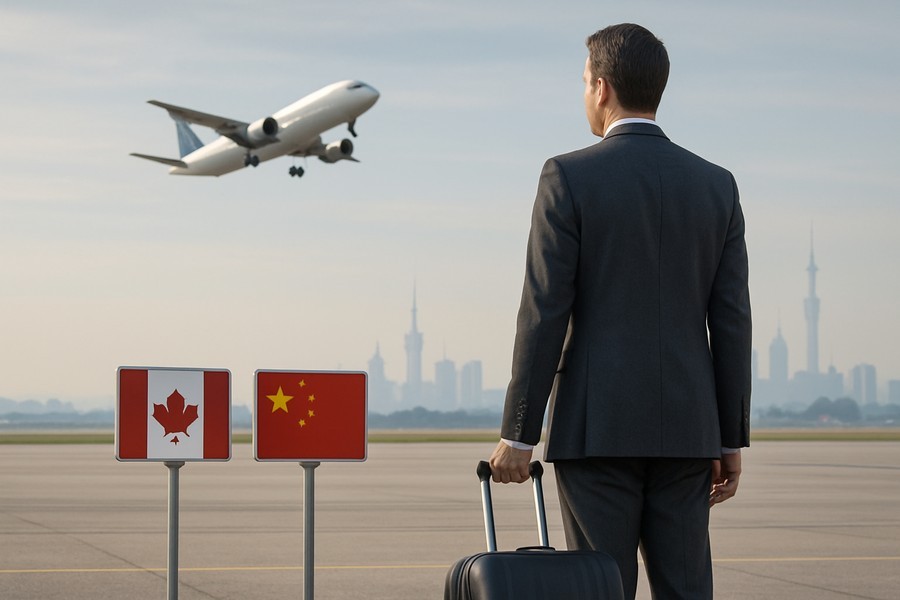
New Course for Canada as Trade Winds Change
As economic dynamics shift globally, Canada is recalibrating its trade strategy. This comes in response to recent trade turbulence with its biggest trade partner, the United States. Now, it's looking towards the East, with a focus on China. In fact, a Canadian prime minister is visiting China for the first time in almost ten years.
Recognizing Opportunity in Challenges
It's well-known that Canada's relationship with its southern neighbor, the US, has been strained due to a trade war. This has led to a pressing need to broaden the country's export market. Now, China, with its massive and lucrative market, presents a potential opportunity for Canada. The visit to China is a strategic move, aiming to rebuild a formerly strained relationship and provide a buffer against the economic strain caused by the trade war.
Understanding the Complications
Despite this diplomatic overture, the Canadian officials are under no illusion about the complexity of dealing with China. The past has seen China take punitive actions against vital Canadian industries. For instance, after Canada imposed a tariff on Chinese electric vehicles, China retaliated by taxing Canadian canola oil and meal heavily. This effectively blocked Canadian producers from their second-largest market.
Striving for Balance
There's a clear understanding that dealing with a country like China, which has been accused of human rights violations and political interference, is a delicate balancing act. But the economic potential of the vast Chinese market is hard to ignore. This necessitates carving out a space for diplomacy and economic opportunities. If Canada is to safeguard its sovereignty and prosperity, it needs to explore ways to draw in foreign investment.
Breaking Away from the Past
Canada's over-reliance on the US for trade has been a long-standing issue, with the US consuming 76% of Canada's exports until recently. The shift in strategy is aimed at building resilience and diversifying trade partners. Canada is looking beyond the US and towards new partnerships, particularly with countries in the Indo-Pacific region and China. These regions currently account for only 4% of Canada's exports, a figure that the country hopes to increase.
Towards a Turning Point
The recent visit to China is seen as a significant step in this new direction. High-level meetings and discussions have been held, signaling a turning point in the relationship between the two countries. The visit is part of a carefully orchestrated diplomatic dance, with both parties exploring common interests in areas such as energy, agriculture, international security, and trade.
Navigating the Challenges
However, the path is not without its challenges. Canada's commitment to liberal values, which form a crucial part of its laws, institutions, and foreign policy, has often been a point of contention with China. Canada has also expressed concerns about China's human rights abuses, allegations of electoral interference, and activities in the Arctic.
Looking Ahead
The need to diversify trade partners is clear, and China's potential as a market for Canada's oil, gas, and other industries is significant. However, experts caution against jumping into deals without careful consideration. Areas such as aerospace technology, artificial intelligence, and critical minerals should be approached with caution.
The success of the recent visit could potentially pave the way for beneficial agreements in the near future. However, it's hoped that behind closed doors, discussions will also address long-standing issues such as political detainees and rights violations. Despite the challenges, the belief is that Canada can, and must, assert itself and push back against any undue pressures.