
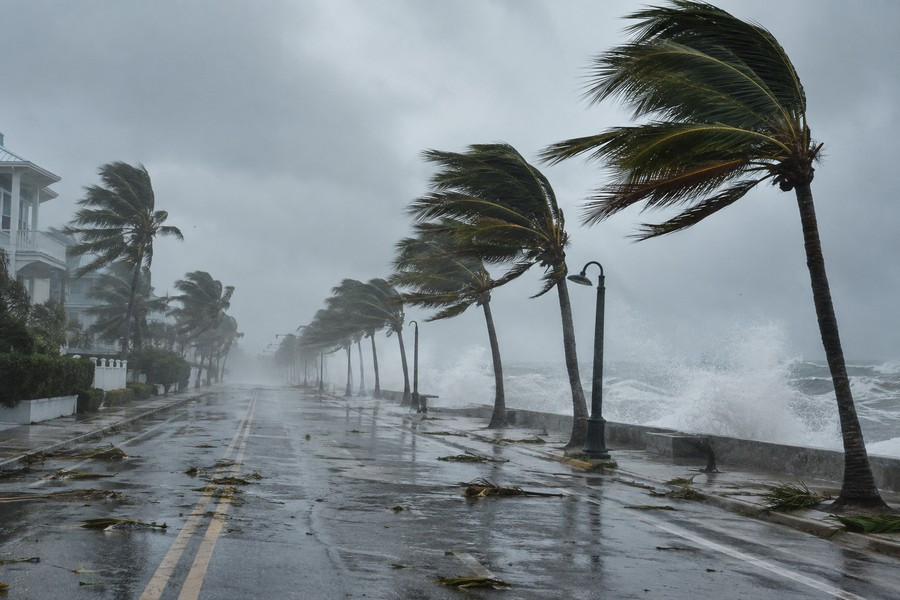
Powerful Hurricane Strikes the Gulf Coast With High Winds and Surging Waters
A dangerous storm came ashore along the Gulf Coast, hitting communities across Alabama and the Florida Panhandle. The Category 2 hurricane brought sustained wind speeds reaching 105 miles per hour near Destin, Florida. While the system weakened slightly from its peak strength just before making landfall, it still delivered violent wind gusts, torrential rain, and dangerous water surges deep into coastal towns.
Local leaders advised residents throughout the region to stay off roads and seek shelter immediately. Flash flooding remains a widespread danger as heavy rain continues to soak the ground. The storm is pushing inland toward Alabama, with forecasts showing its path extending toward northern Georgia and the Tennessee Valley over the coming days.
Heavy Damage and Widespread Power Outages
In Pensacola, located roughly 50 miles west of where the storm made landfall, winds tore roofs off homes and businesses. Fallen tree limbs littered streets, and airborne debris created hazardous conditions for anyone outdoors. A local government worker staying in a hotel during the storm described the wind as faster and scarier than anything he had ever seen before, advising people to avoid traveling to the region.
Coastal and inland areas experienced several major impacts:
- Record-high wind gusts: A peak gust of 102 miles per hour was recorded at Pensacola City Hall.
- Dangerous water levels: Water rose 5.4 feet above normal averages along Panama City Beach.
- Storm surge threats: Ocean surges along the Alabama and Florida border reached up to 7 feet.
- Structural destruction: Powerful wind and heavy rainfall collapsed a gas station canopy in Crestview, leaving the structure hanging in pieces.
As the storm moved over land, electricity grids failed rapidly. Nearly 500,000 customers across Florida and Alabama lost electrical power due to damaged power lines and fallen trees.
Emergency Responses and Safety Measures
The governors of Florida, Alabama, and Mississippi each declared official states of emergency ahead of the storm's arrival. These declarations allowed state agencies to organize resources quickly and urge coastal residents to evacuate. Federal emergency support was also granted to help streamline relief efforts and reduce delays for response teams.
Several major emergency response steps were put into motion across the region:
- Troop deployment: Approximately 5,000 National Guard members were mobilized in Florida to assist with disaster response, with hundreds specifically assigned to evaluate damage and clear blocked roadways.
- Rescue equipment preparation: Wildlife officials prepared a fleet of 10 airboats, 18 shallow-water boats, nine all-terrain vehicles, and six large platform vessels for flood rescues.
- Transportation support: State partnerships with rideshare companies made free round trips available to help residents reach designated emergency shelters.
- Institutional evacuations: Correctional facilities evacuated some incarcerated individuals out of the storm's path.
- Travel shutdowns: Flights were grounded at multiple airports across the Florida Panhandle as conditions worsened.
Economic Impacts and Local Disruption
The storm caused significant interruptions to local businesses and national energy supplies. Energy producers in the Gulf of Mexico shut down a large portion of offshore oil and gas production prior to the storm's arrival. This region typically accounts for nearly 15 percent of all crude oil pumped annually in the United States.
On land, local signs showed just how severe the storm was expected to be. Dozens of popular 24-hour breakfast diners in the Florida Panhandle completely closed their doors. These locations are well known across the American South for remaining open during severe weather, making their closure a clear signal to residents that extreme danger was present.
This hurricane is also notable for its timing. It tied a long-standing historical record as one of the latest-forming Atlantic hurricanes on record. Prior to this storm, eight other named storms had formed during the Atlantic season, but none had reached hurricane strength.