
Federal Help Arrives as Pennsylvania Measles Outbreak Grows
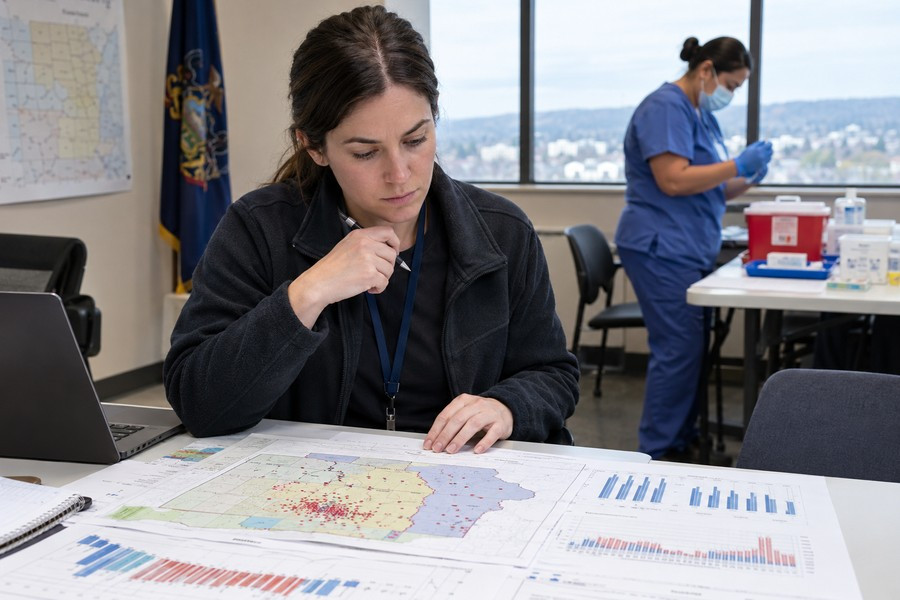
A federal health agency is sending a disease investigator to Pennsylvania to help control a fast-growing measles outbreak. The move comes as the state faces a major public health challenge, especially in Lancaster County, which does not have its own local health department.
Cases Rise Across the State
Pennsylvania has confirmed 1,222 measles cases, a sharp increase from 86 cases recorded during the earlier stage of the outbreak. Six deaths linked to measles have also been confirmed.
The federal agency will send a scientist from its epidemic intelligence service. These specialists are often called “disease detectives” because they study how illnesses spread, identify people at risk, and help communities stop further infections.
The agency is also releasing nearly $4 million to support Pennsylvania’s response. The money will help with public health work, community education, vaccine efforts, and other steps needed to slow the outbreak.
The federal health agency has urged people to receive the measles, mumps, and rubella vaccine, commonly known as the MMR vaccine. The shot is considered the most effective way to prevent measles and reduce the risk of infection.
Lancaster County Faces Special Challenges
Lancaster County is the center of Pennsylvania’s outbreak, with more than 415 confirmed cases. It is also the largest county in the state without its own health department.
Instead of having a county-run department, Lancaster depends on Pennsylvania’s centralized public health system. That arrangement can make it harder to gather local information and respond quickly when new cases appear.
The county has a large plain community, including Amish residents. This group makes up about 8% of the county’s population and has historically had lower vaccination rates. Lower vaccination levels can make it easier for measles to spread, especially when people live or work close together.
A local health department could provide staff who already know the area, its residents, health providers, schools, and community groups. It could also collect local data in real time and quickly alert residents when a serious health threat appears.
Local Leaders Call for Faster Information
Alice Yoder, a Lancaster County commissioner and former critical care nurse, said the outbreak has shown the county’s weaknesses. She said county leaders and residents often learn about measles cases and deaths through public announcements at the same time as everyone else.
Yoder said she never expected to see measles return during her lifetime. Once the outbreak began, she believed the county should have already been prepared to respond.
She is now supporting the creation of a local health department. In her view, a county department would give Lancaster faster access to accurate information and a permanent team ready to act.
Pennsylvania has 67 counties. Sixty of them operate under the state’s centralized health system rather than having their own county health departments. Lancaster’s size and the scale of the outbreak have made the lack of a local department more noticeable.
Vaccine Concerns Add to the Problem
The outbreak is taking place during a period of growing concern about vaccine doubt and false health claims. Robert F. Kennedy Jr., the nation’s health secretary, has faced criticism over his views on vaccines and his public disagreements with Pennsylvania Governor Josh Shapiro.
Shapiro has warned that false vaccine information can cause real harm. During a briefing about two measles deaths in Pennsylvania, he said fear and misleading claims can affect entire communities.
Measles spreads easily through the air and can be dangerous, especially for babies, young children, pregnant people, and those with weakened immune systems. High vaccination rates help protect people who cannot safely receive the vaccine.
Other Counties Use Local Partnerships
Counties with their own health departments have more opportunities to build long-term vaccination programs. Montgomery County, for example, works with a local immunization coalition made up of government workers, health care professionals, and community members.
Susan Wenrick, the coalition’s vice chair, said one of its main goals is to make vaccines easier to obtain. She said access and availability have been major barriers, especially for people without insurance or with limited coverage.
Partnerships formed during the coronavirus pandemic helped bring vaccines directly into communities. Those efforts also created new ways to reach uninsured and underinsured residents.
Wenrick said health workers now face another challenge: many people search online or use social media for medical advice instead of speaking with a health professional. The coalition is working to provide information that residents can trust.
With cases continuing to rise, Pennsylvania is combining state resources, federal assistance, vaccine outreach, and local community efforts. Public health leaders say quick communication and stronger vaccination coverage will be key to stopping the outbreak.