
China Ends Reign of 11 Members of Billion-Dollar Criminal Syndicate in Myanmar
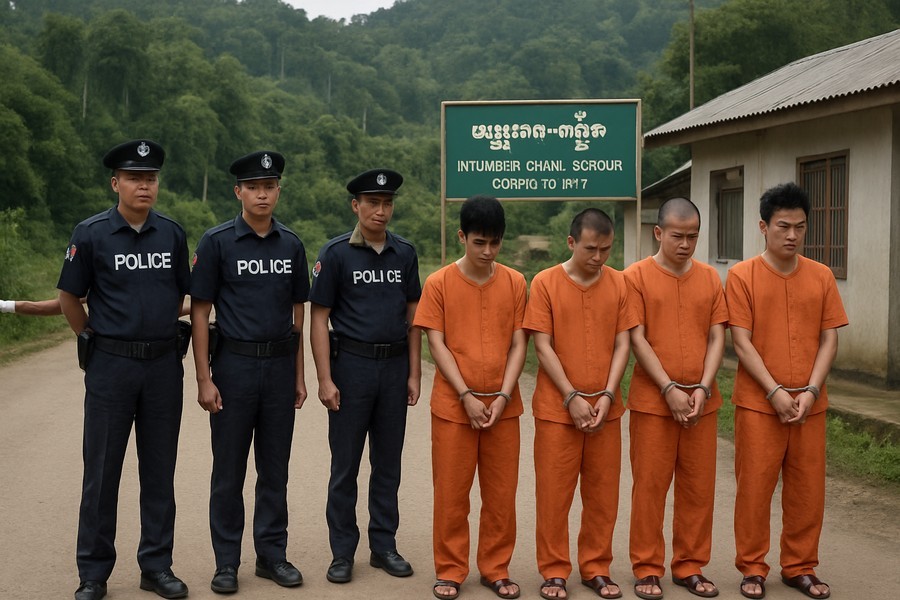
China recently put an end to the reign of terror by 11 members of a notorious crime family in Myanmar. The infamous Ming family, known for their criminal empire which spanned across multiple illegal activities, met their end as the Chinese government executed them.
The Ming family was part of the infamous 'four families' of northern Myanmar, notorious for their illicit operations. These syndicates were alleged to run numerous facilities, dabbling in internet scams, human trafficking, and drug trafficking. Moreover, they held significant influence over local government officials and the military forces aligned with Myanmar's ruling group.
Convictions Leading to Execution
The 11 individuals executed were handed the death sentence in September, following their conviction on counts of murder, unlawful imprisonment, and fraudulent activities. The judgement was challenged by two of the defendants, leading to a hearing at the Supreme People’s Court, China's highest legal authority. The court, however, reaffirmed the initial verdict.
The Ming Family's Criminal Enterprise
The Ming family, led by Ming Xuechang, was notoriously linked to a notorious den known as the Crouching Tiger Villa in Kokang, an autonomous region straddling Myanmar’s border with China. They had a workforce of about 10,000 individuals at their peak, used to orchestrate scams and other criminal activities.
The capital of Kokang, Laukkaing, was the hub of a multi-billion-dollar scam industry. This industry thrived in the lawless areas of Myanmar, utilizing trafficked labor to deceive unsuspecting victims through elaborate online schemes.
China's Crackdown on the Ming Family
Following years of complaints from the families of trafficked workers and increasing scrutiny from international media, the Beijing government took decisive action against these operations in 2023. China issued arrest warrants for members of the Ming family in November of that year, charging them with fraud, murder, and human trafficking. The government also offered rewards ranging from $14,000 to $70,000 for information leading to their capture.
Ming Xuechang, the family's patriarch and a former member of Myanmar's state parliament, committed suicide while in custody. His son, Ming Guoping, a key figure in the Kokang Border Guard Force, and his granddaughter, Ming Zhenzhen, were among those executed.
Collaboration with Other Syndicates
The Ming family was also found to have colluded with another syndicate leader, Wu Hongming, who was also executed. Together, they orchestrated a series of violent acts, including murder and illegal detention of scam workers, leading to the death of 14 Chinese citizens.
In an incident in October 2023, four people lost their lives when members of the group opened fire at a scam facility. The shooting occurred while the workers were being transferred from the cyberfraud park under armed guard, after the group got wind of an impending police raid.
The Scale of the Problem
Scam gangs operating in Southeast Asia are estimated to siphon off more than $43 billion annually. In Myanmar, these scam operations have flourished, shielded by rampant corruption and lawlessness prevalent in the country's border regions. The ongoing civil war has also provided a conducive environment for these criminal syndicates to expand their operations.
When questioned about the recent executions, a representative for China’s foreign ministry asserted that Beijing would continue to amplify its efforts to "eliminate the menace of gambling and fraud."