
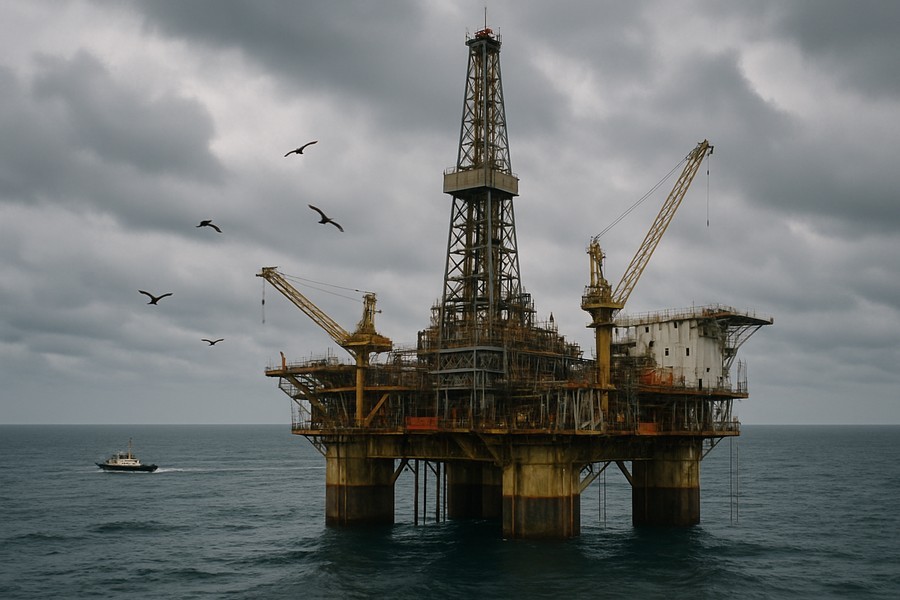
Environmental Organizations Challenge US Government Over Newly Approved Gulf of Mexico Drilling Project
Concerned environmental organizations are taking legal action against the recent governmental approval of an enormous ultra-deep oil drilling project in the Gulf of Mexico. This project, backed by a major British oil company, has been approved 16 years after a disastrous oil spill in the same area, which was the worst in American history.
The new drilling plan, greenlit in March, is set to go deeper than the project that caused the tragic spill, which killed 11 people and leaked over 3 million barrels of oil into the ocean. The leak took almost three months to control and caused extensive damage to the surrounding environment.
The oil spill affected five states, harming wildlife such as fish, whales, and sea turtles, disrupting local ecosystems and fishing communities. The oil also coated the shorelines, creating a detrimental impact on the environment and the economy.
Details of the New Drilling Project
The new $5bn project, referred to as Kaskida, is planned to be situated around 250 miles off the coast of Louisiana. The drilling equipment will be plunged 6,000ft deep into the Gulf’s water, with drills extending further into the seabed. The total depth of drilling would be about 6 miles, which is deeper than the height of Mount Everest.
Once the project begins production in 2029, it is expected to extract around 80,000 barrels of oil daily from six wells. The deposit that the project will be drawing from reportedly holds 10 billion barrels of oil.
Lawsuit Against the Approval of Kaskida
On the 16th anniversary of the tragic explosion, five environmental organizations joined forces to file a lawsuit aimed at reversing the approval of Kaskida. They claim that the drilling poses a catastrophic risk to the environment and local communities.
The lawsuit alleges that the oil company has not provided the legally required information related to the project and has failed to demonstrate that it can safely drill at such extreme depths. The suit also argues that the company has not shown it has the containment capabilities to prevent a much larger oil spill, potentially around 4.5 million barrels of oil, from spreading across the Gulf.
The British oil company, though not a defendant, has dismissed allegations that Kaskida will be unsafe.
Concerns Over Environmental Impact
While the government seeks to boost domestic oil drilling across the US, environmental groups are raising alarms about the potential damage to the environment and wildlife. Last month, the oil and gas industry was exempted from endangered species laws in the Gulf. This move could threaten the Rice’s whale, a species found only in the Gulf that lost about a fifth of its population after the previous oil spill.
Despite these concerns, the government maintains that energy production in the Gulf is vital to national strength and energy independence. They argue that development in the Gulf keeps the economy resilient, stabilizes costs for American families, and secures the US as a global leader.
However, environmental groups have criticized the new drilling project as "appalling". They argue that the project will put wildlife in the Gulf, like the Rice’s whales and sea turtles, at terrible risk. They insist that ultra-deepwater drilling is inherently dangerous.
The British oil company has defended itself by stating it has safely drilled 100 deepwater projects since 2010 and has new equipment designed to prevent disastrous spills. The company also stated that the lawsuit is “unfounded” and “singles out” the company in an attempt to block not only the Kaskida project but all future offshore oil and gas development in the US.