
A drawing can be gorgeous, wildly imaginative, and still make the person in it think, “Uh... whose body is that?” That was the surprisingly explosive question at the center of an old Demi Lovato controversy that has resurfaced, and the internet's original response has not aged especially well.
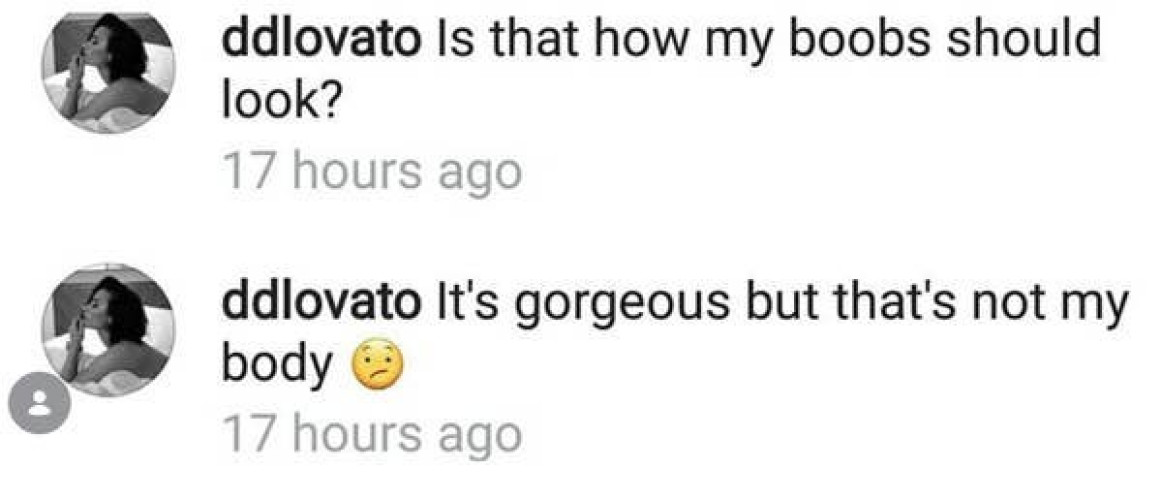
The whole thing started with a single Instagram comment. After seeing an illustration of herself as a mermaid, Demi wrote, “Is that how my boobs should look? It’s gorgeous, but that’s not my body .”
That was enough to ignite a debate about artistic freedom, body image, and whether a person is allowed to feel uncomfortable when an artist transforms their appearance into something they never asked to represent.
The Drawing That Started It
The illustration showed Demi lying on her stomach, topless, with a mermaid tail replacing the lower half of her body. It was detailed, polished, and clearly the result of serious effort. It also gave her a slimmer waist and larger breasts than she actually had.
Demi did not accuse the artist of being untalented. She did not demand that the drawing disappear. She called it gorgeous, then pointed out the part that bothered her: the body in the picture did not look like hers.
That distinction got lost almost immediately. Some people saw a fantasy illustration and thought Demi was taking it much too seriously. Others saw someone with a well-known history of body-image struggles looking at an idealized version of herself and saying, quite plainly, that she did not recognize it.
Why Demi’s Comment Hit a Nerve
Demi has spoken openly about her body image and eating-disorder history. She once told BuzzFeed, “I’ve been open about my struggles because part of my recovery includes being honest with myself and others, and I’m inspired to use my success as a platform to help others suffering.”
That context mattered. Her comment was not simply a celebrity complaining that a fan art portrait was insufficiently flattering. She was responding to a drawing that changed the exact features connected to some of her most personal struggles.

Still, many people treated the situation as if she had rejected a grand romantic gesture. The argument seemed to be: the artist worked hard, the drawing was beautiful, and therefore Demi was supposed to be grateful. Apparently, “That doesn’t look like my body” was considered an unacceptable response to receiving a picture of your own body.
The Artist Explained His Choice
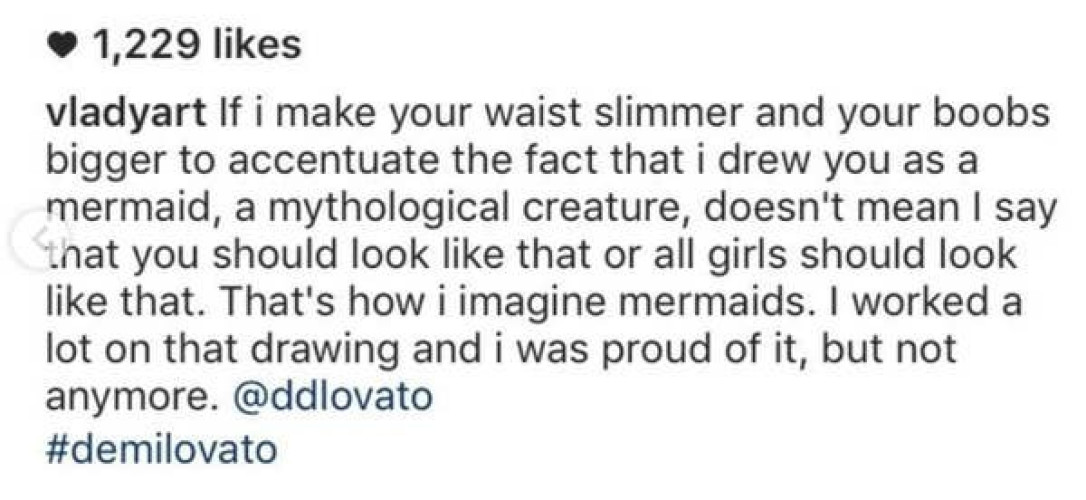
Vladimir Serbanescu responded to Demi’s comment by explaining that the altered proportions were part of his idea of a mermaid. He wrote:
“If i make your waist slimmer and your boobs bigger to accentuate the fact that i drew you as a mermaid, a mythological creature, doesn't mean I say that you should look like that or all girls should look like that. That's how i imagine mermaids.”
He also said he had worked hard on the drawing and had been proud of it, but no longer felt that way after the backlash.
From his perspective, the changes were fantasy. He was drawing a mythical creature, not issuing instructions about how Demi or anyone else should look. That explanation made sense to many people, especially those who saw the image as a compliment rather than a judgment.
The Backlash Was Not Exactly Gentle
At the time, Instagram commenters and BuzzFeed readers largely questioned Demi’s reaction instead of validating it. Some praised the artist’s skill and effort while criticizing her for objecting. Others suggested she should have accepted the image as a flattering tribute.
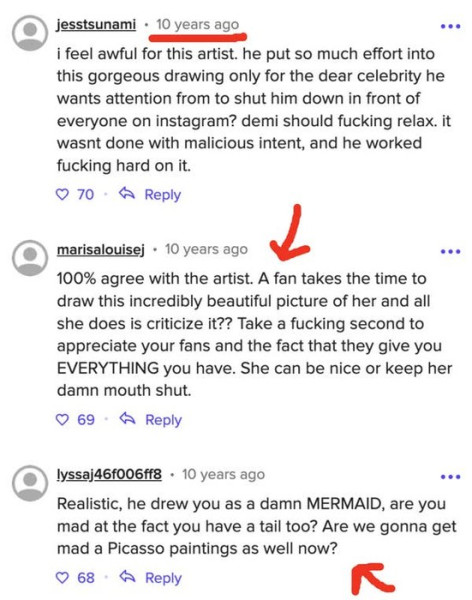
The criticism quickly became much meaner than the original disagreement deserved. People defended the artist as if Demi had personally insulted him by saying the drawing did not resemble her.
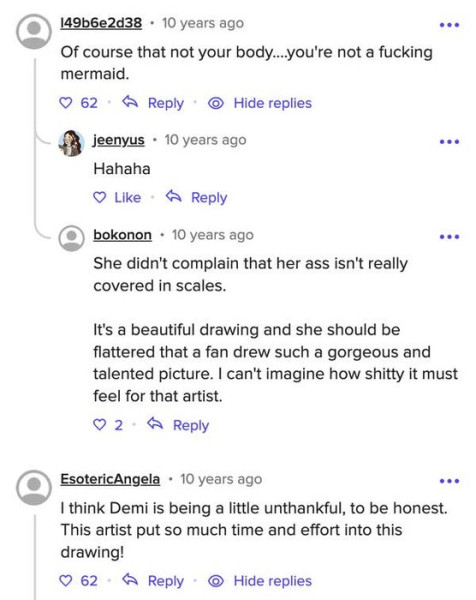
Then the comments became brutal. Some people claimed Demi did not love herself. Others treated her discomfort as proof that she was selfish or insecure. One recurring idea was that she should have felt honored instead of questioning the image.
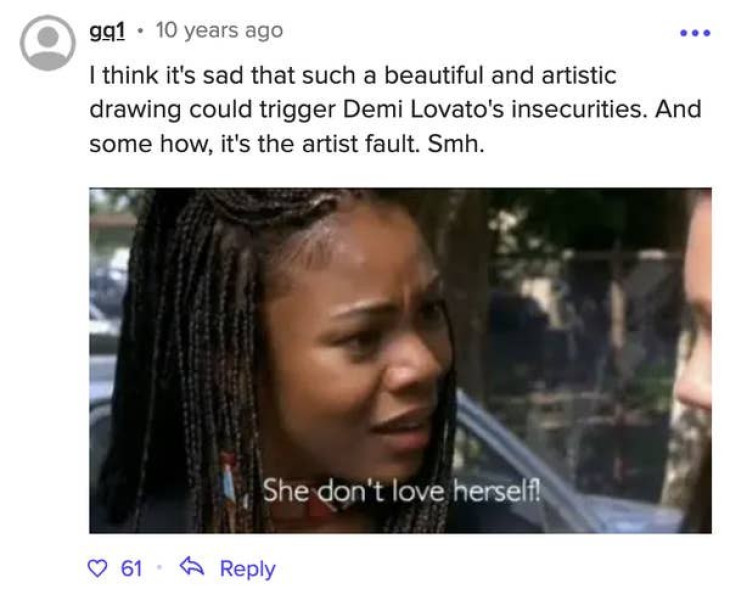
That is a strange standard. If someone draws you with a completely different shape, apparently you are expected to smile, say thank you, and keep your observations to yourself.
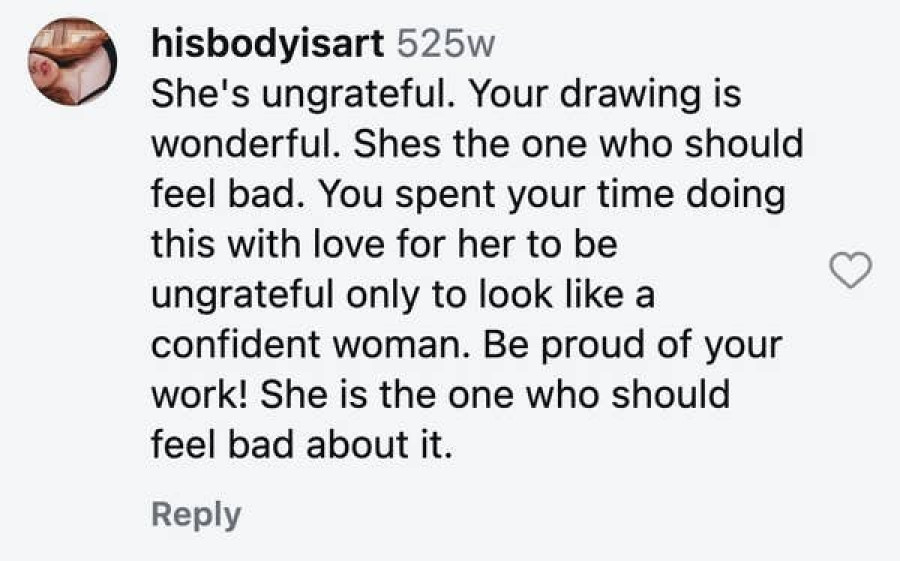
Other commenters accused Demi of making the situation about herself, which was a difficult position to defend when the drawing was literally a depiction of her.
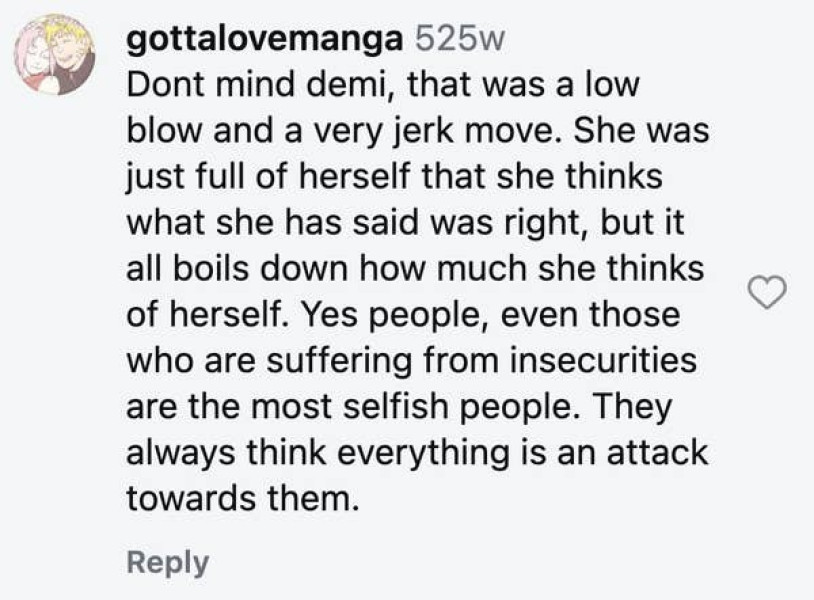
Even Her Defenders Got Dragged In
The argument became so tangled that people who tried to defend Demi found themselves under attack, too. Supporters pointed out that a compliment can still feel uncomfortable when it depends on changing someone’s body into a shape they do not recognize.
Critics pushed back that the drawing was obviously fictional and that nobody was claiming Demi should actually look like a mermaid. The two sides were answering different questions. One was talking about artistic intention. The other was talking about personal impact.
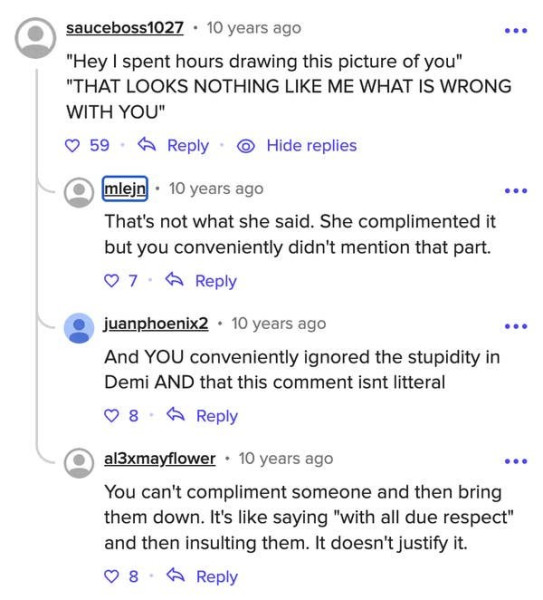
That gap explains why the disagreement kept going. The artist may have intended a glamorous fantasy. Demi could still look at the result and decide it did not represent her. Those positions do not cancel each other out.
The Illustration Came Back Around
The drawing continued to spark discussion over the years, and eventually some people admitted they could understand both sides. The artist had created a fantasy image and did not appear to be saying that Demi needed to change her body. Demi, meanwhile, had every right to say that the body in the artwork was not hers.
More recently, the conversation resurfaced after @artistswithoutautotune reopened the discussion on its page.
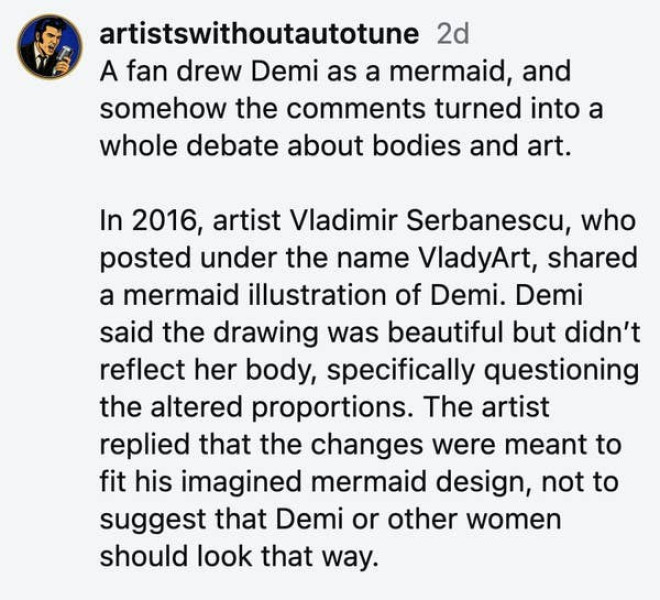
The renewed debate brought fresh attention to the difference between artistic interpretation and body representation. People revisited Demi’s original comment, the artist’s explanation, and the way commenters had reacted to both of them.
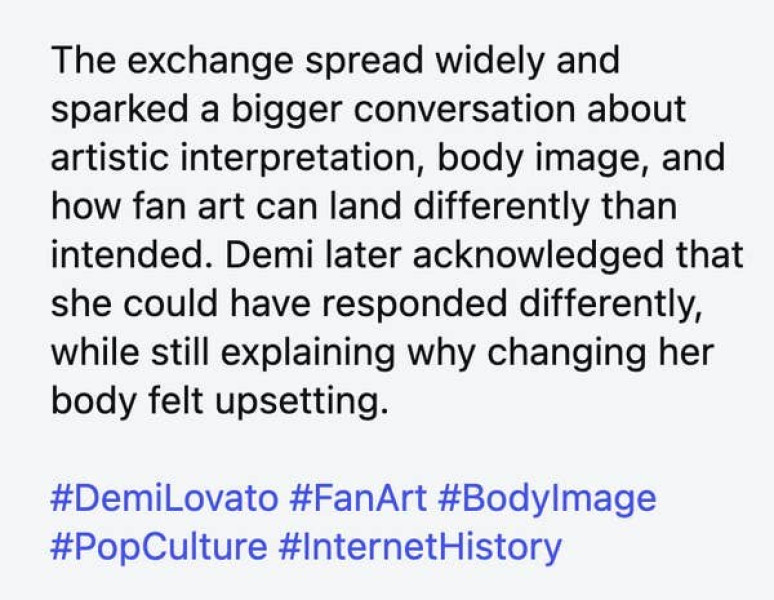
Why People See It Differently Now
In 2026, the illustration is gaining traction again, and the public reaction appears to have shifted. Many people now think Demi was remarkably polite. She complimented the work before explaining that it did not look like her body, yet the original backlash treated that explanation as an insult.
Some people even argue that she was too nice. The artist’s intention may have been harmless, they say, but the result still used Demi’s likeness while changing the features she was sensitive about.
Others keep defending the artist, pointing out that artistic freedom does not require the person being depicted to approve of the depiction. That is fair, too. An artist can create a beautiful fantasy, and the subject can still dislike seeing herself represented that way.
The part that seems hardest for people to accept is that both things can be true. Serbanescu could be proud of the drawing. Demi could call it gorgeous. The image could be imaginative. And Demi could still say, “That’s not my body.”
What began as a short comment about a mermaid drawing turned into a referendum on how women are expected to respond to compliments, especially when those compliments come with a different waistline and a completely reworked chest. The original argument treated gratitude as mandatory. The newer reaction seems more willing to let Demi describe her own experience.
Do you remember this controversy, and has your opinion changed since the first time you saw it?
The whole thing started with a single Instagram comment. After seeing an illustration of herself as a mermaid, Demi wrote, “Is that how my boobs should look? It’s gorgeous, but that’s not my body
.”That was enough to ignite a debate about artistic freedom, body image, and whether a person is allowed to feel uncomfortable when an artist transforms their appearance into something they never asked to represent.
The Drawing That Started It
The illustration showed Demi lying on her stomach, topless, with a mermaid tail replacing the lower half of her body. It was detailed, polished, and clearly the result of serious effort. It also gave her a slimmer waist and larger breasts than she actually had.
Demi did not accuse the artist of being untalented. She did not demand that the drawing disappear. She called it gorgeous, then pointed out the part that bothered her: the body in the picture did not look like hers.
That distinction got lost almost immediately. Some people saw a fantasy illustration and thought Demi was taking it much too seriously. Others saw someone with a well-known history of body-image struggles looking at an idealized version of herself and saying, quite plainly, that she did not recognize it.
Why Demi’s Comment Hit a Nerve
Demi has spoken openly about her body image and eating-disorder history. She once told BuzzFeed, “I’ve been open about my struggles because part of my recovery includes being honest with myself and others, and I’m inspired to use my success as a platform to help others suffering.”
That context mattered. Her comment was not simply a celebrity complaining that a fan art portrait was insufficiently flattering. She was responding to a drawing that changed the exact features connected to some of her most personal struggles.
Still, many people treated the situation as if she had rejected a grand romantic gesture. The argument seemed to be: the artist worked hard, the drawing was beautiful, and therefore Demi was supposed to be grateful. Apparently, “That doesn’t look like my body” was considered an unacceptable response to receiving a picture of your own body.
The Artist Explained His Choice
Vladimir Serbanescu responded to Demi’s comment by explaining that the altered proportions were part of his idea of a mermaid. He wrote:
“If i make your waist slimmer and your boobs bigger to accentuate the fact that i drew you as a mermaid, a mythological creature, doesn't mean I say that you should look like that or all girls should look like that. That's how i imagine mermaids.”
He also said he had worked hard on the drawing and had been proud of it, but no longer felt that way after the backlash.
From his perspective, the changes were fantasy. He was drawing a mythical creature, not issuing instructions about how Demi or anyone else should look. That explanation made sense to many people, especially those who saw the image as a compliment rather than a judgment.
The Backlash Was Not Exactly Gentle
At the time, Instagram commenters and BuzzFeed readers largely questioned Demi’s reaction instead of validating it. Some praised the artist’s skill and effort while criticizing her for objecting. Others suggested she should have accepted the image as a flattering tribute.
The criticism quickly became much meaner than the original disagreement deserved. People defended the artist as if Demi had personally insulted him by saying the drawing did not resemble her.
Then the comments became brutal. Some people claimed Demi did not love herself. Others treated her discomfort as proof that she was selfish or insecure. One recurring idea was that she should have felt honored instead of questioning the image.
That is a strange standard. If someone draws you with a completely different shape, apparently you are expected to smile, say thank you, and keep your observations to yourself.
Other commenters accused Demi of making the situation about herself, which was a difficult position to defend when the drawing was literally a depiction of her.
Even Her Defenders Got Dragged In
The argument became so tangled that people who tried to defend Demi found themselves under attack, too. Supporters pointed out that a compliment can still feel uncomfortable when it depends on changing someone’s body into a shape they do not recognize.
Critics pushed back that the drawing was obviously fictional and that nobody was claiming Demi should actually look like a mermaid. The two sides were answering different questions. One was talking about artistic intention. The other was talking about personal impact.
That gap explains why the disagreement kept going. The artist may have intended a glamorous fantasy. Demi could still look at the result and decide it did not represent her. Those positions do not cancel each other out.
The Illustration Came Back Around
The drawing continued to spark discussion over the years, and eventually some people admitted they could understand both sides. The artist had created a fantasy image and did not appear to be saying that Demi needed to change her body. Demi, meanwhile, had every right to say that the body in the artwork was not hers.
More recently, the conversation resurfaced after @artistswithoutautotune reopened the discussion on its page.
The renewed debate brought fresh attention to the difference between artistic interpretation and body representation. People revisited Demi’s original comment, the artist’s explanation, and the way commenters had reacted to both of them.
Why People See It Differently Now
In 2026, the illustration is gaining traction again, and the public reaction appears to have shifted. Many people now think Demi was remarkably polite. She complimented the work before explaining that it did not look like her body, yet the original backlash treated that explanation as an insult.
Some people even argue that she was too nice. The artist’s intention may have been harmless, they say, but the result still used Demi’s likeness while changing the features she was sensitive about.
Others keep defending the artist, pointing out that artistic freedom does not require the person being depicted to approve of the depiction. That is fair, too. An artist can create a beautiful fantasy, and the subject can still dislike seeing herself represented that way.
The part that seems hardest for people to accept is that both things can be true. Serbanescu could be proud of the drawing. Demi could call it gorgeous. The image could be imaginative. And Demi could still say, “That’s not my body.”
What began as a short comment about a mermaid drawing turned into a referendum on how women are expected to respond to compliments, especially when those compliments come with a different waistline and a completely reworked chest. The original argument treated gratitude as mandatory. The newer reaction seems more willing to let Demi describe her own experience.
Do you remember this controversy, and has your opinion changed since the first time you saw it?