
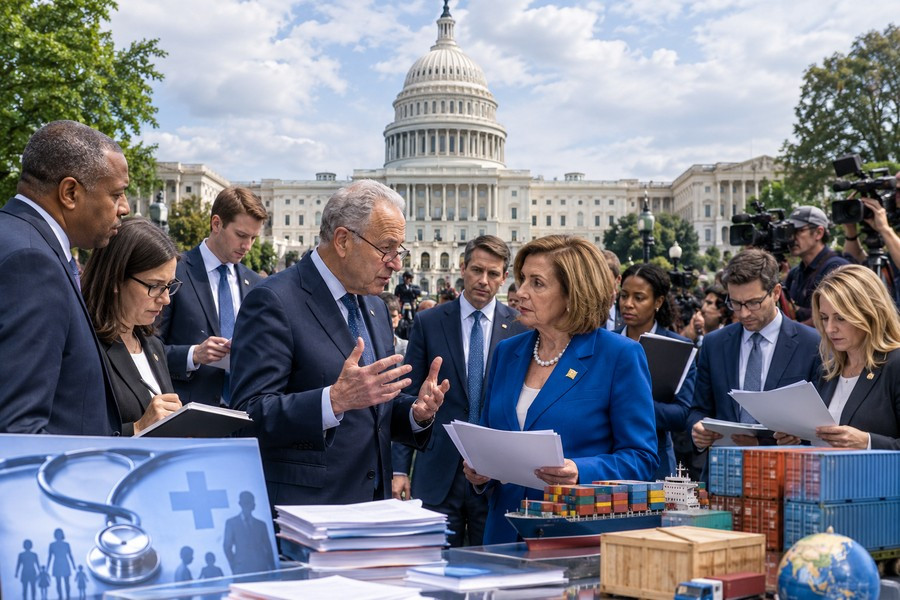
Democrats Take Control of Congress and Set Sights on Healthcare, Tariffs, and Trump Allies
A New Balance of Power in Washington
Democrats have regained control of Washington by winning key seats in both the House and the Senate. The shift gives them majorities in both chambers of Congress after two years of full Republican control.
The change will give Democrats new power to investigate President Trump’s economic allies and challenge his policies. Elon Musk is expected to be one of the main targets. Democrats may also use their control to pass bills that are unlikely to become law but would signal a major change in the political climate surrounding business and economic policy.
Even when those bills cannot pass the Senate, House votes could force Republicans to take public positions on healthcare, tariffs, taxes, and other major issues.
Healthcare and Tariffs Move to the Center
Democratic lawmakers are preparing a fast push on several major issues. Their early priorities include healthcare subsidies and President Trump’s tariffs.
Some proposals may pass the House but fail in the Senate. Senate rules require most bills to receive 60 votes, and Republicans will still have enough power to block legislation even though they are no longer in charge of both chambers.
Democrats are also expected to look for agreements with Republicans in areas where both parties have shown interest. Possible areas of cooperation include:
- Lowering the cost of prescription drugs
- Making housing more affordable
- Setting rules for artificial intelligence data centers
- Protecting or restoring clean-energy tax credits
Democrats are also expected to fight President Trump’s tariffs. Brendan Boyle, who is expected to lead the House Budget Committee, said he would work to end the tariffs, reverse healthcare cuts, and end the war in Iran.
A law aimed at removing the tariffs would almost certainly face a presidential veto. However, bills with bipartisan support could still move forward in other areas.
Investigations Could Expand
Democrats will gain new authority to demand documents and require witnesses to testify. That power could lead to investigations of several people and agencies connected to the Trump administration.
Robert Garcia is expected to become chairman of the House Oversight Committee. He gave a short warning about what those investigations may bring: “Lawyer up.”
Musk is likely to face intense attention because of his business ties, government work, and role in a federal cost-cutting effort. Democrats are expected to examine his work with the administration and the government contracts held by his aerospace company.
They also want to investigate his satellite internet business and its role in Ukraine. The system has been used by Ukrainian forces, and questions have been raised about whether Musk ordered a slowdown of a military version of the service. Musk also discussed the decision with President Trump.
Several lawmakers from technology-heavy states have warned that the issue could lead to a close review of federal money given to Musk’s companies.
President Trump has said he would consider pardoning people such as Musk if they faced legal action from Democratic investigations. He said he would do so if he believed it was necessary.
More Pressure on Treasury and Financial Regulators
Democrats are also expected to examine the Treasury Department and the Internal Revenue Service. They may investigate President Trump’s efforts to reduce the power of financial regulators as well.
Treasury Secretary Scott Bessent could face sharper questioning from lawmakers. His disagreements with Democratic members of Congress have already become personal and heated. With subpoena power in their hands, Democrats could demand records and require Bessent and other officials to answer questions in public hearings.
Senator Elizabeth Warren is expected to lead the Senate Banking Committee. Her position would give her a powerful role in reviewing financial policy, regulators, banks, and other parts of the economy.
Business leaders could also be called before Congress. Technology executives may face hearings about harmful actions taken by artificial intelligence systems. Company leaders in other industries could be questioned about claims that they charged unfairly high prices.
Business Sectors Face Both Risks and Opportunities
The new political balance may create problems for some companies while offering hope to others.
Clean-energy businesses could benefit if Democrats block efforts to remove their tax credits. Some Republicans also support those credits, which means lawmakers from both parties could possibly agree to keep or restore them even with divided government.
Housing may offer another chance for cooperation. A large housing bill previously won support from both parties and became law even though President Trump did not sign it. That example suggests lawmakers may be able to work together on housing policy despite larger political disputes.
Prescription drug prices and artificial intelligence data centers also drew criticism from candidates in both parties during the campaign. That shared concern could make those industries possible targets for new rules or areas for bipartisan legislation.
Markets May Face More Uncertainty
Divided government can sometimes calm financial markets because it makes sweeping policy changes less likely. This time, however, the change in power could bring more uncertainty.
Democratic investigations, fights over tariffs, disputes about executive authority, and battles over healthcare could all affect businesses and investors. President Trump may also continue testing the limits of his power, creating more legal and economic conflict.
The result is a Congress that may produce fewer major laws but far more investigations, public hearings, and political battles. For companies and investors, the next phase of Washington politics could bring both new risks and a few openings for cooperation.