
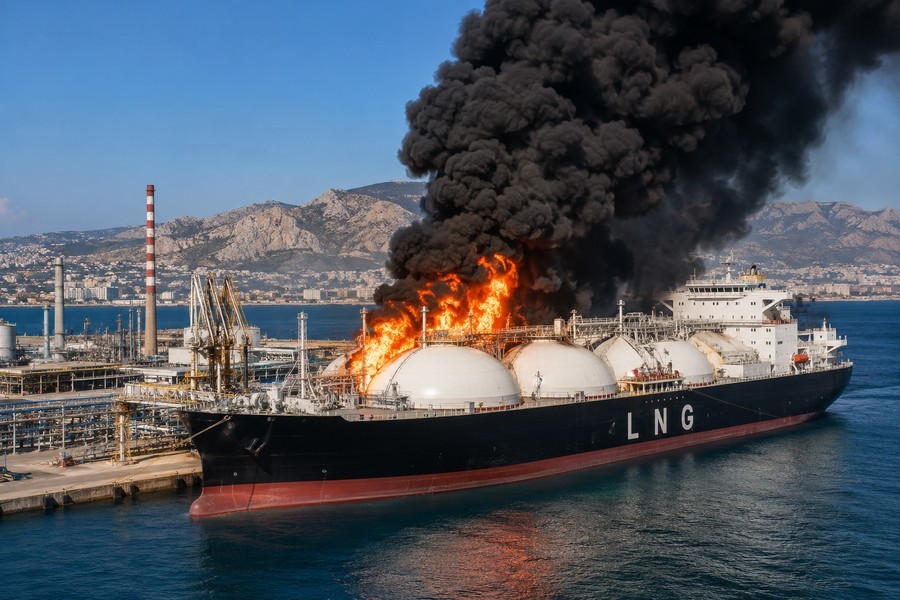
Drone Strike at Egyptian Port Ignites Fires on Two Natural Gas Vessels
An unmanned aircraft struck an American-owned natural gas vessel docked at a major Egyptian port on the Mediterranean Sea. The strike caused a fire that quickly spread to a nearby ship. This event marks the very first time violence from the ongoing conflict between the United States and Iran has spilled directly onto Egyptian territory.
The incident occurred at a busy harbor in the northern part of the country. Government officials verified that a drone caused the blast after examining the scene. While no group has claimed responsibility for the strike, local authorities are actively investigating the event and taking immediate steps to secure the nation's borders and economic interests.
Details of the Harbor Explosion
The flying drone hit a specialized floating storage and gas processing vessel. This ship, flying the flag of the Marshall Islands, is owned by an American energy company. The drone impacted the right side of the vessel during the afternoon, sparking an immediate fire.
Strong flames quickly reached a second vessel parked nearby, which was a large liquefied natural gas tanker flying the flag of Bermuda. Emergency crews acted fast to handle the dangerous situation:
- Complete evacuation: Workers safely evacuated the crews of both vessels.
- Fire containment: Emergency teams brought the flames under control before they could cause a larger explosion.
- No casualties: No injuries or deaths were reported from either ship.
- Vessel relocation: Tugboats moved both damaged ships away from the docks into deeper water so experts could safely inspect the damage.
The country's energy minister traveled directly to the harbor to supervise the emergency response. A former port official noted that the specialized process of turning super-cooled liquid gas back into vapor happens under extremely high pressure. Because of this high pressure, even a tiny leak in these systems can easily lead to massive, fast-spreading fires, making the quick control of the flames highly critical.
Prior Warnings and International Tension
The attack happened shortly after foreign state broadcasts highlighted this specific Egyptian port as a potential target. A map broadcasted in the region labeled the harbor as a major gateway for sending energy supplies to Europe. The broadcast suggested the port could be targeted to strike back against international interests following a separate military strike on a cargo vessel in the Caspian Sea.
While foreign officials stated they wanted to avoid making the conflict worse, they had openly demanded payment for earlier damages. The strike at the port immediately halted local gas terminal operations, forcing shipping companies to change their immediate plans and move their ships away from the coast.
A Growing Regional Crisis
This harbor attack comes during a highly unstable period for the entire region. Several major military events occurred around the same time:
- Missile attacks: Armed forces launched ballistic missiles at American military positions in neighboring Jordan.
- Retaliatory strikes: Joint military forces launched airstrikes against armed groups in Iraq.
- Shipping blockades: A militant group in Yemen declared a naval blockade against a neighboring nation, raising fears of a much larger trade shutdown.
Until now, Egypt had managed to avoid direct involvement in the conflict. The nation has worked hard to maintain diplomatic relationships with both the United States and Iran. However, the ongoing fighting has already severely hurt the local economy.
Economic and Shipping Impacts
The vital shipping lane running through the region, which normally handles about twelve percent of all global trade, has seen a massive drop in ship traffic since the war began. This situation could worsen because militant groups are threatening to demand tolls from passing cargo ships. These groups have also threatened to attack any ships that refuse to pay, which could stop trade through key narrow waterways in the Red Sea.
This port disruption is especially difficult for Egypt. The country was once a major exporter of natural gas and built some of the very first gas export facilities in the region. However, because local gas production has fallen over the years, the nation now relies on importing gas from other countries to meet its own energy needs. This drone strike threatens the very infrastructure the country uses to bring in these vital fuel supplies.