
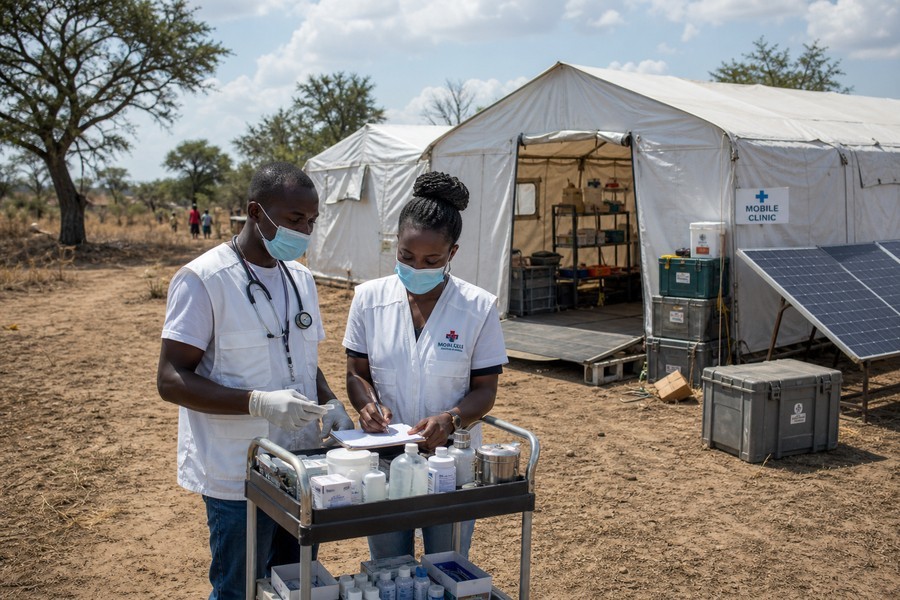
Democratic Republic of the Congo Faces Growing Ebola Outbreak as Challenges Mount
The Democratic Republic of the Congo is currently facing a sharp increase in Ebola cases. Official records show that 3,200 people have contracted the virus during this latest wave of illness. Out of those infected, at least 1,405 people have lost their lives. This represents the 17th time the country has experienced an outbreak of this disease.
Medical teams are working hard to limit the spread, but the virus is moving very quickly. In one recent 10-day span, the number of recorded infections grew by approximately 1,000 cases. Because the virus is spreading so fast, experts believe this health crisis could last for several more months.
A Rare Strain with No Standard Treatment
This particular outbreak is caused by a specific type of the virus known as the Bundibugyo strain. This strain is especially difficult to manage because there is currently no approved vaccine or medicine to treat it. Ebola is a severe illness that causes hemorrhagic fever, a condition that leads to internal and external bleeding. It spreads easily when a person comes into direct contact with the bodily fluids of someone who is sick.
Historically, Ebola has been a major health threat on the African continent. Over the last several decades, the virus has caused more than 15,000 deaths across various countries. Because the Bundibugyo strain is so dangerous, scientists are working as fast as they can to find a medical solution.
Where the Virus is Spreading
The illness has not spread evenly across the country. Instead, it is concentrated in specific regions. Here is where the cases are being found:
- The Ituri Province: This northeastern region, which sits next to the borders of South Sudan and Uganda, is the epicenter of the crisis. Nearly 90 percent of all cases have been found here.
- Five Total Provinces: The virus has now been detected in five different provinces across the country. This includes two new provinces where the sickness has only recently appeared.
The Difficulties in Reaching Patients
Helping patients in these areas is a major challenge for humanitarian groups. Many of the affected communities are located in remote places that are very hard to reach by land. To solve this problem, aid workers rely heavily on special aviation services. Small airplanes are used to fly medical teams and emergency supplies directly to the front lines of the crisis.
These planes also play another critical role. They carry medical samples from remote villages back to specialized laboratories. This allows scientists to test the samples quickly, confirm if a patient has Ebola, and track exactly how the virus is moving through the population. Health officials note that better testing and faster detection have actually helped identify many of the new cases that might have otherwise gone unnoticed.
Hospitals Face Staff and Funding Shortages
Even when medical teams can reach the communities, they face serious problems inside the clinics. In some hospitals, healthcare workers have gone on strike. These doctors and nurses are demanding to be paid wages that they are owed for their work. When staff members strike, it disrupts the daily care of patients and makes it much harder to control the outbreak.
The Search for a Cure
Because there is no standard cure for this strain of Ebola, researchers around the world are trying to develop new tools. Progress is being made in several areas:
- Human Trials: A group of researchers recently started testing an experimental vaccine on humans. The very first volunteer group has already received this test vaccine to see if it is safe and effective against the Bundibugyo strain.
- Fast-Tracked Options: Several other potential vaccines are being prepared for rapid clinical trials.
- New Treatments: Scientists are also developing two different therapies that could help sick patients recover from the infection.
While these medical advancements offer hope for the future, medical teams on the ground must continue to rely on basic safety measures, isolation of sick patients, and protective gear to save lives today.