
Ebola Outbreak Reaches 10,000 Cases as Response Faces Major Barriers
The fastest-spreading Ebola outbreak on record has infected more than 10,000 people in the Democratic Republic of Congo. The outbreak was officially declared in May, but evidence suggests the virus may have been spreading since February or March.
The outbreak has already passed a grim mark, though it has not become the largest by total cases. The West African outbreak from 2014 to 2016 infected more than 28,000 people. At a similar point in that earlier crisis, about 4,000 people had been infected.
The current outbreak has reached a wider area than any earlier Ebola outbreak, with cases spanning from Nigeria to Kenya. It ranks second in deaths, with nearly 5,000 people killed. The earlier West African outbreak caused more than 11,000 deaths.
Children account for about one-third of the deaths in the current outbreak. The youngest children face especially high risks: roughly three out of every four infected children under age five have died.
Why Did the Outbreak Spread So Quickly?
A long period of undetected spread may have put the response behind from the start. The virus likely circulated in communities for months before the outbreak was officially declared.
The outbreak is caused by the Bundibugyo species of Ebola, which is less common than other forms. Existing tests were not designed to detect it well, causing delays. The affected area in northeastern Congo is also remote and troubled by conflict, making it harder to find cases and deliver care. Cuts to foreign aid may have further weakened disease monitoring.
International help has also been slower to arrive than during earlier Ebola crises. In the past, medical workers from many countries traveled to West Africa to help. Fewer workers from the United States and other countries have come to Congo, in part because some may not be allowed to return home if they become sick. As a result, much of the work falls to Congolese and regional health workers.
Countries have promised funding, including more than $880 million from the United States. But some workers say the money has been slow to reach the response. The funding available is only a fraction of what was provided during the earlier outbreak, and international support has been weaker.
Care Is Expanding, but Many People Stay Home
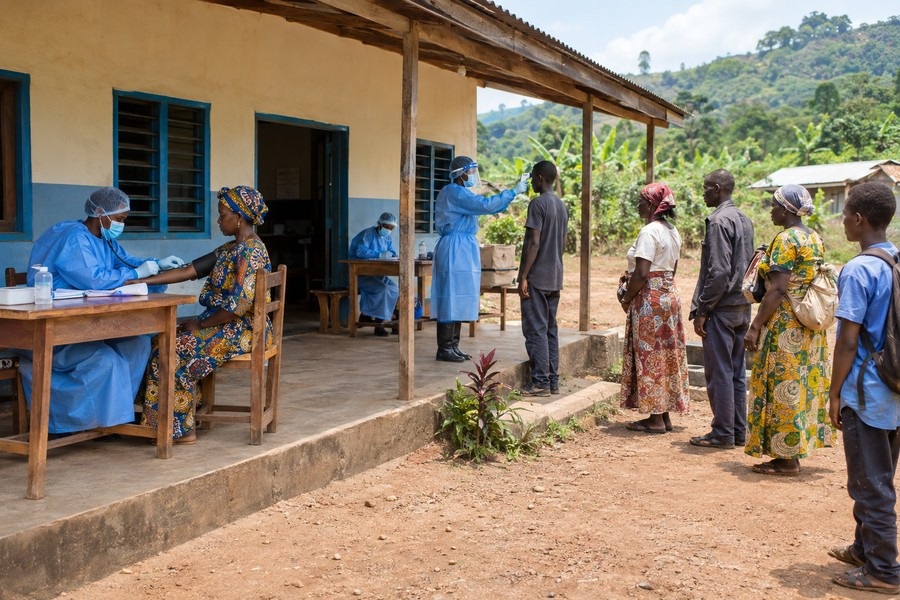
The response has grown over recent months. There are now about two dozen testing labs and more than 50 treatment centers, with close to 2,000 beds for Ebola patients.
Even so, about two-thirds of deaths are happening in communities rather than in treatment centers. That suggests many sick people are not seeking help. The share of deaths outside care facilities has stayed about the same for months, and reducing it is important to stopping the outbreak.
Early symptoms can be easy to mistake for other illnesses common in the region. Fever, headaches, and body aches can also come from diseases such as malaria or typhoid. People with Ebola may not realize they need special care until they are very sick.
Distrust is another major obstacle. In one survey in North Kivu, a current hotspot, 85% of people who responded said distrust of community response workers was keeping people from seeking care. Some residents question whether Ebola is real or believe response teams are trying to make money. Others ask why teams focus on Ebola but not other serious diseases.
Trust and Tracking Remain Essential
Community health workers are trying to build stronger ties with residents. Their work can be more effective in places where they have had time to establish a lasting presence. But the virus is moving into new health areas, where teams must build trust again. Conflict can make this harder, and armed groups have spread false information.
When people do not trust health workers, they may avoid treatment or refuse to help officials find people who have been exposed. About 80% of new cases are still being found among people who were not already known to health teams. Until that number falls, the outbreak will remain difficult to control.
Cases in Nigeria and Kenya show that the virus has spread beyond Congo. Daily case numbers appear to be leveling off, but there may be many places where infections are going unnoticed. The outbreak is still far from under control.
Vaccines May Help, but They Are Not Enough
No vaccine or treatment has been approved for the Bundibugyo species. Several options are being developed, but none is ready to play a major role in the current response.
An existing Ebola vaccine targets a different species. Health workers began receiving it, and researchers have started a trial to test whether it can protect against Bundibugyo. If it works, it could help. But a vaccine or new treatment alone cannot stop the outbreak.
Medical tools need to be paired with basic public health steps, including finding everyone who had contact with an infected person, keeping exposed people apart when needed, and treating those who become sick. These efforts require more workers, supplies, and funding. The response also depends on continued attention and support so that a larger public health crisis does not go unmet.