
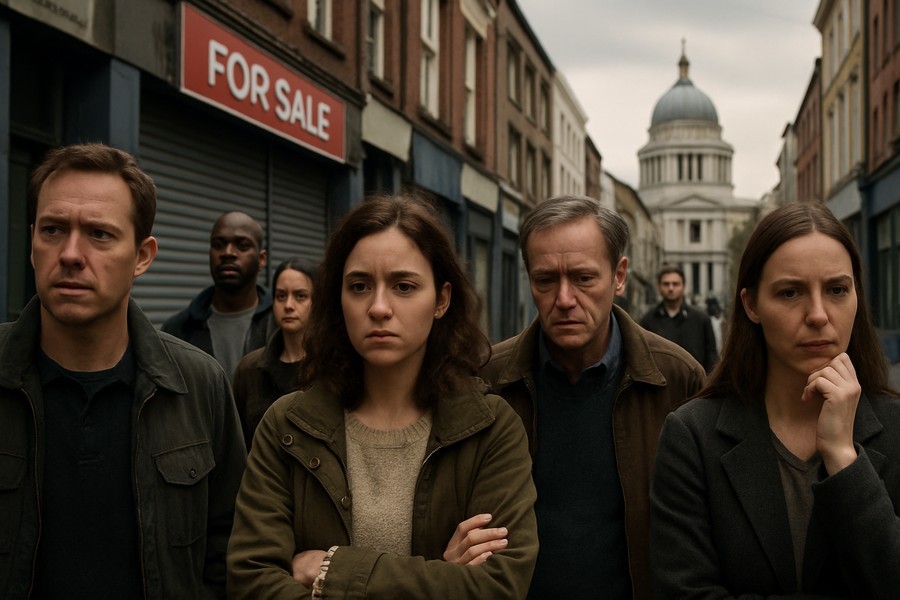
Slipping Approval for the Presidency Amid Economic Challenges
The public's dissatisfaction with the state of the economy has led to a significant dip in the approval ratings for the current president. The perceived lack of attention towards economic issues seems to be the primary cause of this decline. However, there's a possibility that the president could win back the support of his followers if the economy improves.
Key Concerns for the Public
By the close of the year, the president’s approval was hovering around 43%. His handling of immigration, crime, and foreign affairs garnered a fair amount of support. However, his performance in areas concerning the economy, inflation, and healthcare was less well-received. In fact, these latter issues are of greater concern for Americans, with 66% identifying the economy, inflation, or healthcare as their top priorities.
Public sentiment towards the economy is discouraging for the administration. Only 27% of Americans feel that the economy is in a good or excellent state, with a whopping 72% rating it as fair or poor. Additionally, more people believe they are worse off economically compared to those who think they are better off. Public opinion does not favor the president's focus, with a majority believing he is concentrating on the wrong issues.
Public Perception and Presidential Response
This dissatisfaction with the president’s focus has consequences. Most people do not think the president cares about "people like you." The public's negative perception seems to be inflamed by the president's attempts to shift blame for the economic state to his predecessor. A majority of the public places the responsibility for the current economic state squarely on the president's shoulders.
The public also believes that the president's economic policies have worsened the situation. They feel his policies have resulted in job losses and increased health insurance premiums. His signature economic policy, tariffs, is seen as a price-raiser by a majority of Americans, with very few supporting the imposition of additional tariffs.
Looking Forward: 2026 Economic Expectations
Expectations for the economy in the coming year are not optimistic. Most people believe that tariffs will continue to drive up prices, and only a third expect their family finances to improve. The president’s job approval has a significant impact on midterm elections, and this year appears to be no different.
His declining approval ratings have given Democrats an edge over Republicans when it comes to handling the economy. This shift in public confidence has given Democrats an edge in the upcoming midterm elections for the House of Representatives. However, there is still a significant portion of the electorate that could change their mind about the president's performance, primarily based on the economy.
Impacts on Political Alignments
The president’s second term could have long-lasting impacts on the American party system. After the previous election, there was speculation about a shift that would transform the Republicans into a multi-ethnic, populist, working-class party. However, this now seems unlikely as many groups that strongly supported the Republicans have moved away and are now considered swing voters.
Most people believe that the president’s policies favor the wealthy rather than the middle class. Populist views remain strong, with a majority of Americans, including Republicans, thinking that the rich have too much power and that taxes on billionaires are too low.
There are now challenges to some fundamental beliefs of the American creed. When asked about the most important source of success in today’s America, most people believe that coming from a privileged background is key, not hard work. There is also a shared pessimism that today’s children will grow up to be worse off than their parents.
The president returned to the White House promising to “Make America Great Again.” However, for most Americans, this greatness remains elusive, and they do not believe that the nation is moving towards it. This sentiment seems to indicate that neither party will enjoy a stable majority, and the control of national political institutions will continue to oscillate.