
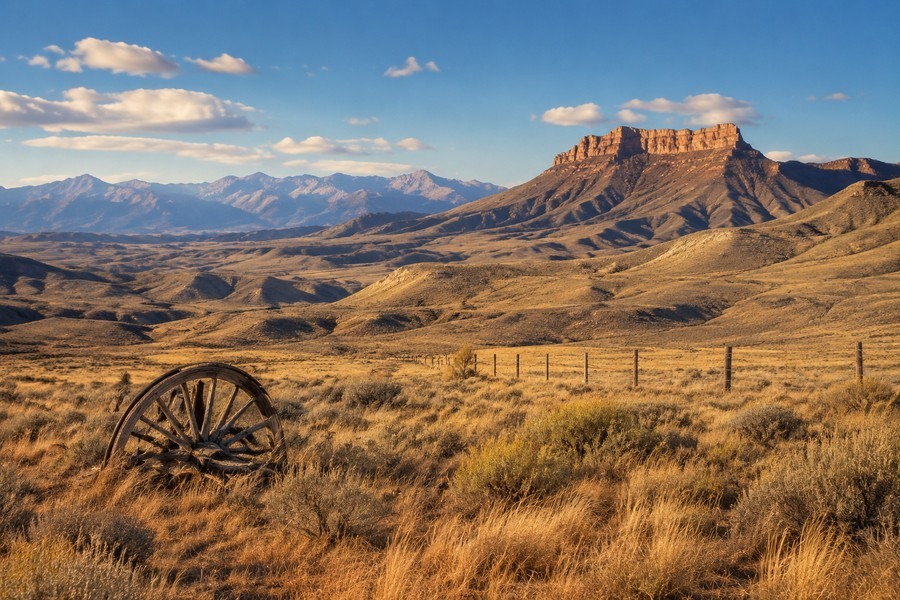
New Legal Battle Begins Over Federal Plans to Expand Cattle Grazing Across Western Public Lands
A major conflict is heating up over the future of public lands in the American West. Federal officials are pushing to open up millions of acres of public land for livestock grazing. However, nature protection groups are fighting back. A national conservation group has filed a lawsuit to stop the plan, arguing that it will harm the environment and threaten vulnerable wildlife.
A Massive Plan for Western Lands
The legal dispute centers on a federal plan to open more than 24 million acres of vacant public land to cattle and sheep. This land is located across several Western states, including Oregon and Washington.
An environmental organization filed the lawsuit in a federal court, targeting the leaders of both the Department of Agriculture and the Department of the Interior. The lawsuit claims that these federal agencies are breaking the law by failing to protect endangered plants and animals.
At the heart of the argument is a special agreement and action plan signed by government leaders. This plan was designed to help the American beef industry. It aims to make it much easier and faster for ranchers to get permits to graze their animals on lands managed by the government.
How Grazing Permits Work
To understand the debate, it helps to know how public land grazing works. The government issues permits that allow ranchers to feed their livestock on public land.
- These permits usually last for 10 years.
- Ranchers pay very low, subsidized rates to use this land, which is much cheaper than renting private land.
- In states like Oregon, federal agencies already allow livestock to graze on nearly 14 million acres of public land.
Only a small fraction of this land—less than 68,000 acres—is currently not being used. Some of these vacant areas are empty because they are too steep, too rocky, or too far away from a water source. However, government officials have identified over 130,000 acres of these unused lands that could quickly be opened up for more cattle.
The Argument for Grazing
Supporters of the plan, including cattle ranching groups, believe that grazing is good for the land. They argue that having cows eat the grass helps manage the landscape in a positive way.
- Ranchers say that grazing keeps grass short, which can prevent giant wildfires from spreading out of control.
- They also believe the plan is necessary to keep the American beef industry strong and support rural families who rely on ranching.
The Environmental Costs
On the other side of the debate, conservationists argue that the plan will cause serious damage to fragile ecosystems. They point out that cattle can easily ruin natural habitats if they are not managed carefully.
An attorney representing the environmental group explained that cattle often gather around streams and rivers. These wet areas are crucial for local wildlife. When too many cows gather there, they can cause serious problems:
- Cattle eat the plants along the banks, leaving the soil bare and unprotected.
- They trample the riverbanks, causing dirt and mud to slide into the water.
- This mud can cover and destroy fish eggs, making it hard for fish to reproduce and survive.
Under federal law, when a government action might hurt threatened or endangered species, agencies are required to talk with wildlife experts. This process is meant to find ways to protect the animals. The lawsuit claims that the government skipped this step entirely before moving forward with the grazing expansion.
Moving Too Fast?
The conservation group claims the government is rushing to get cattle onto these empty lands as quickly as possible. They pointed to public comments made by a senior official who stated that the agency's goal was to have every single vacant area filled with cattle very soon.
The environmental group had previously sent a warning to the government about the potential lawsuit, but they say the agencies ignored the warning and continued with their plans. When asked about the legal challenge, representatives from the land management agency declined to comment, stating they cannot discuss active lawsuits.