
The Downfall of a Prominent Politician: The Power of Online Communities
A prominent politician, who was a strong contender for California's governorship and a seven-term House Democrat, saw his political career crumble after allegations of sexual harassment emerged. The accusation was spearheaded by a woman named Annika Albrecht who claimed she was a victim of his inappropriate behavior six years ago.
"My whole body felt physically sick and I remember my head rushed, and I just was like, oh, my gosh," Albrecht said. "I just felt like I had to do everything I could to just hold one man accountable."
Albrecht, a 28-year-old Democratic strategist, confided in her friend Cheyenne Hunt, a lawyer and progressive content creator. She asked Hunt if she could make a public video about the politician and his alleged misconduct towards women.
The Power of Social Media
On a particular day, Hunt uploaded the video to her Instagram account. "The Democratic candidate currently leading the California governor's race has a known history of being predatory towards women," she said in the video. "And while it may be seen as politically expedient to sweep this under the rug, it is the wrong thing to do and we know it."
The politician has fervently denied these allegations, calling them "false, fabricated and deeply offensive."
Hunt's video quickly made rounds on the internet, encouraging other women to come forward with their stories. Hunt says these accounts ranged from allegations of unwanted sexual advances by the politician to accusations of rape.
From Social Media to Mainstream Attention
Within days, this online conversation drew the attention of major news organizations and the public. Subsequently, the politician withdrew from the California governor's race, and a day later, he resigned from Congress.
The politician's fall is a stark reminder of the continued power imbalances that many women still see at play in one of the most consequential workplaces in the nation – the halls of Congress. Many of the accusers agree that his resignation would not have been possible had they not bypassed traditional avenues for reporting misconduct and created an online community for themselves.
The Power of Online Solidarity
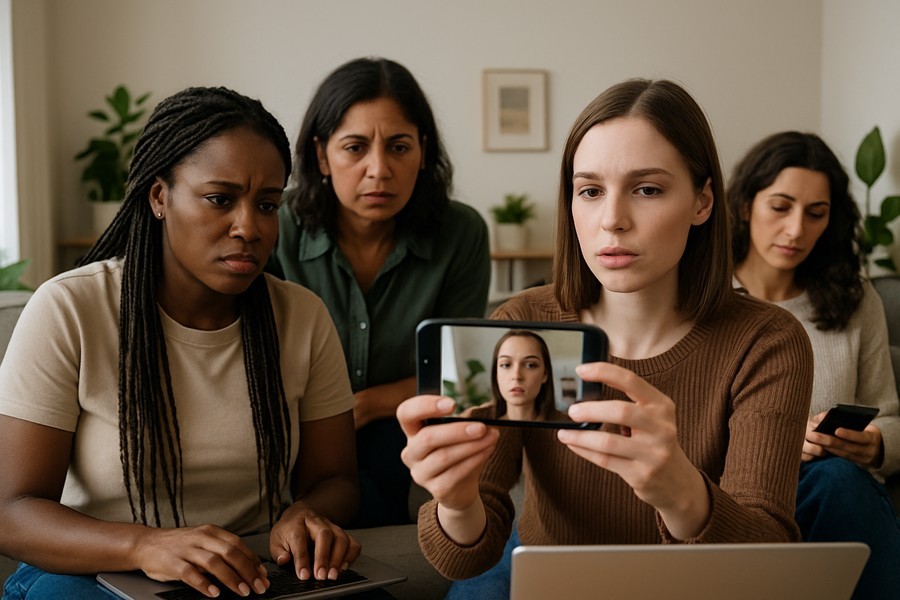
"It was really three girls in a group chat that were figuring out how we were going to bring this story forward, consolidate a group of women together, and get their story told the right way," said Hunt, explaining how she and Albrecht teamed up with Arielle Fodor, another creator who had also been posting and receiving messages about the politician.
A Pattern of Misconduct
Albrecht’s interaction with the politician began during a college field trip in 2019 to Washington, D.C., where she and a group of students met with him. Following their meeting, the politician suggested they start a group chat to stay connected.
"He asked to create that group chat so that he could use us as a resource in the future. If you ever wanted to talk to more young voters or young people that care about, you know, the issues," she recalled.
Soon after, the tone of the conversation began to change. Albrecht reported that the politician started sending her inappropriate messages on Snapchat, which escalated to an unwelcome invitation to a hotel.
"It reached a breaking point where he invited me to a hotel and kept pressuring me to go," she said. "I never responded ever again. I just feel so, so lucky that I didn't go to that hotel."
Several other women have since come forward with similar stories about the politician, with at least two accusing him of assault after inviting them to a hotel room.
Addressing the Culture of Silence
With the politician's allegations coming to light, leaders in Congress have acknowledged that more can be done to better protect the more than 10,000 staff members who work on Capitol Hill. The need for reform has been further highlighted by the resignations of other congressmen due to scandals.
The recent resignations have fueled a long-standing conversation in Congress about the conduct of members, and an atmosphere where "open secrets" about inappropriate behavior can persist.
Hunt believes there is more that needs to be done. "I think we had a MeToo movement, and then we had the backlash and the backsliding that came from that. I think that it's clear that we need to put another stake in the ground now and that the next generation of women is going to have to take up this fight," she said.
She also highlighted the toxic power imbalance in Congress that is "ripe for exploitation." "It makes it incredibly hard to speak up and speak out in a unique way," she said. "I think that what we have done is hopefully kind of blown the door open a little bit to make it clear that we don't have to put up with this."