
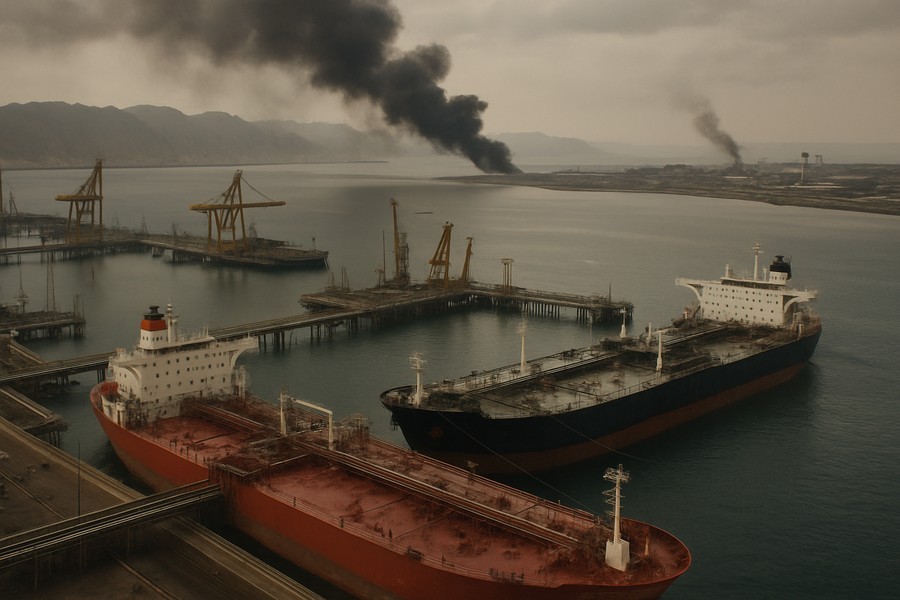
Global Economy Feels the Pressure Amid Conflict with Iran
The escalating conflict between the U.S., Israel, and Iran is causing a major ripple effect on the global economy. The aftermath of the aggressive response from Iran, which included series of drone and missile attacks aimed at Gulf Arab states, has seen severe disruption to the economy of the region and beyond.
These attacks have targeted key infrastructures, such as hotels, airports, and energy hubs, leading to a significant economic and political impact. The Strait of Hormuz, a critical shipping route, has been virtually shut down by Iran, further exacerbating the situation and placing a stranglehold on the region's economy.
Impact on Gulf Arab States
Gulf Arab states, known for their prosperity and stability in an otherwise turbulent Middle East, are facing the brunt of the attacks. These states have long been a beacon of hope for expats seeking a better life, offering a wealth of opportunities and a high standard of living, especially following the Covid-19 pandemic.
However, the safety and prosperity that these states have worked hard to maintain are being threatened by the ongoing conflict. The unsettling images of infrastructure in flames, coupled with the uncertainty surrounding the war's end, have both natives and expats questioning the stability of their futures.
A Shaken Social Contract
The agreement between Gulf state rulers and their citizens, including their large expat populace, has always been one of mutual support. In exchange for loyalty, these rulers have ensured a comfortable and secure life for their subjects. However, the war has tested the strength of this pact, forcing rulers to reassure their citizens of their safety despite the rising tensions.
Security Vulnerabilities Exposed
The conflict has shed light on the military and security weaknesses of the region. For years, these states have relied on American military support, even going as far as fighting alongside American troops in various global conflicts.
Despite their investments in air and missile defense systems, and their willingness to share intel with allies, their defenses have proven to be penetrable. The cost-effectiveness of Iran's drone attacks, which are relatively cheap to produce, is causing a significant drain on the Gulf states' defense resources.
Strained Coordination and Economic Costs
The war has also highlighted the lack of a unified response from the Gulf Arab states, revealing a potential failure in their strategic planning. Their attempt to balance relations with the U.S., Israel, and Iran while keeping the conflict at bay has not paid off.
In terms of the economy, the conflict has disrupted the Gulf states' reputation as reliable energy suppliers. Energy infrastructure attacks and the ongoing issues at the Strait of Hormuz, a key route for the world's oil and gas supply, have broken a longstanding tradition of restraint in weaponizing these resources.
Disruptions in Logistics and the Value of Human Lives
Apart from energy, another sector heavily impacted by the war is logistics and transport. With aviation and ports across the region facing disruption, a prolonged conflict could cause irreversible damage to these networks.
Finally, one can't overlook the human cost of the war. The Gulf region hosts a significant number of foreign residents and workers. Prolonged instability may cause these individuals to rethink their future in the region. However, there is also a possibility that many may choose to stay and weather the storm, especially those who have established their lives in places like Dubai.
