
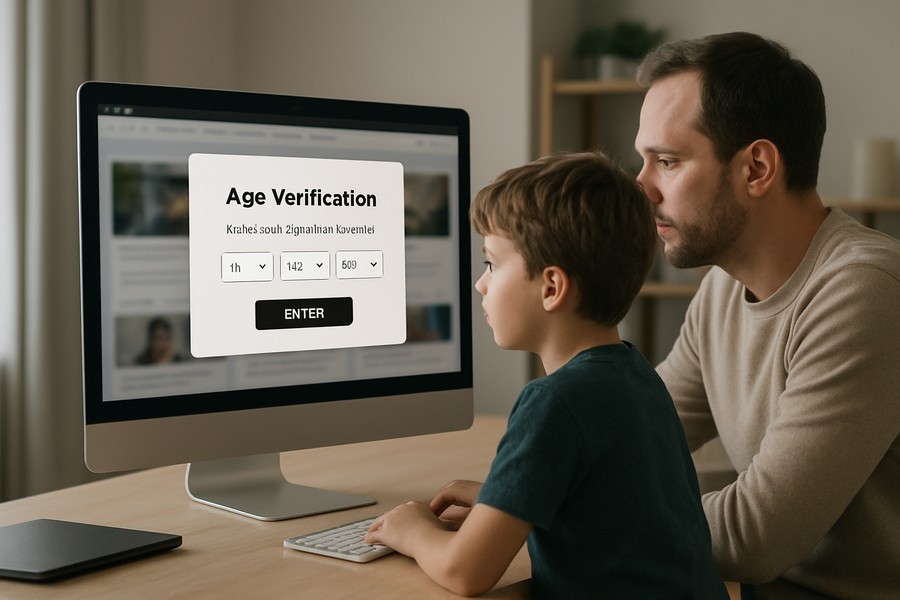
Digital Age Verification Soon to be Implemented in Europe
Plans are underway in Europe to introduce an online tool that can verify the ages of internet users. The goal is to ensure children and young people are protected from potentially harmful online content, such as gambling or explicit material. The move comes amidst increasing calls for social media platforms to step up efforts to safeguard their users from physical and mental harm.
Leaders Call for Increased Online Safety Measures
European leaders are pushing for stricter regulations on social media platforms, with particular emphasis on protecting the younger population. One proposal is to ban children from using social media entirely. These measures aim to make tech giants accountable for verifying the ages of their users before granting access to age-restricted content.
Concerns Over Privacy and Surveillance
While the intentions behind age verification are commendable, critics argue that this could potentially infringe upon privacy rights and pave the way for surveillance. Privacy advocates believe that more work needs to be done before the age-verification initiative is launched. They worry about the implications of tying digital identity to age verification, suggesting the system is not yet ready for full-scale implementation.
Opposition voices stress the importance of considering children's rights to access information and the potential threat to online anonymity. They also argue that the focus should be more on enforcing existing online content laws rather than introducing new measures.
Political Momentum for Age-Restricted Social Media
Despite the concerns, political support for age restrictions on social media is gaining momentum. A panel of experts convened to draft recommendations will present their policy proposal in the coming months. The goal is to ensure that the responsibility of child-rearing remains with parents, not platforms. The technology for age verification is reportedly ready for deployment.
Age Verification - Not Mandatory but Preferred
The proposed age verification tool will not be compulsory, but it's being promoted as the ideal solution for platforms to fulfill their legal obligations. If platforms choose to use other methods, they must demonstrate their effectiveness in comparison to the proposed tool.
To address privacy issues, the proposed system will use cryptographic solutions, known as zero-knowledge proofs. This means that the system will only communicate a simple "yes" or "no" to the question of a user's age, without revealing any personal data.
Next Steps and Challenges
Seven European countries are already developing their own applications in line with the EU plans, and are expected to launch them by year-end. The new tool will use three methods to verify a user's age: passports, national IDs, or a QR code verified by a trusted provider, such as a school or bank. It will then store only the age data, without retaining any other personal information.
However, concerns remain about the potential for misuse of the system, as it relies on IP addresses to determine a user's location. Critics have raised concerns about data protection and security, especially for high-risk individuals such as human rights activists and journalists who require anonymous and safe access to online services. Questions also remain about what kind of data access government and EU agencies would have through the system, and how personal data tracking or sharing with other entities could be prevented.