
Europe Plans to Boost Wind Energy Production
European nations are gearing up to take a significant step towards energy independence from the United States by boosting their production of wind energy, a renewable source that the current US President has openly criticized.
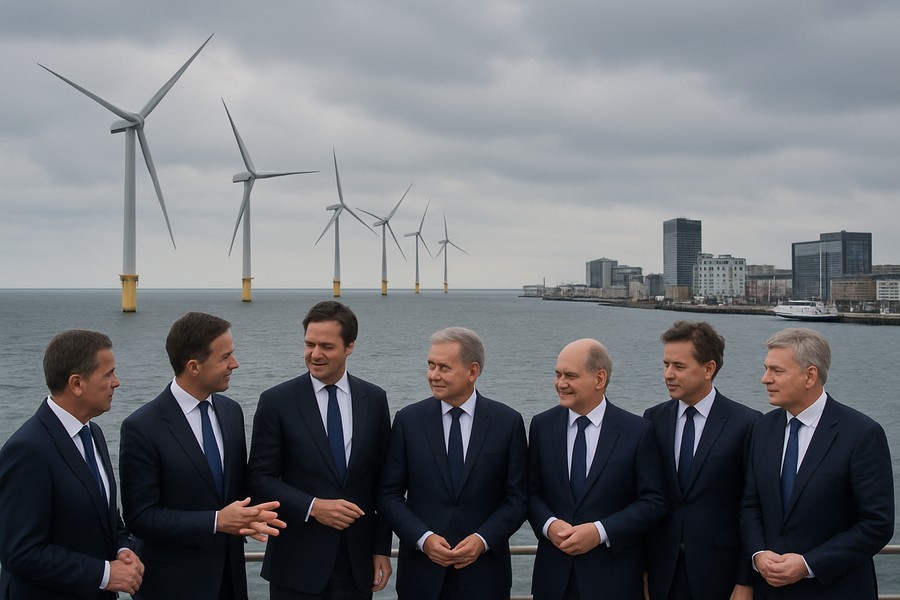
High-level representatives from all over Europe are set to convene in the port city of Hamburg to discuss and agree on a plan to substantially increase wind energy production in the North Sea.
A United Stand for Clean Energy
The Hamburg Declaration, which is to be endorsed by multiple European countries, will commit to constructing offshore wind projects capable of producing 100 gigawatts of power. This amount is comparable to the current total electricity generation capacity of the United Kingdom.
This meeting comes at a time when tensions are high due to the US President's recent attempts to force his NATO allies to cede Greenland, pushing the transatlantic alliance to, and possibly past, its limits.
The UK's Energy Secretary and the EU's Energy Commissioner have pointed out that "homegrown clean power" provides a viable alternative to Europe's growing dependence on imported liquefied natural gas (LNG), a significant portion of which is now sourced from the US.
They stressed that relying heavily on fossil fuels leaves Europe extremely susceptible to the unpredictability of international markets and pressure from external entities. Such a dependency does not guarantee energy security or prosperity.
Challenges in the Path of Clean Energy
Capitalizing on the North Sea's strong winds will require political cooperation that transcends national differences, the Brexit divide, and political backlash against the expansion of renewables. While the offshore industry in the UK has seen recent growth, countries like Germany and France are struggling to attract companies to bid for new projects.
It's important to remember that despite the push for clean energy, gas, which constitutes nearly a quarter of Europe's energy supply, remains integral to Europe's heavy industry. Not all European countries and companies are convinced that they need to halt the influx of LNG from Texas.
US Energy Exports
The US President has made it clear that he believes he has Europe in a difficult position. At a recent global economic summit, he mocked wind turbines and the Europeans who install them. His vested interest in LNG exports was hardly concealed. The US is the largest exporter of LNG in the world, and European imports from the US have quadrupled since the EU started reducing its reliance on Russian pipeline gas.
The US Energy Secretary proudly stated at the summit that US exports had managed to replace almost all of the Russian gas and predicted a "robust energy trade" going forward. He also called for the EU to remove "barriers" such as Europe's carbon border tax and its corporate environmental regulations.
Despite these statements, European officials have celebrated US gas as a key element of their strategy to reduce dependency on Russian energy, along with the increasing use of renewable sources like wind and solar energy.
Looking Ahead
The North Sea summit was initially established as a solution to Russian energy dependence. The upcoming edition will be dominated by concerns that the US could potentially use gas as a weapon, similar to how Putin did against Europe before and after his invasion of Ukraine.
Several high-ranking officials, energy ministers, and major industry players are expected to attend the summit. The objective is to reinforce cooperation between North Sea neighboring states.
Three declarations are anticipated to be signed. The heads of states will endorse the Hamburg Declaration, which promises close cooperation and unified efforts to secure critical infrastructure. The energy ministers will sign a separate declaration focusing on the required grid infrastructure for offshore wind parks, including financing measures and speeding up planning measures. Ultimately, there will be the Joint Offshore Wind Investment Pact for the North Sea, signed by energy ministers and key industry stakeholders. Both parties are pledging to do everything in their power to get offshore wind back on track.
Moving Towards Renewable Energy
Shifting to clean power is a clear priority. However, the existing dependence on oil and gas imports cannot be ignored. The Commission has limited power to dictate where companies get their LNG supplies, and the rapid growth in purchases of the US product will be challenging to reverse.
Despite all the efforts to diversify, Russia remains the EU's second-largest supplier of LNG. The importers themselves are reluctant to curtail such a thriving trade. Some foresee no change in the US trade, while others suggest that flexibility may be needed.