
Expert Opinions on the Market Dip
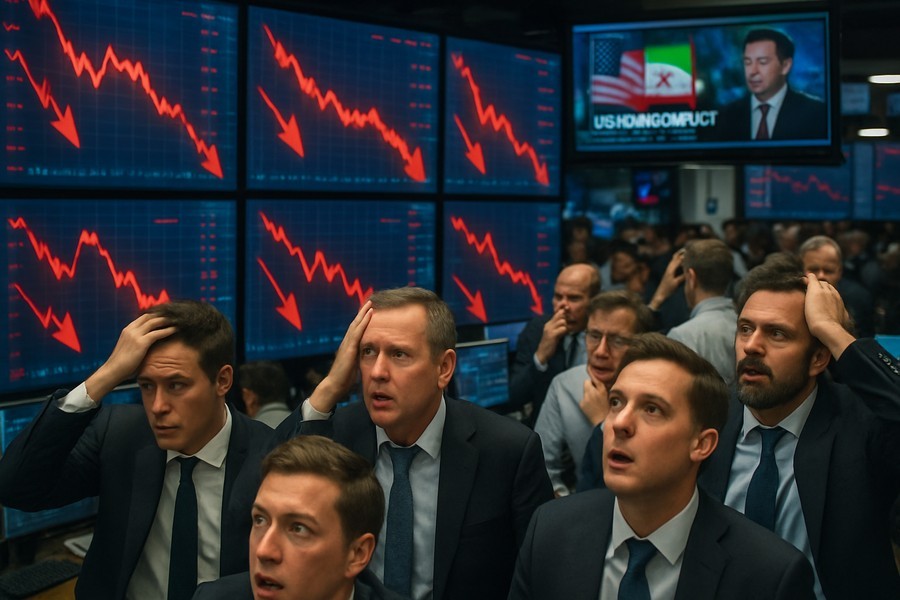
Shaken by the escalating conflict between the US and Iran, stock markets experienced a drastic fall recently, hitting the lowest level since last year. Both the Dow and Nasdaq experienced significant losses, entering into a correction phase, which is characterized by a drop of more than 10% from a recent high. The S&P, too, was not far from a correction, enduring five consecutive weeks of losses.
Examining the possible reasons behind this dip, the verdict from top financial experts seems to point towards the same culprit - the uncertainty surrounding the White House's actions. The current administration's unpredictable decisions and ever-changing headlines are causing investors to question the reliability of the so-called 'Trump put' - a term used to describe the belief that the President will intervene to support the market during times of turbulence.
The Views of Financial Pundits
What are some of the top financial gurus saying about this recent market dip? Let's take a look.
Mohamed A. El-Erian, Renowned Economist
Esteemed economist and former CEO of a major financial corporation, Mohamed A. El-Erian, noted that the market ended the week on a volatile note, with both stocks and bonds experiencing a drop. He pointed out that even the traditional '60/40' portfolio, which is supposed to safeguard investors during market downturns, is not immune to the current market turbulence.
Marko Kolanovic, Ex-Chief Market Strategist
Marko Kolanovic, the former chief market strategist at a large banking corporation, expressed concern over the delay in reopening the Hormuz Strait - a crucial passage for global energy supply. He believes that this delay, coupled with ineffective strategies from the current administration to control oil prices, is negatively impacting the worldwide economy.
Peter Mallouk, Wealth Management Firm CEO
Peter Mallouk, the leader of a prominent wealth management firm, suggests that the current market dip is primarily driven by short-term disturbances. He believes that in the long run, only earnings matter, and savvy investors should focus on the bigger picture rather than short-term market fluctuations.
Torsten Sløk, Chief Economist
Torsten Sløk, the chief economist of a global investment firm, takes a contrarian view. He believes that the market is overreacting to the ongoing conflict and forecasts a period of stability in the oil market, supply chains, and geopolitics following the current turbulence.
Peter Tuchman, 'Einstein of Wall Street'
Peter Tuchman, a well-known stock exchange trader, warns of severe inflationary consequences due to the rising oil prices. He warns that if oil prices continue to remain high, inflation could soar, leading to a potential increase in interest rates.
Larry Weiss, Trading Head
Larry Weiss, the head of trading at a leading electronic trading group, expresses doubt over the credibility of reassurances from the current administration regarding the timeline of the conflict. He believes that the market would have responded positively if there had been more trust in the statements made by the administration and Iranian officials.
Mark Zandi, Chief Economist
Mark Zandi, the chief economist of a business and financial services company, states that an oil price nearing $125 per barrel in the second quarter of this year could push the US economy to a tipping point.
Analysts’ Insights
Analysts from a major European banking group argue that the constant changes and confusion surrounding the White House's actions are starting to lose their impact in stabilizing the market. They also warn of an increasing threat of stagflation if the conflict continues.
Meanwhile, analysts from a multinational banking corporation predict a slowdown in global growth and a 1% increase in inflation, even if Middle East tensions ease later this year. They also add that a prolonged closure of the Strait could push crude oil prices to as high as $150 per barrel.