
Election Pressure Grows as Polling, Voting Investigations, and Veteran Aid Become Political Weapons
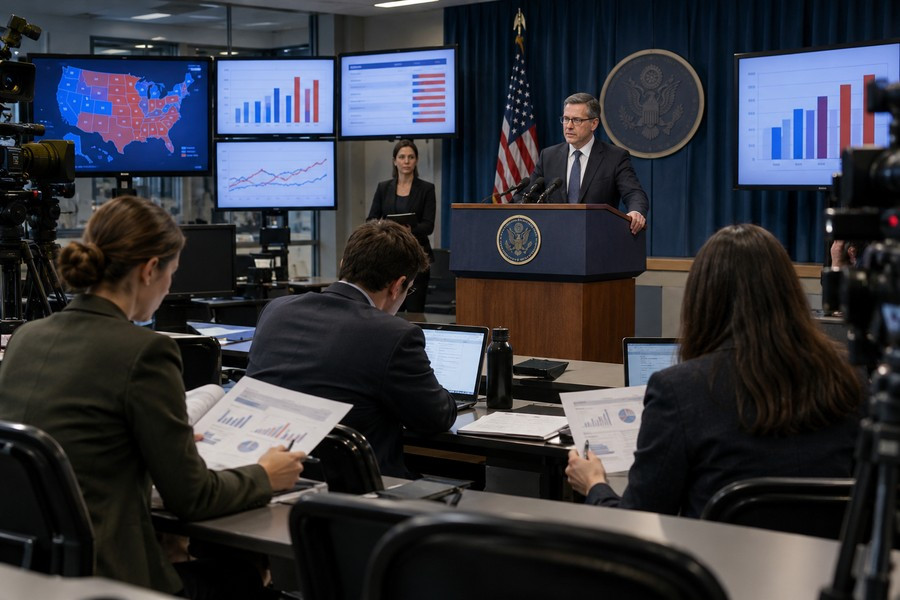
Federal Regulator Warns Broadcasters About Poll Coverage
The chairman of the Federal Communications Commission has accused broadcasters and journalists of spreading what he called fake polls and “suppression polls.” He said some surveys were created to interfere with elections, change voter turnout, and reduce public support for certain candidates.
He also criticized broadcasters for sharing polls without explaining whether the surveys were based on sound research. He claimed that some polls may lack a scientific method, accurate information, or even a real foundation.
The chairman did not identify specific polls or broadcasts. However, several television networks have reported on President Donald Trump’s low approval and polling numbers.
His warning carried a serious threat. He said broadcasters must follow the rules attached to their federal licenses. Those rules prohibit news distortion and broadcast hoaxes. He urged stations to avoid airing polls that could violate their legal duties.
The warning has raised concerns among free speech advocates and media groups. Critics say the regulator could use license reviews and government pressure to influence how broadcasters cover elections.
The regulator has already ordered reviews of the licenses held by eight television stations connected to a major broadcast network. The network argued in a legal filing that the reviews were connected to the opinions and viewpoints expressed on its programs. The action followed a comedian’s joke about the president and first lady.
The latest warning could make broadcasters more cautious while covering the elections. It also raises concerns that the administration may blame the media if Republicans perform poorly and then use government power against outlets that publish unfavorable coverage.
Arrests Add to Fear Over Voting Investigations
The administration’s campaign against alleged voting by noncitizens has led to the arrests of 11 people in California. All of those arrested were legal permanent residents. One was a 72-year-old man from Belize who said he had never voted in a U.S. election.
The man said he had never registered to vote and was shocked when federal agents arrived to arrest him. He said he looked around and wondered why he was being treated like a dangerous criminal.
He also said he may have been a victim of identity theft. At one point, someone had used his name and Social Security number to work at a chocolate factory. Federal prosecutors, however, claim that he registered to vote in Los Angeles County and voted in four elections.
Government lists of suspected noncitizen voters have faced serious questions. A list containing about 20,000 names was sent to California election officials. County officials later said only about 7,000 people on the list had Los Angeles County addresses. They also found that many names appeared to belong to people born in the United States.
The arrests are part of a wider effort to examine voter registration records in every state. Federal officials have demanded access to state voter rolls and have sued states that refused to provide them. The administration has also taken steps involving voting machines and ballots while promoting claims of widespread election fraud.
Home Visits Raise Civil Rights Concerns
Federal agents have begun visiting homes and asking residents about their immigration status and voter registration. The effort combines immigration enforcement with an investigation into alleged election fraud.
Federal officials say they are looking for unlawful voting and want to ensure that only U.S. citizens choose national leaders. They have claimed that as many as 250,000 noncitizens may have voted, although only 156 people have been charged. States have challenged the larger figure and said federal lists contain many errors.
Critics argue that the home visits could frighten lawful voters. Naturalized citizens, longtime residents, and people from minority communities may worry that answering questions or appearing on a voter list could bring unwanted government attention.
Former immigration officials have said the operation goes far beyond normal immigration enforcement. They argue that the Department of Homeland Security is being used as a broad federal police force to investigate voting, pressure nonprofit groups, and question citizens about their status.
Florida Shows a Major Shift in Early Voting
Florida remains likely to favor Republican candidates, but early voting numbers show a much smaller Republican advantage than in the previous election cycle.
During the first day of early voting in the earlier cycle, Republicans held a lead of 24.7 percentage points. During the comparable period this year, their lead was less than one percentage point. That represented a shift of about 24 percentage points toward Democrats.
The same pattern appeared on the second day. Republicans had held a 26.1-point advantage during the earlier election. This time, their lead was about 2.4 points, showing a shift of nearly 24 points.
More than 1 million ballots have been cast in Florida, with millions still left to be counted. Analysts expect the gap to narrow, but the early numbers suggest stronger Democratic participation than Republicans saw during the previous cycle.
The change in voter behavior is not limited to Florida. Several Republican candidates have tried to distance themselves from Trump and his political agenda. Some have removed his name from campaign websites and other materials as they try to appeal to voters in their home states.
Major concerns for voters include the cost of living, health care prices, tariffs, supply problems, artificial intelligence facilities, and the ongoing conflict involving Iran. Trump has continued to say the elections should serve as a judgment on his popularity, a strategy that could affect Republican candidates across the country.
Veteran Benefits Linked to Election Results
At a rally in North Carolina, Trump warned that veterans exposed to contaminated water at Camp Lejeune would receive “no money” if Republicans failed to keep control of Congress.
He said that, if Republicans won, the Justice Department would settle all remaining legitimate claims from veterans and families affected by toxic chemicals in the base water system. He also promised that the government would not abandon those who served.
Trump said the government had already paid about $1 billion in settlements. The Justice Department has made offers worth more than $1.1 billion and has paid more than $879 million.
The compensation program was created by a law signed during the previous administration. It covers people who became sick after exposure to contaminated water at the military base.
Trump also promised major federal investments in semiconductor production in North Carolina and drug manufacturing in Kentucky, but tied both projects to Republican victories in the elections. The promises have added to criticism that the administration is using government money and veteran benefits as political bargaining tools.