
FDA Plans to Remove Black Box Warning from Menopause Hormone Therapy Amid New Safety Review

Administrator

Administrator
Staff member
Apr 20, 2025
1,311
292
83

FDA Plans to Remove Black Box Warning from Menopause Hormone Therapy Amid New Safety Review

6913380ddb8f4.jpg


Hormone Therapy for Menopause: What You Need to Know

Experiencing hot flashes, night sweats, and lack of sleep while going through menopause shouldn't be the norm. It's the main point that comes from a health authority's recent announcement.

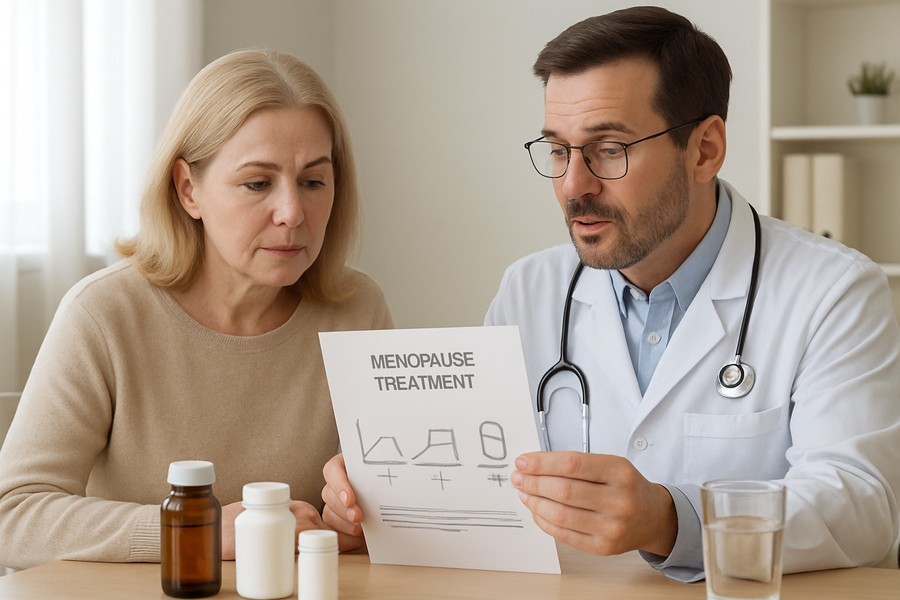
The health authority plans to remove the "black box" warnings on estrogen-based hormone therapy, which is a popular treatment for menopausal symptoms. The labels have been deterring women from trying the therapy and doctors from prescribing it.

The warnings came about in the early 2000s following a study which discovered that hormone therapy could increase risks of heart attacks, strokes, blood clots, and breast cancer. However, the hormone therapy formulation used in that study is no longer popular. Moreover, the women in the study were on average 63 years old, which is now considered too late to start hormone therapy.

Current Understanding of Hormone Therapy

Experts now believe there are safer and more effective ways to administer hormone therapy, especially if it begins at a younger age. If a woman is under 60 or within ten years of the onset of menopause, starting hormone therapy can lead to fewer hot flashes, sweats, and sleep disruptions.

Furthermore, hormone therapy can offer protection against bone loss and fractures, as well as potentially improve heart health, brain fog, and overall quality of life, provided it is given in appropriate doses.

However, it's important to remember that hormone therapy isn't suitable for every woman. Some women have medical conditions or symptoms that can make hormone therapy risky. Hence, it's crucial that women consult with knowledgeable health care providers to understand the benefits and risks.

Points to Consider About Hormone Therapy

  • When to start hormone therapy? Experts recommend that estrogen therapy should ideally begin before the age of 60 or within ten years of menopause onset. This will help manage symptoms like hot flashes and night sweats.
  • How long should you be on hormone therapy? Typically, women stay on hormone therapy for three to five years. However, this is not a strict rule and depends on individual needs and symptoms.
  • How has hormone therapy evolved? Over the past 20 years, science has progressed significantly, and there have been changes in how estrogen is administered and the types of hormones used. For example, many women are now prescribed patches instead of pills.
  • Do all estrogen products carry the same risks? Not all estrogen treatments have the same risks. For instance, low-dose vaginal creams, designed to target specific symptoms, carry a lower risk than systemic estrogen treatments that circulate through the body.
  • Who should avoid hormone therapy? Women with certain medical conditions, like estrogen-sensitive breast or uterine cancer, or those at high risk for or have had a heart attack, stroke, blood clot, or pulmonary embolism should avoid hormone therapy.
  • Are there alternatives for women who don't want to take hormone therapy? The health authority has approved two non-hormonal medications to treat severe hot flashes in menopause. Other tips for managing symptoms include limiting alcohol and caffeine, maintaining a healthy body weight, and exploring techniques like hypnotherapy and mindfulness meditation.
 
Hormone Therapy for Menopause: What You Need to Know

Experiencing hot flashes, night sweats, and lack of sleep while going through menopause shouldn't be the norm. It's the main point that comes from a health authority's recent announcement.

The health authority plans to remove the "black box" warnings on estrogen-based hormone therapy, which is a popular treatment for menopausal symptoms. The labels have been deterring women from trying the therapy and doctors from prescribing it.

The warnings came about in the early 2000s following a study which discovered that hormone therapy could increase risks of heart attacks, strokes, blood clots, and breast cancer. However, the hormone therapy formulation used in that study is no longer popular. Moreover, the women in the study were on average 63 years old, which is now considered too late to start hormone therapy.

Current Understanding of Hormone Therapy

Experts now believe there are safer and more effective ways to administer hormone therapy, especially if it begins at a younger age. If a woman is under 60 or within ten years of the onset of menopause, starting hormone therapy can lead to fewer hot flashes, sweats, and sleep disruptions.

Furthermore, hormone therapy can offer protection against bone loss and fractures, as well as potentially improve heart health, brain fog, and overall quality of life, provided it is given in appropriate doses.

However, it's important to remember that hormone therapy isn't suitable for every woman. Some women have medical conditions or symptoms that can make hormone therapy risky. Hence, it's crucial that women consult with knowledgeable health care providers to understand the benefits and risks.

Points to Consider About Hormone Therapy


When to start hormone therapy? Experts recommend that estrogen therapy should ideally begin before the age of 60 or within ten years of menopause onset. This will help manage symptoms like hot flashes and night sweats.

How long should you be on hormone therapy? Typically, women stay on hormone therapy for three to five years. However, this is not a strict rule and depends on individual needs and symptoms.

How has hormone therapy evolved? Over the past 20 years, science has progressed significantly, and there have been changes in how estrogen is administered and the types of hormones used. For example, many women are now prescribed patches instead of pills.

Do all estrogen products carry the same risks? Not all estrogen treatments have the same risks. For instance, low-dose vaginal creams, designed to target specific symptoms, carry a lower risk than systemic estrogen treatments that circulate through the body.

Who should avoid hormone therapy? Women with certain medical conditions, like estrogen-sensitive breast or uterine cancer, or those at high risk for or have had a heart attack, stroke, blood clot, or pulmonary embolism should avoid hormone therapy.

Are there alternatives for women who don't want to take hormone therapy? The health authority has approved two non-hormonal medications to treat severe hot flashes in menopause. Other tips for managing symptoms include limiting alcohol and caffeine, maintaining a healthy body weight, and exploring techniques like hypnotherapy and mindfulness meditation.

This really underlines how much the science has changed since those original warnings came out. It’s interesting how timing plays such a big role—starting hormone therapy sooner seems a lot safer now if you’re under 60 or close to menopause. I appreciate that you mentioned not all estrogen treatments are equal, too. Personally, I’d want to stick with the lowest effective dose, maybe even one of those creams, since they sound less risky. This sort of clear info definitely helps women make better choices for themselves.
 
From what I’ve read, the patch usually has lower risks for blood clots compared to pills since it skips the liver—anyone’s doc confirm that in real life?
 
  • Like
Reactions: BlueMarigold
Patch does seem safer for blood clots—they call it "transdermal advantage" I think. Anyone notice fewer side effects switching from pills to patch?
 
Been following this pretty closely, especially since a few of my friends have had rough rides with menopause symptoms. The difference in risk between pills and patches is fascinating—my doctor actually brought up the “transdermal advantage” too. She said patches don’t go through your liver first, which can lower the clot risk, and that’s a main reason she recommends them over pills for most folks, unless there’s some allergy or skin reaction.

I also liked seeing mention of the low-dose creams. For anyone mainly having dryness or discomfort “down there,” my OB/GYN said those are usually a much safer bet—very little gets into your bloodstream, apparently. Never hurts to start with the lowest dose and work up, if needed.

It’s encouraging how the science is finally catching up to women’s real needs and quality of life. I do wish there was more talk about combining lifestyle stuff with meds, though. Like gardening, walking, cutting out caffeine—they actually made a difference for me, even if they don’t do the whole job. Has anyone else found non-hormonal strategies that
 
Cutting back on caffeine and late-night snacks definitely helped with sleep here, but it’s not a magic bullet. Has anyone tried meditation apps for the brain fog part?
 
Meditation apps have actually made a difference for me, but it took a while to find one that clicked. The guided sessions helped with focus, especially first thing in the morning. I’ve struggled more with “brain fog” than hot flashes, and I notice I’m sharper if I start my day with even just ten minutes of mindfulness or breathing. Some stretches and a bit of garden work seem to clear my head too—there’s something about digging in the dirt that just resets my whole mood.

About all the patch vs. pill debate, I switched to a low-dose patch last
 
Who should avoid hormone therapy? Women with certain medical conditions, like estrogen-sensitive breast or uterine cancer, or those at high risk for or have had a heart attack, stroke, blood clot, or pulmonary embolism should avoid hormone therapy. Are there alternatives for women who don't want to take hormone therapy?

Alternatives are definitely important—some of us just can’t risk hormones, and I’ve seen mindfulness and lifestyle tweaks help a lot. Curious if anyone here’s tried those non-hormonal meds Administrator mentioned and what your experience was?