
A Burned City Hall Becomes a Sign of France’s Deep Divide
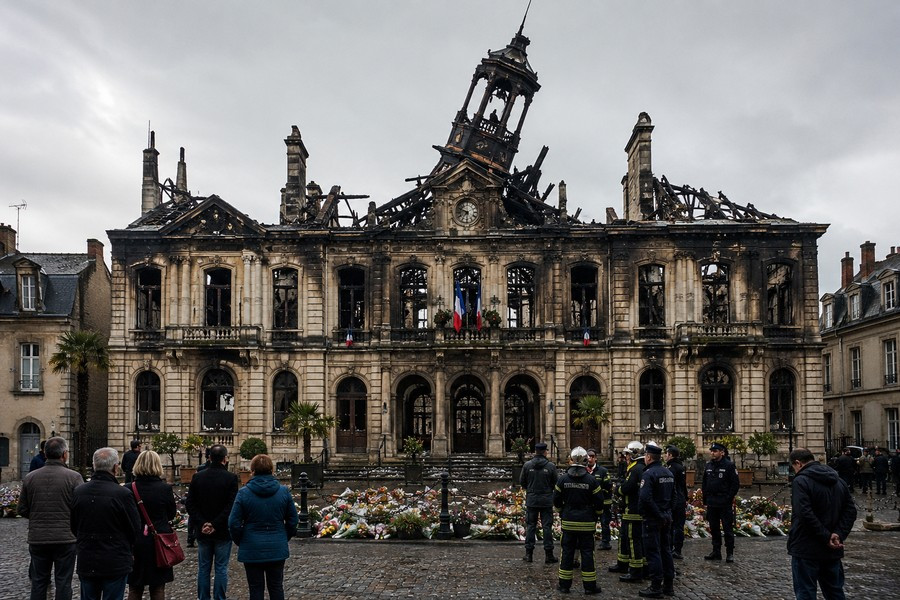
Limoges is grieving after fire badly damaged its historic city hall during a wave of protests across France. The building’s burned walls and collapsed wooden clock tower have become a powerful image of a country split by anger, poverty, and political conflict.
A Historic Building Left in Ruins
Guillaume Guérin had been mayor for only six months when the fire destroyed much of the city hall. He stood in tears when he first saw the damage and called the destruction a tragedy for both Limoges and France.
The city hall was built in the 19th century and was one of Limoges’ most recognizable buildings. Its clock tower fell into the flames, shocking residents and people across the country. Flowers now cover the entrance, while quiet visitors gather to look at the damaged structure.
Guérin said the destruction was caused by members of the hard left, with help from rioters. Two men have been arrested. One is 66 years old, and the other is 34. Prosecutors have connected both men to radical left-wing groups.
The mayor said he received a message of support from United States Vice President JD Vance. He also criticized French President Emmanuel Macron for not contacting him.
“This was a historical tragedy for France, not just Limoges,” Guérin said. He believes the damage could affect the next presidential election and show how serious the country’s problems have become.
Protests Grow Beyond Schools
The unrest began with demonstrations about the poor condition of high schools. It soon grew into a much larger protest movement. Hundreds of thousands of people, many of them young, have taken part.
Many protesters say daily life has become too expensive and difficult. They are angry about low incomes, limited opportunities, and the feeling that young adults are being ignored. France is also facing a very large budget deficit, adding pressure to a government already struggling to respond.
The centrist government does not have a majority in the National Assembly. It is also running out of time before the next presidential vote. Prime Minister Sébastien Lecornu visited Limoges during the crisis.
Authorities have blocked demonstrations in some cities and ordered more police to patrol areas where violence may return. In Limoges, officials announced nighttime curfews and limited gatherings in the city center to no more than 10 people.
Young Protesters See a Bigger Problem
Many people in Limoges believe the destruction of city hall went beyond acceptable protest. Others say the building, while important, should not matter more than people who cannot afford to live with dignity.
Alexander, a 24-year-old student, said the fire was upsetting because the building represented the republic. Still, he asked whether a damaged city hall should receive more attention than people living in poverty.
He spoke during a student gathering at a local pub. Several students wore colorful traditional berets, and many had joined the demonstrations. The protests included fires and looting that caused about 500,000 euros in damage in Limoges.
Alexander admitted that some actions were unacceptable. However, he said the anger behind the protests should not be ignored.
Jade, a 19-year-old medical student, shared a similar view. She said burning the city hall was sad but believed other parts of the protests were more troubling. She lives on about 300 euros a month and said she feels young adults are not treated with respect.
Business Owners Fear More Violence
At Limoges’ busy covered market, the mood was much less sympathetic toward the protesters. The market’s blue wooden beams and steel supports are a well-known part of the city. Vendors there said the violence had harmed the entire community.
Jean Roger Faucher, 63, runs a family fish business that has operated in the market for more than a century. He said the events left him stunned. He was married inside the city hall, which made the damage especially painful.
Faucher said some complaints from protesters are understandable. But he believes vandalism and danger to local residents cannot be accepted.
Many vendors and shoppers said they wanted the protests to become less intense. They are worried about more fires, damaged stores, and threats to their safety and income.
Residents Struggle With Rising Costs
Pascale Vuylsteke, 59, works near displays of freshly prepared meat. She said life has become expensive, but people still have to work through hard times. She works about 100 hours a week and finds it difficult to understand why some protesters turned so quickly to violence.
Her comments reflect a wider divide in Limoges. Some residents see the protests as a necessary demand for change. Others believe the movement has lost its purpose because of destruction and disorder.
Limoges has a long history of social unrest. Its industries, including porcelain production, helped make the city an important center of the French labor movement. That history helps explain why public demonstrations remain part of local life.
But the burned city hall has forced residents to face a difficult question: Can a protest for better living conditions still earn public support when it destroys a symbol shared by the whole community?
For now, Limoges remains caught between two powerful emotions. Many residents mourn the loss of a treasured building, while others insist that the struggles of ordinary people deserve equal attention. The answer may shape the country’s political debate for years to come.