
Students Lead Massive Protests Across France Over Crumbling Classrooms and Staff Shortages
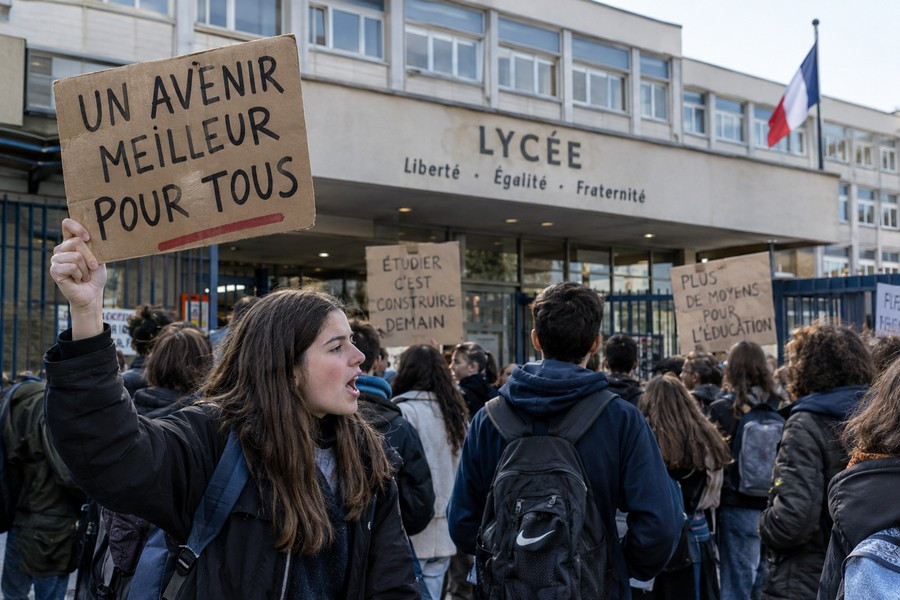
High school students across France are walking out of classes and filling the streets in massive protests. What began as anger over run-down school buildings and missing teachers has turned into a broader movement reflecting deep frustration among the country's youth.
In cities across the nation, teenagers are blocking school entrances, burning trash cans, and marching through public squares. Attendance at rallies has ranged from a quarter-million to half a million people, including both high school students aged 15 to 18 and many of their teachers.
Unbearable Conditions Inside High Schools
Students report that daily life inside high schools has become increasingly difficult. Many buildings suffer from years of neglect, leading to safety and sanitation concerns that have gone viral on video-sharing platforms.
Key complaints from students and educators include:
- Overcrowded classrooms: Classes often have up to 35 students, making individual attention difficult compared to neighboring countries like England, where average class sizes are under 23. School cafeterias are overwhelmed, forcing thousands of kids to rush through lunch in under an hour.
- Severe staffing shortages: Long teacher shortages leave huge gaps in the school schedule, stretching the day from 8:00 AM to 6:00 PM with empty hours in between. Some schools even lack enough basic furniture, forcing teenagers to hunt for chairs before every lesson.
- Decaying facilities: Video posts online show rats running through hallways, broken plumbing, holes in walls, and moldy ceilings. Classrooms often lack proper heating during winter freezing spells and get uncomfortably hot during the summer.
Escalating Clashes and Injuries
As the demonstrations have grown, confrontations between young protesters and riot police have intensified. Police officers have faced fireworks and flying objects, while demonstrators report heavy-handed tactics, including the use of tear gas, batons, and specialized projectile weapons.
The human toll of the unrest includes severe casualties and arrests:
- Nearly 7,000 people have been detained, with minors making up more than 85 percent of those held.
- More than 700 police officers have sustained injuries during the confrontations.
- At least 200 students and dozens of teachers have been hurt during protests.
- A 15-year-old boy lost his hand after an explosive device detonated during a confrontation, leading officials to ban police from using stun grenades at school demonstrations.
Government Promises vs. Budget Realities
Government leaders have attempted to calm the anger by promising to bring in 3,000 extra substitute teachers in the short term and outline a broader national plan to address the crisis. However, students and union representatives remain doubtful that these steps will resolve long-standing structural problems.
Fixing the educational system would require billions of dollars at a time when national finances are heavily strained. Annual interest payments on national debt now exceed the core budget for state education. Furthermore, a planned 1.7 percent increase in education spending for the upcoming year falls below the rate of inflation, limiting what can be repaired or built.
Political Fallout Ahead of National Elections
The school crisis has become a major issue in national politics ahead of upcoming presidential elections. Conservative political leaders have focused on public property damage, which has reached millions of euros, suggesting that parents should be forced to pay for vandalism caused by their children. Conversely, left-wing figures have joined student rallies, comparing the current youth movement to historic political uprisings like the major nationwide strikes of 1968.
Surveys show that more than three-quarters of young people in the country feel deeply anxious about the nation's direction. With many students determined to keep up their blockades, the movement shows no immediate signs of slowing down.