
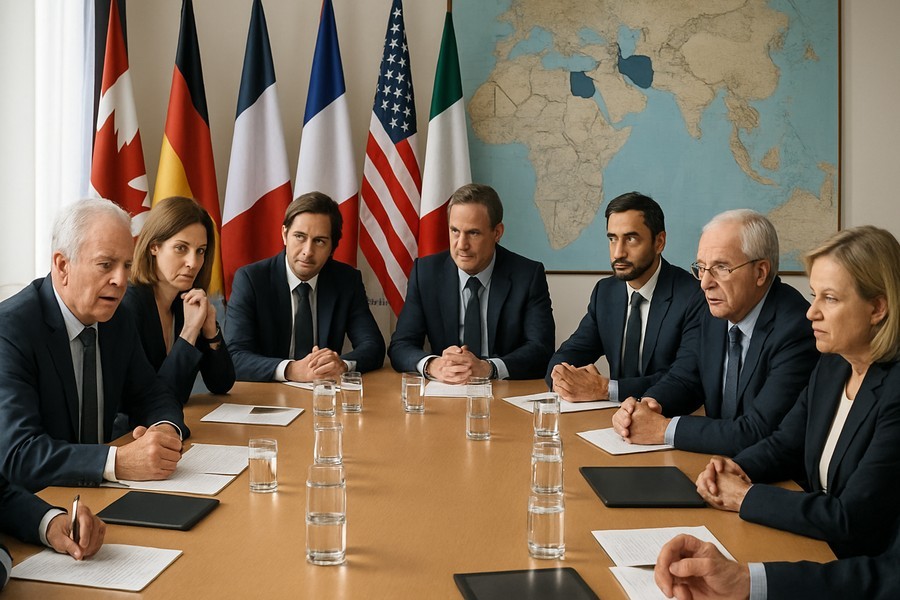
Discussion on Middle East Crisis Dominates G7 Meeting
The foreign ministers of the G7 nations recently convened in France to deliberate on the escalating conflict between the US, Israel, and Iran. The discussions were marked by tension and discord, as a result of the US president's criticism of allied nations, accusing them of turning a blind eye to requests for assistance in the military operation and in addressing Iran's retaliatory actions, including the blockade of the Strait of Hormuz to most international shipping.
The US Secretary of State was in attendance at this meeting, coming in the wake of recent criticisms of NATO by the US president and ongoing instability in oil markets due to the ongoing war with Iran and uncertainty surrounding potential peace talks.
Skepticism and Calls for Diplomacy
The US allies demonstrated considerable doubt and concern about the conflict with Iran. These feelings were evident during the G7 meeting held at a historic abbey in France. The foreign ministers urged for a diplomatic solution to the situation. France's Minister of Armed Forces stated that the conflict in the Middle East was not their battle, emphasizing France's defensive stance and advocating for a diplomatic approach as the sole guaranteed path to peace.
The British Foreign Secretary also expressed support for a diplomatic path, acknowledging differences with the US. She stated that while Britain supported defensive action, they held a different stance on the offensive actions that have been part of the conflict.
Challenges for the US Secretary of State
The US Secretary of State had the tough task of advocating for the US strategy for the Iran conflict. This task was made even more difficult by the US president's harsh comments about NATO countries not supporting the US and Israel. The president expressed disappointment with NATO, stating that they had done absolutely nothing. The Secretary of State echoed these sentiments, stating that nations worldwide, even those criticizing the situation, should be grateful for a president willing to confront such a threat.
But there are still bridges to mend with European allies who have faced criticism or outright threats from the US administration. These European nations are still reeling from previous demands to take over Greenland and concerns about US support for Ukraine in its war with Russia. The Middle East conflict has only increased these tensions.
A Call for Support from Allies
The US president has lamented the lack of support from allies for the war with Iran. He has expressed disappointment over the refusal of NATO and most other allies to assist in securing the Strait of Hormuz, where Iran's control has disrupted oil shipments and increased energy prices.
However, NATO's Secretary-General responded by highlighting the increase in defense spending by alliance members, suggesting a change in mindset from over-reliance on US military power.
Voices of Opposition and Skepticism
France, hosting the G7 meeting, has been highly skeptical of the war. The French defense chief expressed dissatisfaction that US allies were not informed about the start of hostilities. He criticized the US's unpredictability and lack of communication when deciding to engage in military operations.
Despite these criticisms, 35 countries joined military talks on reopening the Strait of Hormuz once hostilities have sufficiently decreased. Similar doubts have been expressed by other allies, who also express concern about the US commitment to Ukraine as the Iran conflict nears a month.