
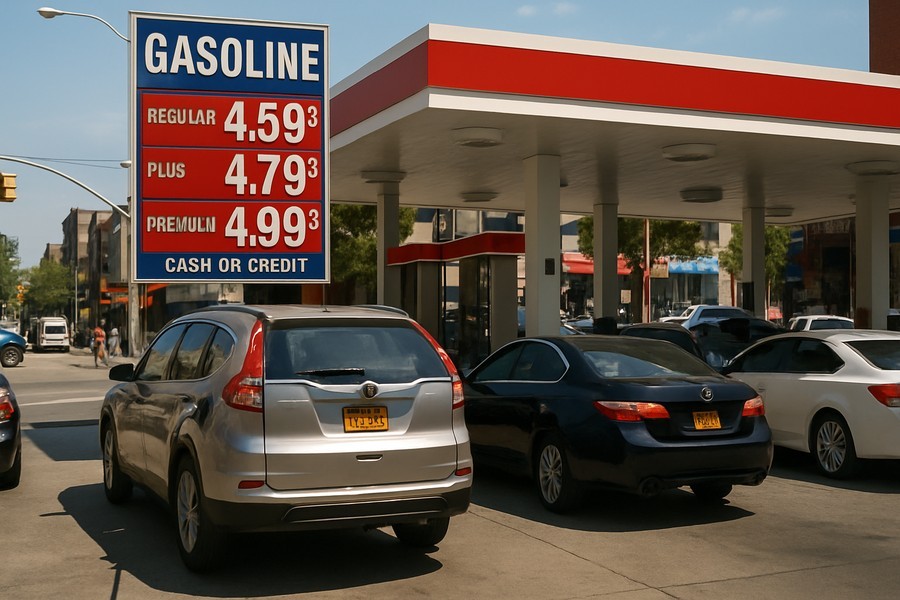
Gasoline Costs in the US Hit Record High, Surpassing $4 Per Gallon
For the first time since 2022, the average price of gasoline in the US has exceeded $4 per gallon. This leap in price is largely attributed to the ongoing war with Iran, which has caused fuel prices to skyrocket globally.
Gasoline Pricing: A National Overview
The nationwide average cost for a gallon of regular gasoline now stands at $4.02, showing a substantial increase of over a dollar since the war commenced. The last time Americans experienced such high gasoline prices was almost four years ago, in the aftermath of Russia's invasion of Ukraine.
This is a national average and hence, motorists in certain states have been dealing with prices well over $4 per gallon for some time. The variance in price from state to state is influenced by various factors, including the proximity of supply and differing tax rates.
Global Impact of the War on Gasoline Prices
Since the initiation of the joint war against Iran by the US and Israel, there has been a dramatic fluctuation in the cost of crude oil, the primary component of gasoline. The disruption in the supply chain and cutbacks from major oil producers across the Middle East due to the conflict have contributed to this instability.
Motorists worldwide are feeling the pinch of increased gasoline prices as a result of the war. In Paris, for instance, the cost of gasoline is 2.34 euros per liter ($2.68), which translates to roughly $10.27 per gallon.
Economic Ramifications of Expensive Gas
Escalating gasoline prices are putting pressure on both consumers and businesses, exacerbating existing cost-of-living strains for many households. As individuals spend more on essential items such as gasoline, they may need to make cuts elsewhere in their budget.
Furthermore, the surge in fuel prices can also lead to an increase in other daily expenses, from utility bills to the cost of consumer goods. This has led to growing concerns about consumer prices and the cost of living, particularly as we approach the midterm elections, with political parties trying to maintain their majority on Capitol Hill.
A recent poll revealed that 45% of US adults have serious concerns about their ability to afford gasoline in the coming months, an increase from 30% shortly after the 2024 presidential election.
In the near term, analysts are predicting that grocery prices, which need to be replenished frequently, could also rise as transportation costs for businesses continue to mount. The cost of transporting other goods and packages has also been affected, with some services seeking to implement temporary surcharges.
The average price of diesel fuel, used by many freight and delivery trucks, has surged, reaching $5.45 per gallon from about $3.76 per gallon prior to the war.
If the conflict persists, it is possible that these prices could climb even higher. The Strait of Hormuz, a key route for about a fifth of the world's oil supply, is currently at a standstill. Subsequently, major producers in the region are unable to bring their crude oil to the market. Meanwhile, oil and gas facilities have been targeted by all parties involved in the conflict, exacerbating concerns about the supply.
Attempts to Mitigate High Gas Prices
In an effort to alleviate the situation, the International Energy Agency has committed to releasing 400 million barrels of oil from the emergency reserves of member nations. Sanctions have also been eased to allow for the release of some oil from Venezuela and Russia on a temporary basis. Furthermore, a century-old law known as the Jones Act, which imposes shipping requirements, is being waived for 60 days.
However, it remains uncertain whether these efforts will provide consumers with any relief. A multitude of factors contribute to gasoline prices. Refineries often purchase crude oil in advance, so some might be dealing with more expensive oil for some time, and it will take a while for any new supply to reach consumers.
Despite the fact that the US is a net exporter of oil, it has not been immune to these price hikes. Oil is a commodity traded globally, and the US also imports oil to meet its needs. In the past, escalating geopolitical conflicts have disrupted oil flows and contributed to a surge in gas prices. The national average for regular gasoline reached over $5 per gallon in June 2022, nearly four months after the Ukraine war began and world leaders imposed sanctions against Russia, a major oil producer.
After reaching that record, gasoline prices eventually dropped. Prior to this recent surge, the national average had remained below the $4 mark since mid-August of 2022.