
How a Polished Social Media Campaign is Driving a Far-Right Political Surge in Germany
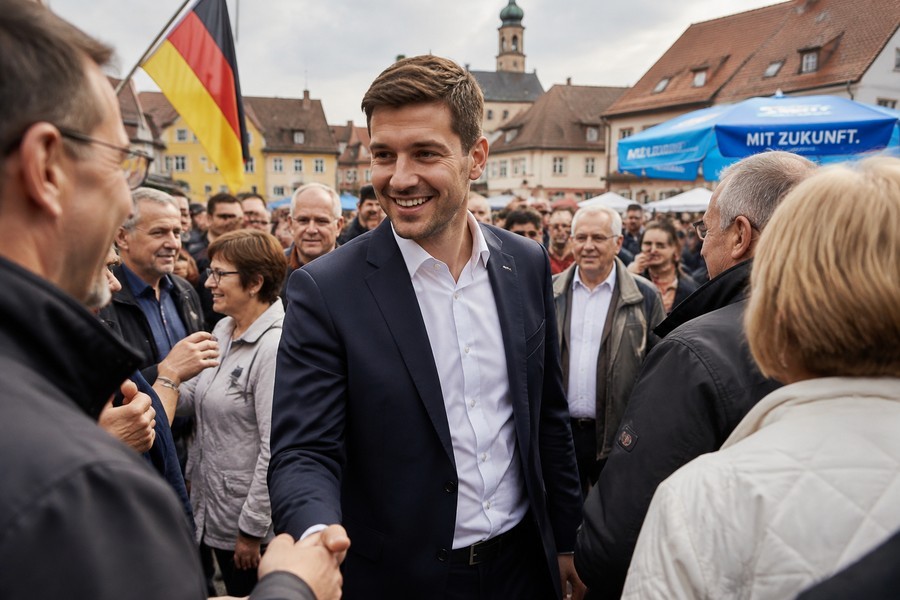
A young politician walks through a crowd, followed closely by a campaign assistant holding a smartphone. They are broadcasting his every move live to thousands of viewers online. This candidate is 35 years old and used to work in marketing. Now, he is running to lead the government of a state in eastern Germany.
He does not rely on traditional newspapers or television stations to get his message out. Instead, he has built a massive following on popular video-sharing platforms. His online popularity is so high that his political group is leading the polls for an upcoming state election. If they win, it would mark the first time a far-right party has led a German state government since the end of World War II.
The candidate has almost half as many social media followers as there are eligible voters in his small state. He connects with people by answering their questions directly, often filming videos from his own back porch.
A Friendly Face with Strict Policies
In his videos, the candidate always looks neat and professional, wearing clean, well-ironed shirts. He smiles constantly, which makes him stand out from other members of his party who often look angry or serious. However, behind this friendly smile are very tough political stances, particularly regarding immigration and the mass deportation of migrants.
For example, he recently posted a video complaining that local doctors are leaving the country to work in wealthier nations while the government brings in doctors from other parts of the world to replace them. His party's official platform goes even further, claiming that medical workers from different cultures do not meet local standards and could put patients in danger.
While his party's written plans are highly detailed, the candidate keeps his speeches short and full of high energy rather than deep policy discussions.
Challenging the Campaign's Message
Not everyone is convinced by this friendly image. A 23-year-old law student has been attending the party's rallies to talk to voters on camera. He used to support the party himself, but he changed his mind after reading their actual policy proposals.
Now, he tries to show voters the differences between the candidate's cheerful campaign and the party's actual plans. He argues that the party's economic ideas would only benefit wealthy people, leaving average citizens behind.
His conversations with voters are not always easy:
- Some people get angry and try to grab his microphone.
- Others are willing to have a polite discussion about the facts.
- He believes that if he could change his mind about the party, others can do the same.
This student decided the party was not right for him because he wants to live in an open, friendly country rather than one focused on keeping people out.
What Attracts Regular Voters
Despite these criticisms, many local residents see the party as a source of hope. One 49-year-old aviation engineer explained that he is considering voting for the party for the very first time. He agrees with their ideas on limiting immigration.
However, this voter does not agree with all of the party's positions:
- He wants the country to remain in international defense alliances.
- He wants to keep using the common European currency.
- He does not support foreign adversaries.
Even with these doubts, the young candidate's positive attitude might win him over. The voter explained that other members of the party seem full of gloom and threats, while this candidate feels young, optimistic, and like a breath of fresh air for the political system.
The Appeal of "Real" Democracy
Researchers who study political movements at a local university say it is a mistake to think that people who vote for this party want a dictatorship. Studies show that the majority of these voters actually support democracy. However, they strongly believe that the current democratic system in their country is not working properly.
The far-right party appeals to these voters by promising a "real" version of democracy that represents the silent majority. This is a difficult message for traditional political parties to fight against. When established politicians try to defend the current system, they can end up looking like elites who want to keep power for themselves.
This political movement is no longer limited to just one region. The party is now polling very high across the entire country. A victory in this state election would be a major milestone, especially since national security agencies in several states have labeled the group as right-wing extremists.
Meanwhile, critics point out that the party's promise to give a voice to ordinary citizens does not seem to apply to those who disagree with them. For instance, the young law student was recently asked to leave a campaign event simply for asking difficult questions.