
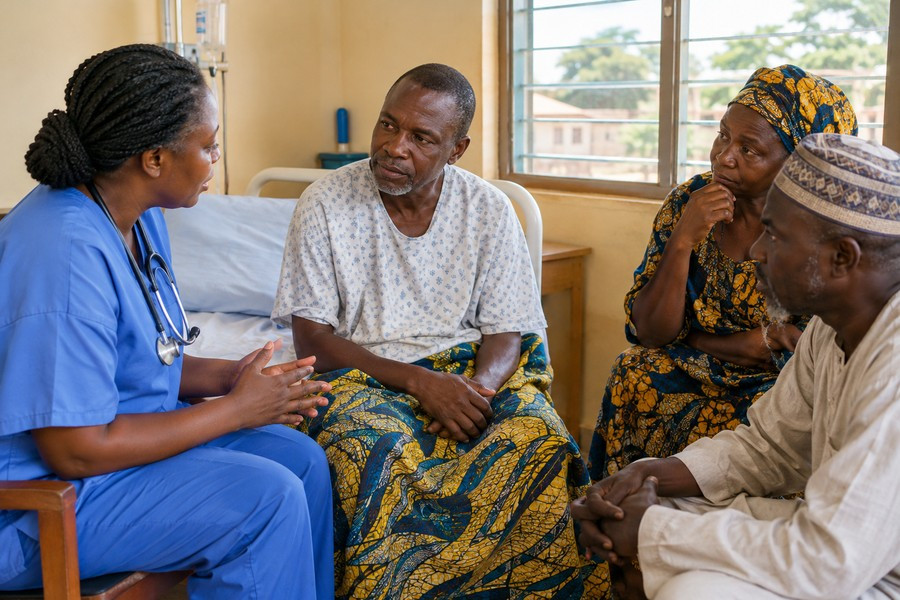
Patients and Families Differ on How Serious News Should Be Shared
Talking about a serious illness can be one of the hardest parts of medical care. In palliative care, patients and families may need to make difficult choices while facing fear, grief, and uncertainty. A study at a large hospital in Northern Ghana explored how patients, family members, and healthcare workers experience these conversations.
The study found a clear difference in what patients and relatives wanted. Patients generally preferred to hear difficult news directly, often with family members beside them. Family members, however, usually favored keeping the news from patients because they worried it could cause emotional pain. This difference can put healthcare workers in a difficult position when a patient wants honesty but relatives ask them to hold back information.
How the Study Was Carried Out
The researchers used an approach designed to understand people’s experiences from their own point of view. They interviewed 17 people at one large hospital in Northern Ghana: five patients, five family members, and seven healthcare professionals.
The interviews followed a flexible set of questions, allowing participants to describe their experiences and views in their own words. The researchers then looked for shared ideas and patterns in the interviews. They also used a text-analysis program to help identify words and themes that appeared often.
The analysis grouped the findings into two main areas:
- Communication and disclosure: How serious news was shared and whether people wanted it disclosed.
- Emotions and coping: How people reacted to difficult news and what helped them manage their feelings.
Different Views on Telling Patients
Healthcare professionals described using both planned communication methods and approaches adjusted to each situation. They tried to consider the person, the family, and the needs of the conversation.
Patients generally wanted clear, direct information about their condition. Many preferred having family members present when the news was shared. Family members often took a different view. They tended to support holding back information because they hoped to shield patients from stress and sadness.
These competing wishes created an ethical challenge for healthcare workers. Respecting a patient’s desire to know can conflict with a family’s belief that keeping the news private is an act of care. The study did not describe this as a problem with an easy answer. Instead, it showed how clinicians may have to balance honesty, patient choice, family concerns, and their professional duties.
Language differences and cultural beliefs also shaped these conversations. They could affect how patients and relatives understood the news, adding another challenge to discussions that were already emotionally difficult.
Strong Emotions and Ways of Coping
Participants described powerful reactions after hearing serious news. These included shock, fear, sadness, and uncertainty. Such feelings affected patients, family members, and healthcare professionals involved in the conversations.
People described several sources of support that helped them cope. These included spiritual beliefs, help from family, and earlier experience caring for someone who was ill. Healthcare workers also found professional discussions after difficult cases useful. Clear communication was another important support, helping people better understand what was happening.
What the Findings May Mean for Care
The study shows that sharing serious news in palliative care is shaped by more than the medical facts. Patient choice, family involvement, cultural values, and professional responsibility all play a role. The gap between patients’ and families’ preferences can leave healthcare workers facing hard decisions, especially when relatives ask them not to tell a patient something the patient wants to know.
The researchers suggest that healthcare facilities could consider several steps to improve these conversations:
- Offer training that helps staff communicate with respect for local cultures and beliefs.
- Create clear guidance for discussing disclosure preferences with patients and families.
- Provide or strengthen emotional support for patients, relatives, and healthcare professionals.
The findings come from interviews with a small group of 17 people at a single hospital. They cannot show how common these views are across all of Ghana or in other places. Instead, they offer a close look at how people in this setting experienced the challenge of sharing serious news. Their accounts may help guide future training and policies that take both patient wishes and family concerns seriously.