
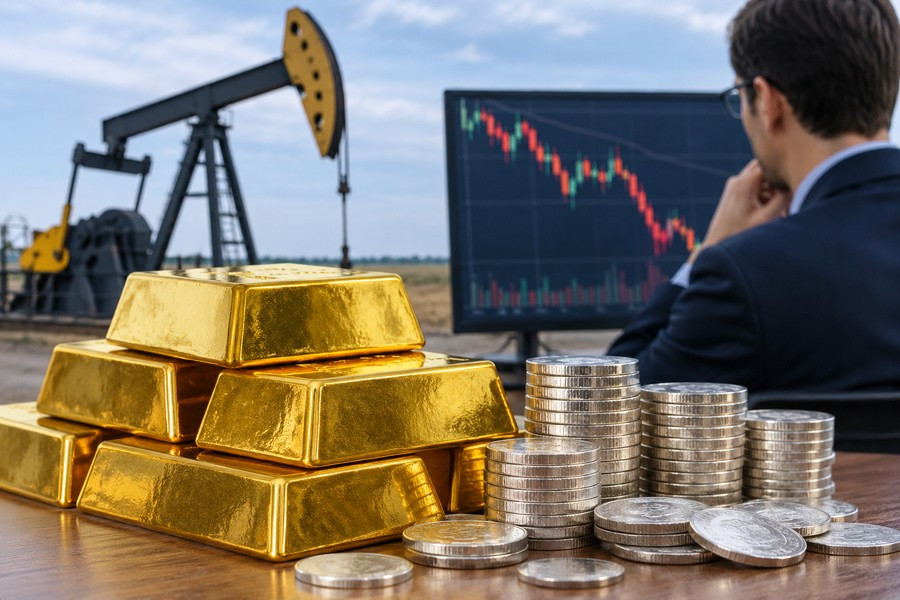
Gold Falls Below $3,900 as Oil Prices Raise New Inflation Fears
Gold prices suffered a sharp decline heading into the weekend, dropping below $4,000 an ounce and reaching their lowest level in more than a year. The selloff came as investors prepared for a busy period filled with employment data, elections, and uncertainty about interest rates.
Gold and Silver Face Heavy Selling
Gold reached an intraday low of $3,884.61 an ounce, its weakest level since October 6, 2025. Spot gold later traded near $3,880, down about 3.5% for the session and almost 3% for the week.
Silver suffered an even larger decline. Prices fell below $50 an ounce, with spot silver trading near $48.95. Silver dropped almost 6% during the session and nearly 9% over the week, marking its steepest weekly fall since early June.
The declines have confused some investors because the U.S. dollar and bond yields also moved lower. Those conditions often support gold because they reduce the cost of holding an asset that does not pay interest. This time, however, broader concerns about inflation, energy prices, and future interest-rate decisions have outweighed those normally helpful factors.
Oil Prices Keep Inflation Concerns Alive
Higher oil prices linked to the ongoing war with Iran have become a major concern for financial markets. Rising energy costs can push up prices across the economy, making it harder for inflation to cool.
One market strategist said gold may continue to struggle while oil remains expensive. Gold often benefits when a central bank cuts interest rates to support a weak economy. But the U.S. economy grew at a strong annual rate of 3.4% in the third quarter, giving policymakers more room to keep rates high or raise them further.
The central bank recently left interest rates unchanged, but it remains focused on lowering inflation. Investors still expect possible rate increases in December and during the first quarter of 2027. Higher rates can reduce demand for gold because investors may prefer interest-paying assets.
Market conditions could change if new economic information causes investors to expect fewer rate increases or a return to rate cuts. Several developments could help gold recover:
- A clear slowdown in job growth, along with higher unemployment and slower wage increases
- A lasting drop in inflation, especially in underlying prices and costs connected to energy
- Lower expectations for future interest rates and real bond yields
Technical Signals Point Lower
Gold's price charts also show continued weakness. The metal has fallen well below its 200-day moving average, which is near $4,490 an ounce. Gold is trading about 13.5% below that long-term trend line, a sign that selling pressure remains strong.
One technical analyst expects gold to eventually test support near $3,800 an ounce. The current price action suggests that sellers still have control, at least in the short term.
The market's behavior also shows that gold is not acting as the main safe-haven asset during the current conflict. Investors have instead moved toward oil and the U.S. dollar. Higher oil prices are lifting inflation worries, while a drop in technology stocks may have forced some traders to sell gold to cover losses or margin calls. Gold is highly liquid, so it can be sold quickly when investors need cash.
Election Results Could Affect the Market
The upcoming midterm elections may influence the outlook for the conflict with Iran and global energy prices. A change in control of Congress could make it harder for the administration to continue its military campaign.
Any step that reduces tensions in the Middle East could help ease pressure on energy supplies. A weaker energy crisis could also support gold by reducing inflation fears and lowering expectations for higher interest rates.
Even after the recent decline, some market participants view a large drop in gold as a possible long-term buying opportunity. Extremely negative investor sentiment can sometimes signal that prices are nearing an important turning point.
One wealth manager said the latest decline may be mostly technical rather than a sign that gold's long-term outlook has completely changed. Lower bond yields have also failed to lift gold because investors may be moving money from large technology stocks into bonds for protection. Strong economic growth, however, suggests bond yields could eventually move higher.
Important Economic Events Ahead
Markets will face several possible price-moving events in the coming week. Investors will focus on manufacturing activity, job openings, private payroll growth, service-sector activity, and weekly unemployment claims.
- Manufacturing activity data
- Job-opening information and the midterm elections
- Private payroll and service-sector reports
- A major European central bank interest-rate meeting
- Weekly U.S. jobless claims
- The monthly U.S. employment report
- A preliminary survey of consumer confidence
Gold is likely to remain sensitive to changes in interest-rate expectations, inflation forecasts, oil prices, and investor sentiment. Until the economic outlook becomes clearer, the precious metal may continue facing pressure despite its traditional role as a hedge against inflation and market risk.