
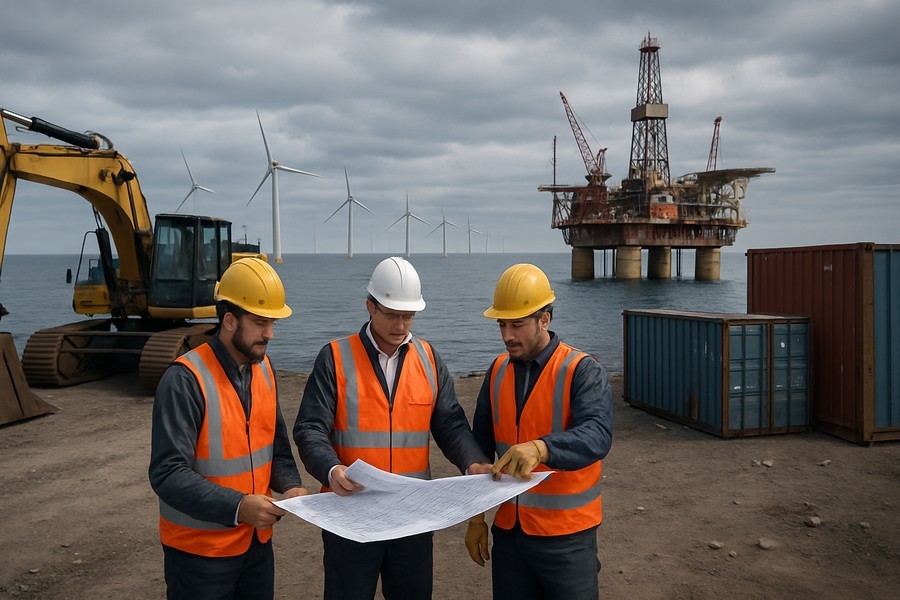
Offshore Wind Sector Faces Setbacks due to Government Intervention
The government recently struck a deal with a major French energy company to redirect their investments from the American offshore wind sector to oil and gas. This decision has raised concerns among industry experts, who believe this could negatively impact business confidence by manipulating the private sector using executive power.
Details of the Agreement
The French company has agreed to recoup nearly $1 billion it and its partners paid the federal government for offshore wind leases around North Carolina and New York. The company has committed to investing the same amount in American oil and gas production, and a liquid natural gas plant in Texas. The company has also promised not to develop any new offshore wind projects in the U.S., stating such investments are not in the country's interest.
Potential Impact on Infrastructure Spending
The intervention to halt investments that clash with the President's personal views could potentially dampen infrastructure spending in the entire economy, not just offshore wind. This form of policy uncertainty might result in fewer infrastructure projects, which could be slower and more expensive.
Government's Response
When asked for a response, the Interior Department highlighted the Secretary's statement that the agreement was yet another victory for the President's commitment to affordable and reliable energy for all Americans.
Energy Company's Perspective
The Chief Executive of the French energy company praised the agreement as a win-win for both his company and the U.S. government. He stated that offshore wind projects in the U.S., unlike those in Europe, are expensive and could negatively affect power affordability for American consumers.
Reaction from the Renewable Energy Sector
The executive director of an industry group expressed disappointment with the agreement, stating that with power demand rising at an unprecedented rate, all energy sources are needed to provide affordable, reliable, and secure energy for Americans.
Impact on Renewable and Fossil Fuels
The current administration has been favoring the use of fossil fuels while attempting to restrict the construction of renewable energy projects. The President is notably averse to wind energy due to a previous dispute involving an offshore wind project near one of his golf courses in Scotland.
Uncertain Future for Offshore Wind Projects
Companies are currently sitting on several leases in federal waters that could be potential sites for future wind projects. However, given the current government's opposition to wind energy, these companies might look for compensation from the government instead. While the government and the French company have argued that offshore wind is a poor investment in the U.S., organizations managing electric grids along the East Coast have emphasized the importance of new offshore wind projects to ensure electric reliability and meet growing power demand.
Political Influence on Energy Sector
The energy industry could suffer as it becomes increasingly politicized, and federal policy swings dramatically from one administration to the next. When planning a power plant or considering oil production, the focus should not only be on the current administration but also on the next couple of decades. The political pendulum swing poses a real policy risk.