
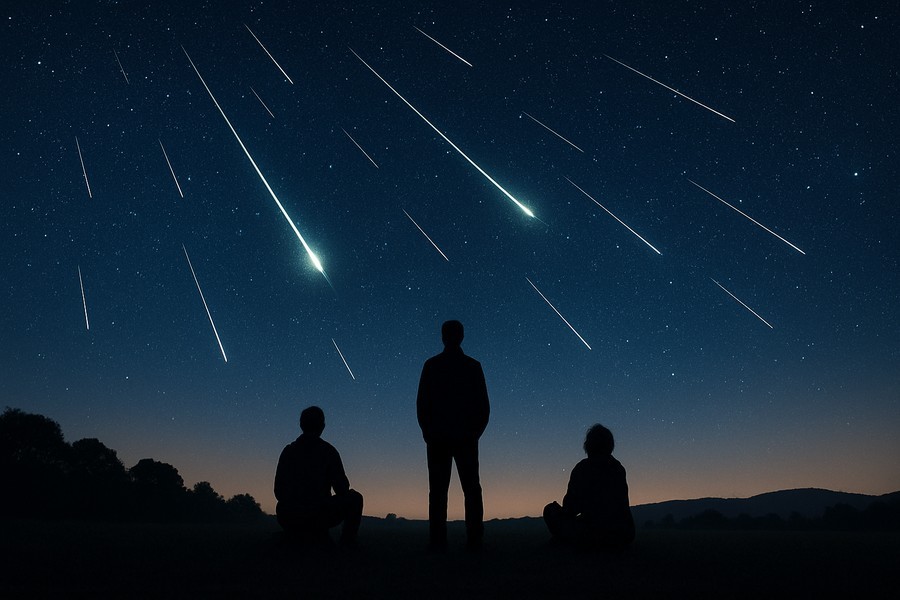
The Magic of Halley's Comet Returns Via the Eta Aquarid Meteor Shower
Fast-moving meteors associated with the illustrious Halley’s Comet are set to put on an impressive display in the sky in early May - a key highlight of the season for stargazers and skywatchers.
The Legacy of a Celestial Icon
Every year, our planet traverses through a trail of ancient remnants left by Halley’s Comet, a celestial body that needs no introduction in the field of astronomy. These tiny debris pieces, or "comet crumbs", enter Earth’s atmosphere at jaw-dropping speeds. The result is a spectacular light show known as the Eta Aquarid meteor shower.
The meteor shower is on display from mid-April to late May. However, it's most active during the night between early and mid-May. That's when Earth's alignment with the debris path is at its best, resulting in a remarkable increase in meteor activity.
The link to Halley’s Comet makes this shower a subject of scientific fascination. The comet completes a journey around the Sun approximately every 76 years and is not expected back in the inner solar system until the mid-21st century. The meteors we see today are remnants of its past visits, providing a unique chance to observe the enduring impact of a comet over decades.
The meteors of the Eta Aquarid are extremely fast, entering Earth’s atmosphere at about 41 miles (66 kilometers) per second. This speed is what makes them so bright and leaves behind long glowing trails that can be seen for a brief moment in the sky.
Best Time and Place to Experience the Light Show
The most opportune viewing window is just before dawn in mid-May, when the meteor shower's radiant point in the Aquarius constellation is highest in the sky. Skywatchers are advised to go outdoors around 2:00 a.m. local time, as meteor activity progressively intensifies until sunrise.
Location plays a crucial role in what observers can witness. The Southern Hemisphere provides the most awe-inspiring show, with up to 50 meteors per hour under perfect dark-sky conditions. Close to the equator, the rates remain high, making it one of the most active showers of the year in these areas.
On the other hand, observers in the Northern Hemisphere will see fewer meteors, typically ranging from 10 to 30 per hour at peak. Despite this, the speed and brightness of the Eta Aquarids can still make the experience worthwhile, especially in places with little light pollution.
Moonlight will pose a challenge this year. A bright waning gibbous moon coincides with the peak, reducing visibility of fainter meteors and slightly lowering the overall viewing quality.
Tips to Enhance Your Meteor Shower Experience
Despite the moonlight's presence, careful viewing strategies can significantly enhance the experience. Observers are advised not to stare directly at the Aquarius constellation, even though it is the radiant point. Meteors appearing farther from that area often produce longer, more dramatic trails and are easier to spot.
Instead, scanning broader sections of the sky increases the chance of spotting brighter streaks. A comfortable viewing position, patience, and avoiding artificial light sources are crucial for a successful viewing. There is no need for a telescope or binoculars as meteors move too quickly for magnified observation.
The key ingredients remain simple: darkness, time, and clear skies. With these in place, even a modest meteor rate can feel spectacular when multiple streaks cut across the sky within minutes.
A Testament to Halley’s Lasting Influence
The Eta Aquarid meteor shower serves as a splendid reminder of Halley's Comet's enduring legacy. Whether you're an astronomy enthusiast or just someone who appreciates a good light show, this celestial event is not to be missed.
