
Court Orders Trial for Young Man Accused of Fatal Campus Shooting
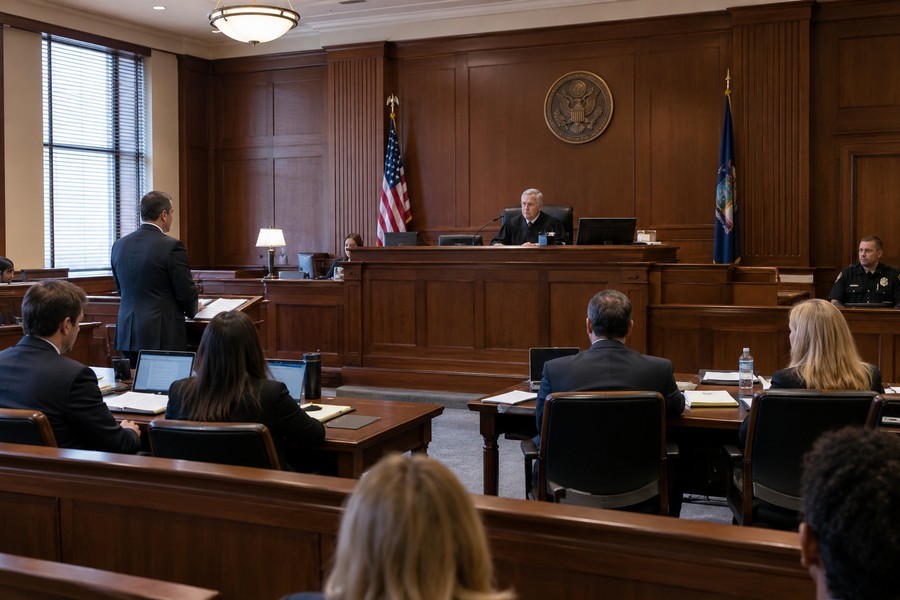
A courtroom filled with heavy emotion became the setting for a major decision in a highly publicized tragedy. Sitting just two rows apart, the widow of a well-known conservative activist and the mother of the young man accused of his murder both wept as a judge ruled that the case must go to a full trial.
The suspect, a 23-year-old named Tyler Robinson, entered a plea of not guilty during his court appearance. This came right after the judge decided there was enough initial evidence to support all seven charges against him. The most serious charge is aggravated murder, and prosecutors have already shared their plans to ask for the death penalty if he is found guilty.
Tensions Run High as the Judge Shares His Decision
Family members from both sides showed deep pain during the final hour of the hearing. They cried, leaned on one another, and wiped away tears as the judge went over the events of the shooting, which took place on a college campus in Utah. The suspect's mother began crying almost immediately as the judge started speaking. Nearby, the suspect's father held his wife’s hand as the serious charges were read aloud.
On the other side of the room, the victim's widow, Erika, sat with her family. She became very emotional as the details of her husband's final moments were read. The family of the victim expressed a sense of relief after the hearing, calling the judge's decision a vital step toward finding justice. The court will meet again soon to set a formal date for the trial.
The Case Presented by the Prosecution
During the hearing, the suspect sat quietly in a gray suit, occasionally speaking with his lawyers. This was a contrast to the victim, a 31-year-old husband and father who was widely known for his bold public speaking and his work leading a conservative nonprofit organization. The shooting sparked a massive search for the gunman that lasted for more than 30 hours, ending only when the suspect turned himself in to local authorities with his parents.
The prosecution argued that the suspect planned the attack carefully. They presented several key arguments about how the crime was carried out:
- Careful Planning: The suspect allegedly visited the campus earlier in the day to find the best spot to hide.
- Concealing the Weapon: He later returned wearing dark clothes to hide a powerful rifle inside his pants.
- Setting Up: He used a screwdriver to put the rifle back together on a campus roof.
- Firing into a Crowd: From a distance of over 400 feet, he aimed and fired into a gathering of more than 3,000 people where the victim was speaking.
Prosecutors argued that firing into such a large crowd put many innocent lives at risk. They noted that if the rifle had moved even a tiny fraction of an inch, other bystanders could have been killed. During these detailed descriptions, including information from the medical report about how the bullet struck the victim's spine, the victim's family briefly stepped out of the courtroom to avoid the graphic details.
The Defense Questions the Charges
The suspect's defense team argued against some of the most severe charges. They claimed that the charge of endangering others was not fair because there was no proof that anyone else in the crowd was directly threatened or targeted by the shooter. They argued that the prosecution was relying on guesses rather than hard facts.
The defense also discussed text messages sent between the suspect and his former roommate. In those messages, the roommate asked the suspect if he was the shooter, and the suspect replied that he was sorry and admitted to the act. The defense lawyers argued that the court must look closely at these messages to understand the suspect's true intent. They also stated there was no real evidence to prove the suspect targeted the victim because of his political views.
Key Evidence That Led to the Trial
To secure the trial, the prosecution presented a wide variety of evidence gathered over several months. This included:
- Video Footage: Security cameras from the campus tracked the suspect's movements before and after the shooting.
- Physical Evidence: Police found a rifle wrapped in a towel in a wooded area near the school, along with bullets that had messages carved into them.
- Written Confessions: A note allegedly written by the suspect to his roommate stated that he had the opportunity to attack the victim and took it.
Although the defense tried to argue that the witnesses and the forensic data were not reliable, the judge ultimately decided the evidence was strong enough to move the case forward to a trial.