
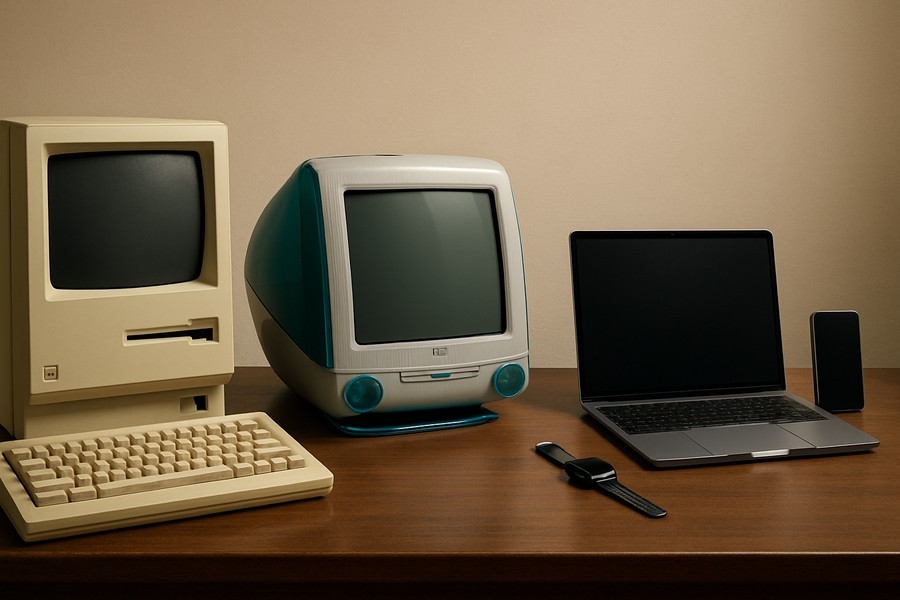
The Evolution of Tech: A Walk Down Memory Lane
Over the past half-century, the world has witnessed a significant transformation in technology. We've seen the rise of personal computers, the birth and evolution of smartphones, the growth of wearable technology, and a revolution in software and services. For many of us, the first time we zoomed into a picture was likely on a touchscreen device.
However, as technology advances, some things have to be left behind. We've seen how powerful companies can shape the direction of technology, leading entire product categories to adapt or become obsolete. Despite the initial resistance and complaints from consumers, these changes often reflect a broader technological shift. And although these transitions may cause temporary discomfort, they often prove to be beneficial in the long run.
Goodbye, Disk Drive (1998)
One significant technological transition was the demise of the disk drive. The iMac G3 was a game-changer in many ways. In addition to revamping the typical ports and cables used in personal computers, the device also did away with the 3.5-inch floppy disk drive, opting instead for USB and internet connectivity. Flash drives and online file storage quickly made these disk drives obsolete.
The End of Portable Music Players (2007)
The rise of smartphones also marked the end of portable music players. Despite the popularity of the iPod, it was eventually overshadowed by the very company that created it. As soon as the iPhone was launched, the need for a separate music player diminished. Over time, the classic iPod and its variants were discontinued, marking the end of an era.
The Transition to Touch Keyboards (2007 onwards)
The introduction of the touchscreen keyboard was another significant milestone. Moving from physical keys to a touchscreen was a big adjustment for many. However, as devices became larger, physical keyboards became impractical. The versatility of software keyboards, which could support multiple languages, key arrangements, and emoji galleries, made them the obvious choice for the future.
The Second Death of the Disk Drive (2008)
The MacBook Air, introduced in 2008, had to sacrifice its internal optical drive to achieve its ultra-portable design. This change marked the beginning of an era of ultra-portable laptops. Although this move was initially met with resistance, it paved the way for a future of App Store software installations, faster internet connectivity, and the rise of cloud storage.
The Decline of Adobe Flash (2010)
In the early days of smartphones, Apple controversially decided not to support Adobe Flash. At the time, much of the web depended on Flash for animations and video support. This decision forced developers to choose between sticking with Flash or adopting open standards like HTML5. By 2020, Adobe officially discontinued Flash.
Removal of the Headphone Jack (2016)
The removal of the headphone socket from the iPhone 7 in 2016 was a bold move that made headlines worldwide. While this change sparked initial resistance, it played a significant role in the rise of wireless earbuds. Despite the controversy, most modern smartphones have now done away with the headphone jack.
The Change in Ports (2016)
2016 also saw a drastic shift in laptop design with Apple's MacBook Pro redesign. In a bid to achieve an ultra-thin profile, almost all legacy connectors were replaced with USB-C ports. This change was met with widespread criticism, particularly from power users who relied on these ports. However, this move accelerated the availability of USB-C peripherals and accessories. Eventually, Apple reintroduced some of the removed features in its 2021 MacBook Pro redesign.
Looking back, it's clear that the evolution of technology is a story of continuous change. As we embrace the new, we inevitably have to say goodbye to the old. However, these transitions are often necessary steps towards a more advanced and convenient technological future.