
High-Tech in the Sky: How Drone Technology Helped Firefighters Beat a Dangerous Woods Fire
A quiet afternoon in a rural Missouri community turned dangerous when a fast-moving wildfire swept through more than 200 acres of forest and grassland. Volunteer firefighters faced steep hills, thick smoke, and extreme heat as they rushed to contain the flames. While the conditions pushed the crews to their physical limits, emergency officials noted that a small piece of modern technology played a major role in keeping the situation from becoming a disaster.
The trouble began in the early afternoon off a rural roadway when a property owner began burning trash in a grassy area. Because the weather was very hot and dry, the flames quickly escaped control and spread into the nearby brush. Driven by the wind, the fire began marching toward local homes, causing immediate concern for nearby families.
For one local resident, the afternoon quickly turned into a frightening experience. Returning home from town, she discovered the wildfire burning rapidly near her property line. She described feeling incredibly nervous as she watched the smoke rise, noting that she was prepared to pack up her belongings and evacuate immediately if the wind pushed the flames any closer to her home.
A Challenging Landscape for Firefighters
The terrain in this part of Missouri is exceptionally rugged, making traditional firefighting methods difficult. The local emergency response director described the landscape as a major obstacle for the ground crews. The area is filled with thick, overgrown woods that are hard to walk through even under normal conditions, and the ground is broken up by deep ravines and steep hills.
The emergency director pointed out that several factors combined to make this one of the most exhausting battles local crews had faced in years:
- Extreme Summer Heat: Fighting a fire in high temperatures drains the physical energy of volunteers much faster than cool-weather operations.
- Severe Drought: The dry ground and vegetation acted as fuel, allowing the fire to spread rapidly.
- Unusual Timing: While dry spells and brush fires do happen in this region, they typically occur during the late winter or early spring rather than the peak of summer.
With thick smoke blanketing the area, visibility on the ground was extremely low. Normally, firefighters have to hike through the brush to locate the active edge of the fire, which is known as the "head." Walking through ravines in heavy gear to find the flames is dangerous and consumes critical time when minutes matter most.
How Aerial Technology Saved the Day
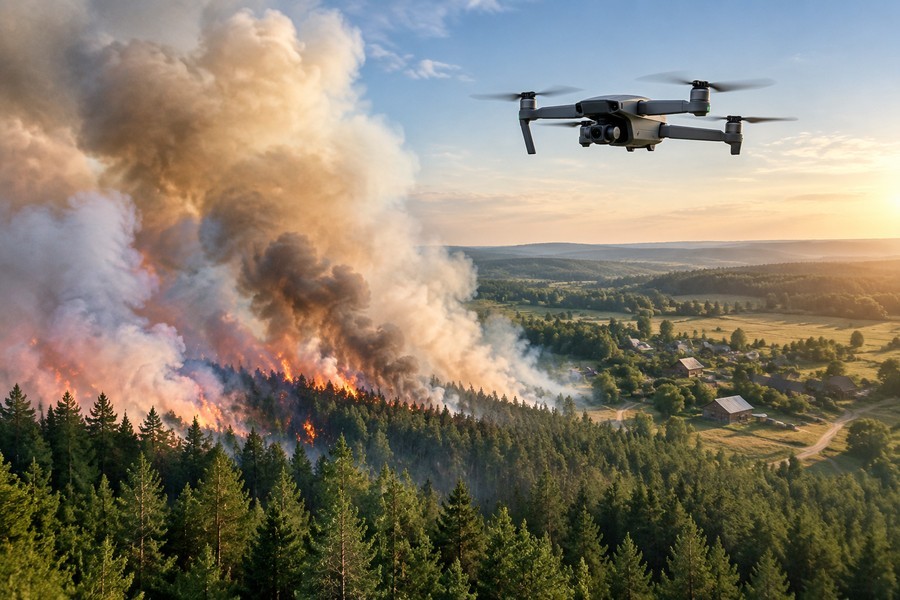
To overcome the visibility issues and the difficult terrain, emergency leaders deployed a camera-equipped drone into the smoky sky. This high-tech tool immediately changed the course of the firefighting effort. By looking at the live video feed from above, commanders were able to see through the smoke and map out the entire scene in real time.
The aerial view allowed the response team to work much more efficiently by:
- Locating the Fire Line: Pinpointing exactly where the flames were burning without sending firefighters into danger zones to search for them.
- Tracking the Movement: Identifying which direction the head of the fire was traveling so crews could set up defensive lines ahead of it.
- Guiding Ground Crews: Directing volunteer firefighters straight to the active hot spots, saving them from exhausting hikes through the rugged ravines.
By using the drone to guide the ground teams, commanders minimized the amount of time the volunteers had to spend exposed to the worst of the heat and smoke.
The Physical Toll and Safe Outcome
Despite the help from the drone, the nine-hour battle in the intense heat took a heavy toll on the responders. Four volunteer firefighters had to be treated for heat exhaustion, and three others experienced dangerously high blood pressure during the effort.
As a precaution during the height of the fire, emergency crews ordered nearby residents to evacuate their homes. Fortunately, the protective measures worked. No residents were injured, and local homes were successfully protected from the flames. The only property lost to the fire was a single vehicle.
The emergency response director praised the local volunteer forces for their dedication and hard work under such grueling conditions, calling the crew members outstanding. Following the successful use of the aerial camera during this emergency, the department plans to purchase additional drones in the near future to further improve their ability to fight fires from the air.