
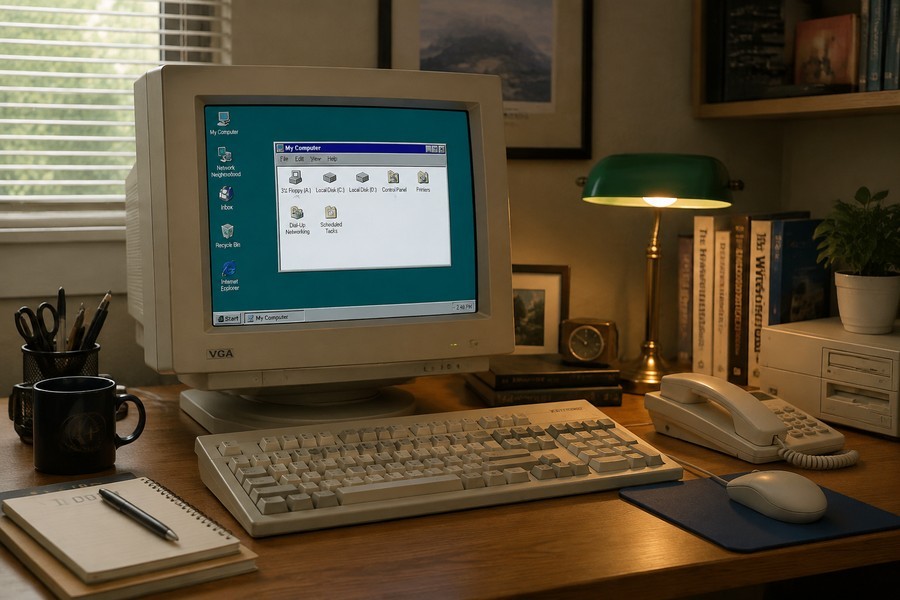
The Wild West of the Web: How We Explored the Internet Before the Modern Search Era
Today, finding information online seems incredibly simple. We open a browser, type a word or phrase into a single box, and instantly get millions of organized results. But decades ago, the internet was a completely different place. Finding anything useful online felt like an adventure, and there was no single giant tool to guide the way.
Before one dominant search engine took over the web, a variety of creative, experimental tools tried to organize the growing digital world. Each of these early tools had its own unique style, charms, and flaws. The story of the early web is not that these older tools were bad, but rather that they belonged to a much more open and chaotic internet.
A Very Different Kind of Internet
In the early days of the web, people did not assume that a computer program could search the entire internet for them. Instead, finding new websites was a social and community-driven experience. Users discovered new pages through several different methods:
- Human-curated directories that worked like digital phone books.
- Online discussion groups where people talked about niche hobbies and shared links in their message signatures.
- Webrings, which linked related websites together in a circle.
Before automated search engines became popular, early online discussion boards were the main way people shared information. Created in the late twentieth century, these boards allowed users to join conversations about specific topics. People would add website links to the bottom of their messages, and word about interesting sites spread naturally from person to person. It was a friendly, community-focused way to explore.
Another popular tool was the webring. Website owners would add a small block of code to the bottom of their pages. This code created a link to another website on the same topic. A volunteer would manage the list of sites in the ring. By clicking the link, a visitor could jump from one personal site to another, discovering a whole chain of related content. This helped small, independent websites get noticed without needing a giant search system.
When Humans Organized the Web
Before computer algorithms took over, real people did the hard work of sorting the internet. The most famous guide of the early era was a directory edited entirely by human staff. It was organized into categories, much like the yellow pages of a telephone book.
If you created a new website for a business or organization back then, you had to submit a form to this directory. Human editors would review your submission and decide if your website was important enough to be included. This process was a major hurdle, and getting accepted was considered a huge honor.
However, this human-run system had clear limits. One early web administrator recalled trying to submit a local branch of a major national health charity to the directory. The human editors actually rejected the submission, claiming the local branch was not important enough. They suggested that the local group should instead get a link from the charity's main national website—even though the national organization did not even have a website yet!
As the internet grew larger, it became impossible for human editors to keep up with the millions of new pages being created. The future of search had to belong to automated computer programs.
The Rise of the Web Crawlers
To solve the problem of a rapidly expanding web, developers built software programs called crawlers. These programs automatically scanned the internet, cataloged pages, and let computer formulas sort through the data. This was a massive technological leap forward.
One of the most popular early search tools used a highly advanced, fast crawler. It could handle millions of search requests every single day. For the first time, searching felt less like looking through a library catalog and more like querying a giant, instant machine.
Even so, finding specific information was still a difficult skill. Because the early formulas were simple, typing a question could easily return tens of thousands of confusing and unrelated results. Combing through these pages required patience and practice. However, these early crawlers did one important thing: they made users expect search results to appear instantly. Once people experienced fast search, they did not want to go back to slow directories.
Portals, Butlers, and Early Tricks
During this experimental era, search tools tried many different business models and designs. Some companies created all-in-one portals. These sites tried to keep users on their pages by combining search tools with daily news, weather reports, email services, and stock prices.
Other tools tried to make search feel more like a conversation. One famous search engine used a digital butler mascot. Instead of typing short keywords, users were encouraged to ask questions in plain English, as if they were talking to a helpful assistant. While this was a highly creative idea, the technology of the time was not yet advanced enough to truly understand natural human language without modern artificial intelligence.
This era was also a wild time for website owners who wanted to get noticed. Because early search programs relied on simple rules, like counting how many times a word appeared on a page, they were very easy to trick. Webmasters would often repeat keywords hundreds of times, or even hide keywords by typing them in white text on a white background. This made the search engines think the page was highly relevant, even if it was just junk. For a long time, there were no penalties for these tricks, and getting to the top of the search results was relatively simple.
The Big Shift to Authority
The entire landscape changed when a new search engine introduced a revolutionary ranking system. Instead of just looking at the words on a page, this new system analyzed how other websites linked to that page. If many other reputable websites linked to a page, the system viewed it as a trusted authority.
This new approach made search results much more accurate and much harder to manipulate. At the same time, this new search engine rejected the cluttered, busy look of the old portals. It offered a clean, simple homepage with just a single search box, reinforcing the idea that search should be a fast, straightforward utility.
Why the Early Web Still Matters
Looking back, the internet of the past was slower, messier, and far less efficient than what we have today. However, many people who lived through that era feel a deep sense of nostalgia for it.
The early web felt highly personal and handcrafted. Most websites were built by regular individuals using simple text editors. Exploring the web felt like wandering through a quiet neighborhood. You might start by looking for one topic, click a few links, and find yourself on a fan page for an obscure band, an online forum, or a government space agency website.
Remembering this history reminds us that the internet did not have to turn out the way it did. The early search tools were not just stepping stones; they were creative, diverse experiments trying to solve a massive puzzle in a young and exciting digital world.