
Israel's Battle Tactics in Lebanon Mirrors Those in Gaza
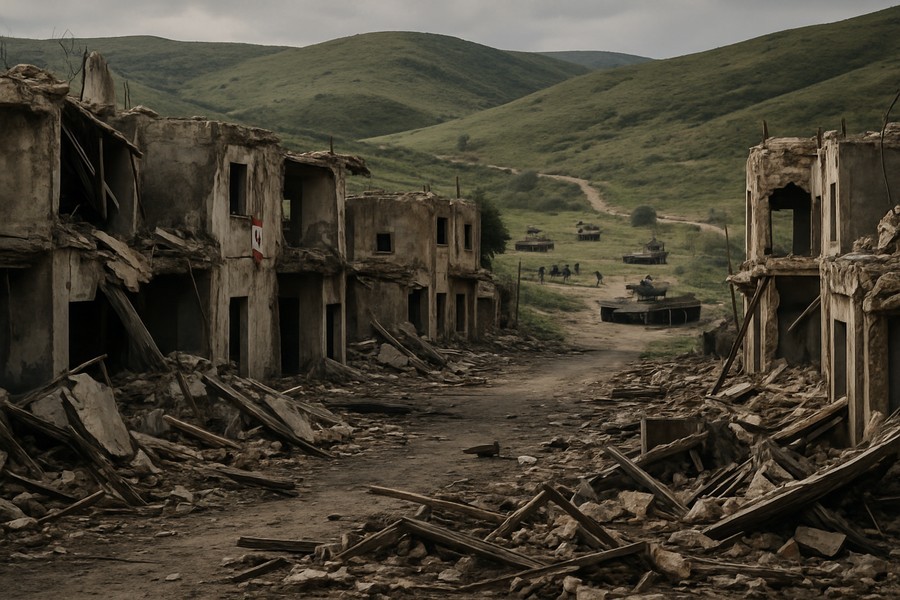
The town of Bint Jbeil, located just a short distance from the Israeli border, now lies in ruins. Its houses, shops, and even a well-loved cafe have been reduced to rubble. This sight is becoming all too familiar across southern Lebanon, following the resurgence of Israel's ground operations.
Wiping Out Hezbollah Strongholds
The widespread destruction is particularly visible in southern Lebanon, known for its rolling landscapes. Here, the Israeli military has systematically leveled border villages. This is part of a broader strategy to pave the way for a more expansive occupation. The Israeli defense minister has said that the military is using the same approach as in Gaza. There, vast residential areas and entire streets were reduced to piles of debris.
The Impact of the Buffer Zone
After the rekindling of hostilities between Israel and Hezbollah in early March, Israel declared a broad "buffer zone". The country plans to maintain this zone until it believes the threat from Hezbollah is under control. Images from satellites, as well as photos and videos shared online, reveal the extent of this campaign. At least two dozen towns and villages near the border have been flattened. Damage extends to government offices and civilian buildings, including schools, hospitals, and mosques. One by one, towns are being turned into ashes, with the stark white of rubble marking their locations.
A resident of Bint Jbeil, Nabil Sunbul, 67, has had to flee to Beirut with only a few possessions. He expresses his heartbreak and anger over the destruction. Satellite images confirm that the area where he lived and worked has been severely damaged, though it’s unclear whether his home has been utterly destroyed.
The Human Toll
Since the conflict started, over 2,600 people in Lebanon have lost their lives due to Israeli airstrikes, as stated by Lebanon's health ministry. These casualties include journalists and medical workers. Infrastructure like bridges and gas stations has been destroyed, and over a million people have been displaced. The fighting continues despite efforts for a U.S.-mediated cease-fire, which has now been extended into mid-May.
The Israeli military maintains that it is targeting Hezbollah's infrastructure and locations. Hezbollah, backed by Iran, has launched hundreds of drones, rockets, and anti-tank missiles at Israel and has killed at least 17 Israeli soldiers since the conflict began in early March, as stated by the Israeli military.
Accusations of War Crimes
Legal experts and human rights activists argue that targeting or destroying civilian infrastructure without a valid military justification could amount to a war crime. Concern is also escalating over Israeli officials' statements about their intentions to mirror the destruction in southern Lebanon to that in Gaza, considering the extent of destruction and loss of life in Gaza.
One video circulating on social media, authenticated independently, shows an excavator destroying solar panels near the village of Debl. These panels supplied electricity to the town and powered the water station. The Israeli military has admitted that such actions fall short of the standards it sets for its soldiers and noted steps have been taken against the reserve soldiers involved, without providing further details.
The Ongoing Devastation
Many towns across southern Lebanon were already devastated during the Israel-Hezbollah war in 2024. More than 10,000 structures, including homes, mosques, and parks, were damaged or destroyed in at least 26 municipalities, according to Amnesty International.
The current destruction seems even more widespread, with fresh rubble visible in satellite imagery covering large areas. A resident of the town of Houla near the Israeli border, Fatima Abdallah, 46, now lives in a tent inside a stadium in Beirut. Satellite images show her town has been heavily hit, and her home, which she and her husband built two decades ago, seems to have been destroyed.
Videos demonstrate Israeli soldiers implementing similar destruction methods to those used in Gaza, including controlled demolitions. Soldiers enter targeted structures to place explosives, which are then detonated from a safe distance. This results in vast areas being turned into uninhabitable wastelands of white rubble and shattered concrete.
Israel's operations aim to dismantle Hezbollah’s military infrastructure, which Israel claims is embedded in civilian areas. However, Hezbollah has long denied positioning military assets among civilians.
The Uncertain Future
For the families who have been displaced, there is no certainty about when they can return home. For now, they rely on messages and calls from displaced friends and neighbors, piecing together fragments of news about what remains of their homes and lives. Abdallah, for example, uses a Lebanese phrase – “with stones, not with people” – to convey that while their home is in ruins, at least her family members are safe.
“Only Allah can compensate us,” she says.