
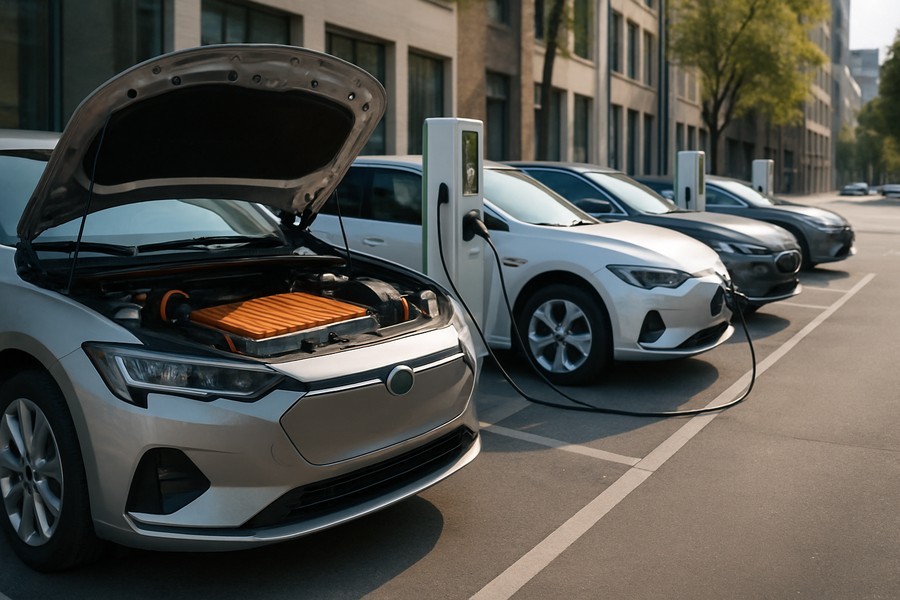
Unraveling the Lifespan of Electric Car Batteries
When modern electric vehicles first hit the road about fifteen years back, there were lots of uncertainties about their batteries' longevity. These expensive lithium-ion batteries were designed to outlast smaller, cheaper ones, but the question was, by how much?
Initial predictions were quite unsettling, with estimates suggesting a lifespan of about seven years. This made potential electric vehicle buyers anxious, considering the average car on the road lasts more than twelve years. Moreover, while batteries come with warranties, they often don't last as long as the car itself. Replacing a high-voltage battery midway through the vehicle's life can be quite costly, running anywhere between $5,000 to $20,000.
A Positive Surprise?
However, recent data collected from tens of thousands of vehicles shows that electric vehicle batteries are lasting longer than initially predicted. But what causes a battery to age, and how does this process work?
The Aging Process of Batteries
Lithium-ion batteries age in two ways. First, there is calendar aging where batteries degrade over time, holding less charge, even if they are in storage. Then there's cyclical aging, which is the degradation that occurs due to usage — being charged and discharged repeatedly.
This means that battery degradation is inevitable. Whether you use your vehicle frequently or occasionally, the battery will eventually hold less power. However, the rate of aging isn't linear. It is described as an "S curve," with a rapid decline at the beginning, a long leveling off, and then a more rapid decline at the end.
Two things have become clear regarding electric vehicle batteries. The initial drop-off is not as severe as some people had feared, and the sharp end-of-life decline is taking a long time to occur.
Healthy Batteries at Auto Auctions
Recent years have seen a significant increase in the number of used electric vehicles for sale, reflecting the sharp rise in production a few years ago. These used vehicles have provided a large pool of data for evaluation.
Contrary to the expectation of massive degradation over the first one to three years of owning a vehicle, 2, 3, 4-year-old off-lease cars have shown battery health scores well upwards of 95%. This is partly due to the software and battery management systems designed to correct for the battery's early degradation and provide drivers with consistent range.
Older Electric Vehicles Thriving
Among electric vehicles that are 10 years old or older, only 8.5% have ever had a battery replacement. More than 90% of them are still on their original battery. This is a testament to how well electric vehicle batteries are holding up.
Even vehicles with more than 150,000 miles that have not had battery replacements are still achieving at least 83% of their original range.
However, it's important to note that electric vehicle batteries can be replaced early on due to a defect. But thanks to warranties, this kind of replacement doesn't pose a financial burden to the owners.
Why Batteries Last Longer Than Expected
Engineers who developed modern electric vehicles knew that prolonging battery life was crucial. They designed systems to actively manage temperatures to improve battery lifespan and software to constantly check battery health. This has certainly paid off.
But another reason why electric vehicle batteries have out-performed expectations is that real-world driving is gentler on the batteries than lab tests. Most lab tests cycle batteries from a high state of charge to a low one repeatedly. But in real-world driving, there are stops and starts, which is less stressful on the batteries.
How Long Do Electric Vehicle Batteries Last?
While it's still too early to pinpoint a precise lifespan for electric vehicle batteries, the signs are encouraging. Battery technology continues to improve, and newer electric vehicles are equipped with more sophisticated battery management systems. Some new electric vehicles even use a different battery chemistry — lithium iron phosphate or LFP — which lasts even longer than lithium-ion batteries.
It's also worth noting that the end of life for an electric vehicle battery doesn't mean a sudden death. Rather, their range shrinks over time, holding enough power only for shorter trips. Some electric vehicle owners might choose to live with this limitation instead of investing in an expensive battery replacement.