
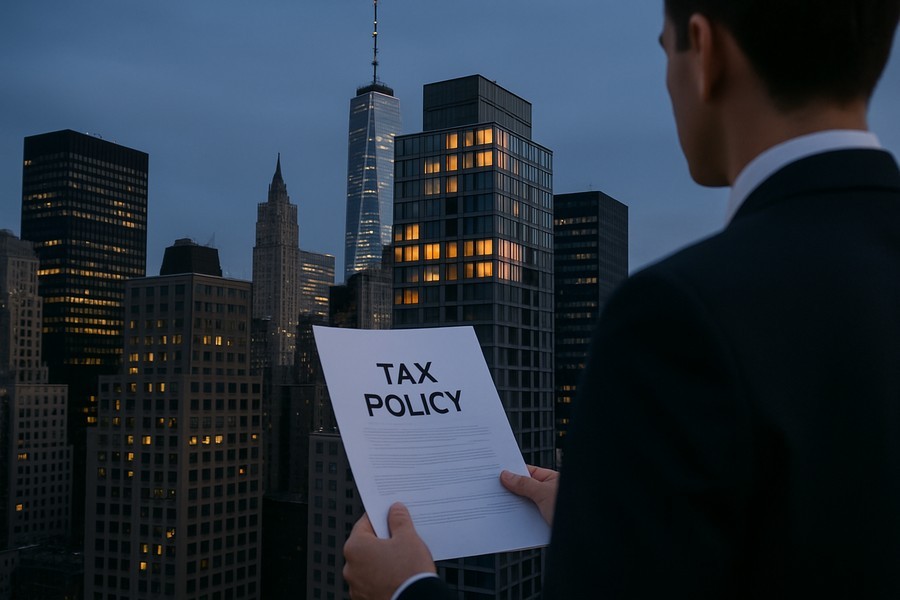
A Look at the Proposed Luxury Home Tax in the Big Apple
In the not-so-distant past, a high-ranking state official put forward a proposal to tax the lavish yet unoccupied condos scattered throughout the Big Apple's shining new skyscrapers. This proposed tax, known as the "pied-à-terre" tax, specifically targets the affluent individuals who own multiple homes in the city but are not full-time residents. However, real estate stakeholders and others vehemently opposed the idea, leading to its repeated failure.
Fast forward to now, and what was once considered a radical idea has transformed into what the state's governor describes as a practical solution to address the city's budget deficit. This more moderate approach to boosting revenue is a departure from the broader wealth tax favored by the city's mayor.
From 'Radical' to 'Common Sense': The Evolution of the Pied-a-Terre Tax
The person behind the original pied-à-terre tax proposal, now serving as the borough president of Manhattan, noted that attitudes towards the tax have shifted significantly over time. There seems to be growing consensus that the world's super-rich, who use the city's real estate market as a safe place to park their investments, should also pitch in to maintain the city's services that protect these investments.
The newly proposed tax plan would impose a surcharge on second homes worth $5 million or more. The governor believes this tax could generate an additional $500 million annually for the city. The governor argued that owners of these luxury homes are not contributing as much as the city's 8.3 million residents are, despite enjoying all the amenities and benefits the city has to offer. Meanwhile, the property values of these homes continue to rise, even as many remain underused or vacant.
Opposition and Skepticism
Despite its potential benefits, the proposal has met with significant opposition. Critics warn that the implementation of the tax could be challenging. The city's leading real estate organization warns that this could negatively impact the city's housing market and property values. Others argue that it is a poor substitute for comprehensive property tax reform, while some believe it falls short of the more progressive goal of taxing the city's wealthiest residents more heavily in light of the historic income inequality.
The city's mayor, however, sees the proposal as a victory and a potential solution to address the city's $5 billion budget shortfall. The mayor views this as a step towards taxing the ultra-wealthy and global elites who own luxury homes in the city.
The Changing Landscape of Public Opinion
Over the years, public sentiment towards the tax seems to have shifted in line with the changing political landscape of the city, the fluctuating influence of the real estate industry, and the mayor's persistent calls to tax the rich. The initial tax proposal, which was supported by the city's former mayor and speaker, fell through due to opposition from powerful business groups and the real estate industry. The proposal saw a resurgence in 2019 following a billionaire's record-breaking purchase of a penthouse in Midtown, but again faced opposition from the real estate industry.
Today, political attitudes appear to be turning against the wealthy, making the tax more acceptable. A policy and planning professor noted that average earners who couldn't leave the city during the pandemic may be more open to tax increases after witnessing the city's elite flee to their second homes in the city's outskirts.
The number of luxury second homes in the city has actually decreased since the pandemic. The city's housing agency recorded around 59,000 homes used for "seasonal, recreational or occasional use" in its most recent survey – a significant drop from around 103,000 just a few years ago. The governor estimates the proposed tax would apply to about 13,000 second homes.
Concerns About Implementation and the Need for Comprehensive Reform
Officials from the city's leading real estate board have warned that the tax could deter new development, harm construction workers, and push wealthy investors to other cities. They argue that the annual tax could weaken the city's overall economy without addressing its fiscal issues. The board's vice president also raised concerns about how the city would enforce the law when property values are contested and homes are often owned by individual limited liability corporations or trusts, complicating the determination of ownership.
Experts across the political spectrum agree that the tax should be part of broader reforms of the city's skewed property tax system. This system currently favors owners of high-end condos and homes in gentrifying areas while imposing disproportionately high costs on apartments and homes in less trendy neighborhoods. While the proposed tax is seen as a step in the right direction, many believe it is not a substitute for comprehensive property tax reform.