
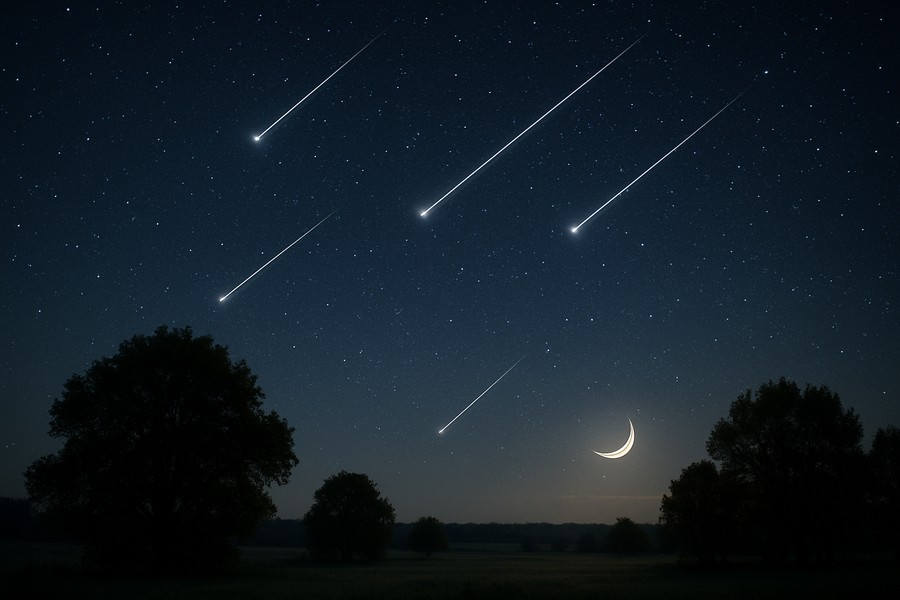
Catching a Glimpse of the Annual Lyrid Meteor Shower
Every year, the Lyrid meteor shower graces our skies and this time, it's getting an extra boost from a dim crescent moon. Those who gaze up at the sky might be treated to a view of 10 to 20 shooting stars zooming across the spring sky when this celestial spectacle reaches its peak.
Best Viewing Locations and Time
The meteor shower can be seen from anywhere in the world, but those residing in the Northern Hemisphere will have the best seat in the house. The good news is that the crescent moon won't steal the show as it will set before the meteor shower starts.
What Makes a Meteor Shower?
Meteor showers occur when the Earth moves through trails of debris left behind by cosmic rocks. These small fragments heat up when they enter our atmosphere, creating the bright streaks we refer to as shooting stars.
Contrary to what the name might suggest, most meteor showers are actually the result of debris from comets, not meteors. And the Lyrids? They're the remnants of an icy comet known as Thatcher.
Seeing Thatcher's Comet
The comet, from which the Lyrid meteor shower originates, only appears to us every 415 years. However, we pass through the grains left in its trail annually, making this spectacular display an eagerly anticipated event. "The shower is a yearly reminder of Thatcher's passage, even though we can't see the comet itself," said Maria Valdes, a meteorite researcher.
Observing the Sky Show
Even on a regular night, a few random meteors can be spotted. However, certain times of the year bring about a much more exciting spectacle when a large number of them can be seen at once, like during the Lyrid shower. In fact, the Lyrids are one of the oldest known meteor showers, with sightings recorded for over 2,500 years.
To witness the Lyrids, venture outside after midnight and find a spot away from city lights and tall structures. It will take a good 15 to 30 minutes for your eyes to adjust to the dark, so remember to resist the urge to check your phone. Bring along a comfortable chair or a sleeping bag and wait patiently for the meteors to reveal themselves. The meteors will seem to originate from the constellation Lyra, located in the northeastern sky.
"A meteor appears as a streak of light against the sky. What you'll notice is its movement against the static background," explained astronomer Lisa Will.
Upcoming Sky Events
Get ready for the next major meteor shower, the Eta Aquarids, which is set to grace our skies in early May. This shower is the result of debris from another comet, the famous Halley's comet.