
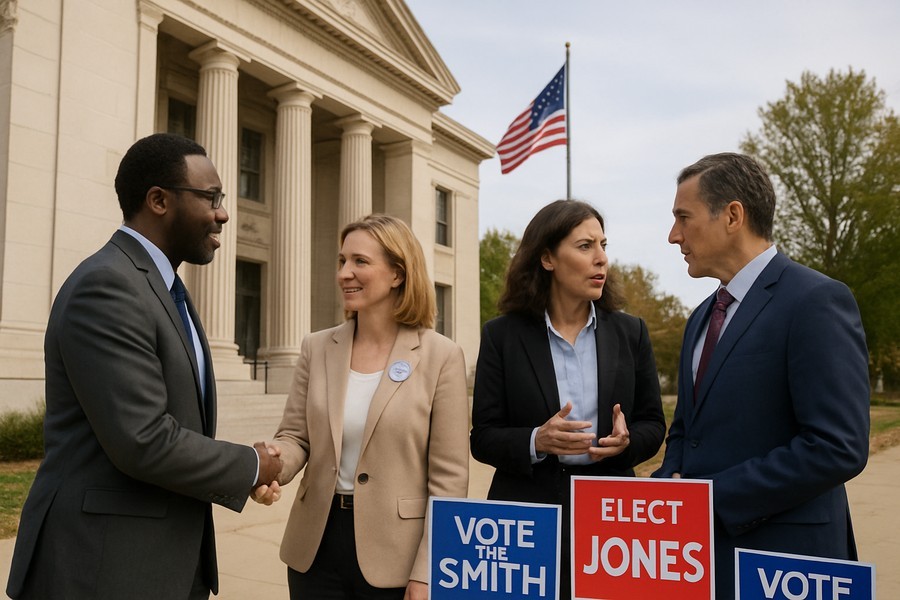
Electoral Office Hopefuls Disputing Past Election Results
As mid-decade elections approach, a significant development is unfolding that could impact future elections. This development centers around candidates who have previously contested election results and are now vying for positions that have a direct influence on future election certifications.
In 23 states, some of which have historically been closely contested in presidential elections, such candidates are running for office. This information is based on a recent examination conducted by a non-profit organization dedicated to safeguarding elections. This organization has been monitoring candidates' views on the legitimacy of election results for several years.
Understanding the Candidates
Joanna Lydgate, the CEO of the nonprofit, emphasized the importance of voters being well-informed. She stated, "It is crucial to provide voters with the most accurate information so they understand what these candidates represent and if they truly believe in free and fair elections."
39 states are conducting elections this year for statewide positions that will play a role in future elections. These positions could include secretary of state or governor, both of which can be involved in administering or certifying elections, or attorney general, who interprets and enforces election laws.
According to the nonprofit's research, at least 53 candidates who have previously disputed election results are currently running for these positions.
Identifying the Candidates
To identify such candidates, the non-profit uses five criteria, including whether the candidate has falsely claimed that a different candidate should have won in 2020, or if they've backed efforts to undermine results after audits and legal challenges were concluded.
In many states, the secretary of state, a typically bureaucratic position, has the most direct influence over how elections are conducted. This role gained new significance in 2020 when officials from both major political parties faced extensive pressure to influence the results.
In one state, the Republican Secretary of State turned down a request to "find" additional votes. In another, the Democratic Secretary of State had armed protesters show up at her home after the voting period concluded.
Both of these politically volatile states will choose new secretaries of state and governors this year, and candidates who have contested past election results are among those running.
Election Deniers in Battleground States
In another closely contested state, candidates who deny election results are competing for all three crucial statewide positions. In 2020, the state's Republican governor faced pressure to interfere in the certification process but chose not to.
However, this year, the leading candidate for the Republican nomination for governor in that state, Andy Biggs, voted against certifying those election results while he was a U.S. Representative, and even suggested investigating other ways to interfere with the process.
Lydgate emphasized the importance of electing officials who believe in the electoral system and free and fair elections, stating, "It's incredibly important to elect individuals who have faith in our system and who believe in free and fair elections."
Election Denier Candidates on the Decline
Interestingly, compared to recent years, there are fewer election-denying candidates running in statewide races this year. Lydgate attributes this decrease to candidates recognizing that denying election results is a poor campaign strategy, especially in competitive races.
"Election denial is something that American voters generally don't appreciate, and candidates who've campaigned on this platform have suffered in previous elections," said Lydgate.
Notwithstanding, candidates running in states won by a large margin in the past election, or in crowded primaries where they are seeking a particular endorsement, don't seem to be deterred by this data.
The Impact of Election Denial
Brendan Fischer, who spearheads research into attempts to undermine elections at a legal center, notes that a powerful "election denial infrastructure" has emerged since 2020. This infrastructure has been effective in steering candidates and lawmakers toward misinformation about voting and policy responses to such misinformation.
"The election denier movement still represents a tiny fraction of the country," Fischer said. "But it is a dynamic and active force within certain political circles. It's an organized interest group that a number of candidates and lawmakers feel they need to respond to."