
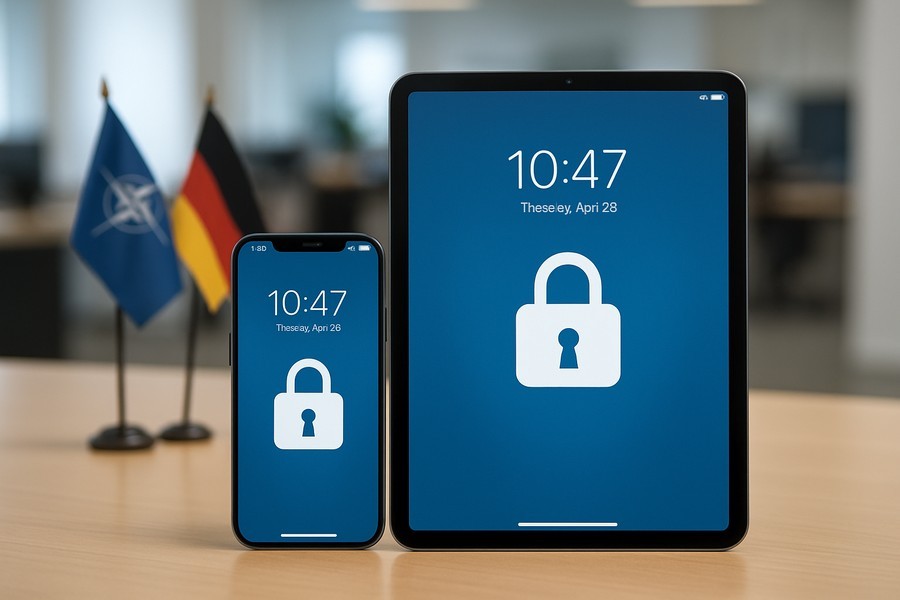
Popular Gadgets Given the Nod to Manage Confidential Data
Two renowned electronic devices, a smartphone and a tablet, have been given official clearance to handle classified data up to a certain security tier. The devices' creators made this revelation recently.
The smartphone and tablet had already been granted permission to manage classified data from the German government. This was achieved using built-in security features of their proprietary operating systems, after a thorough appraisal by the Federal Office for Information Security (also known as Bundesamt für Sicherheit in der Informationstechnik, or BSI). Now, both gadgets, functioning on updated versions of their operating systems, have received certification for such usage across all NATO countries.
A First for Consumer Devices
This marks a historic moment as it's the first time a consumer gadget has been deemed compliant with NATO's information security prerequisites. This implies these devices are approved for handling classified information right off the bat. The 'restricted' level, which these gadgets have been approved for, is the initial level of NATO classification.
The NATO Information Assurance Product Catalogue has newly included the latest versions of these devices' operating systems. It's noteworthy that these systems require no additional software or modification in settings to meet the compliance criteria.
Making Secure Devices Accessible
Before these devices, secure gadgets were exclusively available to sophisticated government and enterprise organizations, following significant investment in customized security solutions. However, the company behind these devices has developed the most secure devices in the world for all its users. These protections are now singularly certified under assurance requirements for NATO nations — a feat unmatched by other devices in the industry.
NATO's Current Situation
While this NATO designation is significant, it's also somewhat amusing considering the current state of the alliance. The US President has been causing tension with ally nations like the UK, France, and Germany, while developing closer relationships with leaders of countries like Hungary, Argentina, and El Salvador. The UK has even halted some intelligence sharing with the US due to American attacks on boats in the Caribbean that have resulted in over 150 casualties.
The US President has also been voicing his wish to "acquire" Greenland, a semi-independent territory of Denmark, alongside his aspiration to make Canada the 51st state. Despite the majority of residents in both Canada and Greenland opposing these plans, and the President's brazen threats of military action against NATO allies, the alliance still stands and will continue to do so until a formal separation is initiated.
German Federal Office for Information Security's Response
The head of the Federal Office for Information Security in Germany praised the recent recognition in a company press release, avoiding any mention of the ongoing geopolitical disputes.
"Successful digital transformation can only be achieved if data security is prioritized from the onset in the development of mobile products," said BSI president Claudia Plattner.
Commenting on the BSI's rigorous audit of the platform and device security for use in classified German information environments, she affirmed the compliance under NATO nations' assurance requirements.
CEO's Controversial Association
The CEO of the company producing these devices has faced criticism for his close ties with the current administration, even attending a White House screening of the First Lady's new movie on the same day that masked federal agents fatally shot a VA nurse in Minneapolis. Responding to the backlash, the CEO sent a memo to his staff discussing America's "highest ideals" and advocating for de-escalation.