
Implications of Artificial Intelligence in Modern Warfare
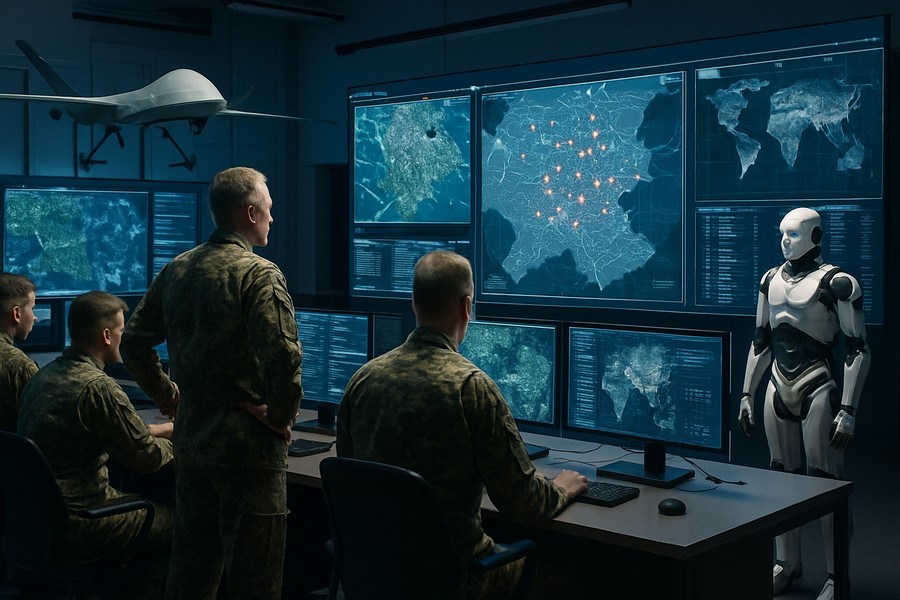
Artificial intelligence (AI) is rapidly becoming an integral part of modern warfare, as was clearly demonstrated in the recent conflict in Iran. The UN Secretary-General has voiced his concerns about the pace at which technology is evolving and its implications for geopolitical stability. The integration of AI into military operations is no longer a hypothetical discussion; it's a reality that is transforming the face of warfare.
AI and Ethical Concerns
Recent disputes have erupted over the use of AI technology by the U.S. military, particularly in the context of the Iran crisis. A prominent AI company was embroiled in controversy for refusing to remove safety measures that would prevent the Department of Defense from using its technology for mass domestic surveillance or autonomous lethal weapons. Despite the company's stance, it was ousted and marked as a supply-chain risk. In response, another AI firm stepped in to fill the gap, insisting that it would maintain the same ethical boundaries.
However, the CEO of the second company admitted that they have no control over how the Pentagon uses its products. This admission sparked backlash, with critics arguing that the company's actions were opportunistic and haphazard.
Alarming Developments in AI-driven Warfare
Despite the ongoing debates and controversies, the shift towards AI-driven warfare has already started. Reports suggest that AI technology has been used to facilitate large-scale offensives resulting in significant civilian casualties in Iran. Experts have described this new era of warfare as bombing 'faster than the speed of thought', with AI systems identifying and prioritizing targets, recommending weaponry, and even assessing the legality of potential strikes.
It's important to point out that AI is not solely responsible for civilian deaths or military errors. High-ranking officials openly boast about relaxing rules of engagement. However, the introduction of AI into the equation has undeniably made mass killing more efficient, distancing soldiers and decision-makers from the direct impact of their actions and reducing their accountability.
The Need for Democratic Oversight
Given the potential risks and ethical implications of AI-driven warfare, democratic oversight and multilateral restrictions are crucial. Instead of leaving these critical decisions to entrepreneurs and defense departments, there should be clear guidelines and regulations in place.
As the conflict in Iran unfolded, discussions were underway in Geneva to address the issue of lethal autonomous weapons systems. The draft text under consideration could serve as a strong foundation for a much-needed treaty. Most governments are seeking clarity on the military use of AI, but it is the major players who are resistant to change, though they are at least participating in the discussions.
The rapid evolution of AI-driven warfare can make caution seem like surrendering control to adversaries. However, as tech workers and military officials are beginning to understand, the risks associated with unchecked expansion are much greater.