
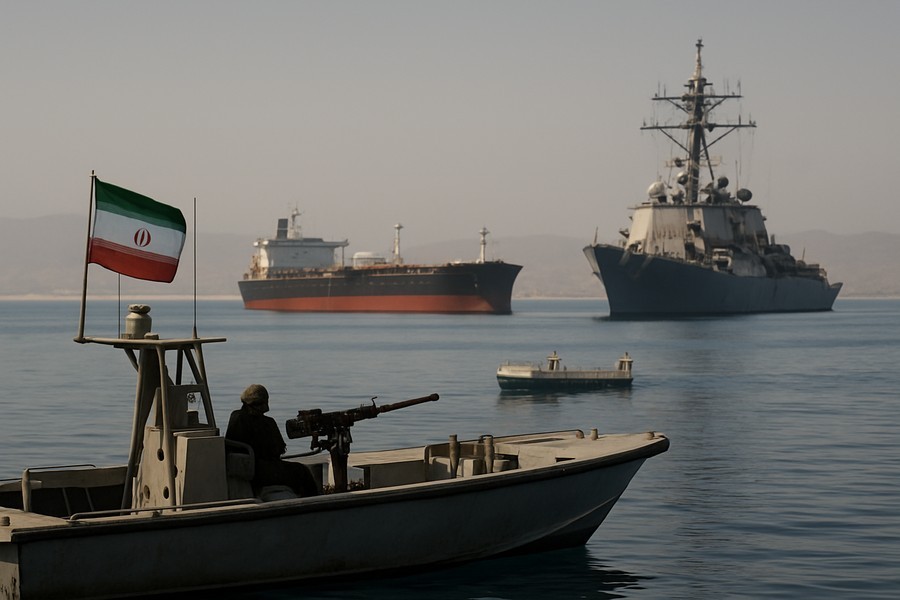
Tensions Rise as Iranian Leader Expresses Contempt for U.S. Presence in the Gulf
The head of Iran has issued a strong statement, suggesting that the only place for Americans in the Persian Gulf is underwater. These remarks come at a time of heightened tension in the region, with a new chapter in its history being penned.
After the demise of the previous supreme leader in the early stages of the war, the current leader has remained largely out of the public eye. His latest comments have only added fuel to the fire in an already volatile situation.
Disruption in the Oil Industry
Iran is currently facing economic hardship, with its oil industry severely impacted by a blockade put in place by the U.S. Navy. This has resulted in Iranian oil tankers being unable to reach international waters. At the same time, the global economy is feeling the squeeze as Iran continues to control the Strait of Hormuz, a crucial point for the transportation of crude oil. The global oil benchmark recently hit a high of $126 per barrel due to these disruptions.
This sudden shift in oil supply and prices is causing concern for the U.S. administration, which is considering new strategies to reopen this essential route used by Gulf allies for oil and gas exports.
U.S. Considers New Strategies
The proposed strategy would see the continuation of the blockade on Iranian ports, with the U.S. coordinating with allies to increase the cost of Iran's efforts to disrupt energy flow. To encourage Iran to cease its control over the Strait, multiple diplomatic and policy options are under consideration.
A recent proposal from Iran suggests postponing negotiations on the country's nuclear program. The U.S. has previously expressed concerns over Iran's potential to develop nuclear weapons, one of the reasons for the ongoing conflict. Iran, however, insists that its nuclear program is peaceful, though it has been enriching uranium at near-weapons-grade levels.
Indirect talks between the U.S. and Iran are currently being facilitated to ease tensions. Direct communication between the two nations is being encouraged to resolve the contentious issues.
Iran Insists on its Rights
While addressing the nation on Persian Gulf Day, the Iranian leader emphasized that they would not compromise on their nuclear and ballistic missile programs. He referred to the U.S. as the "Great Satan", a term used by Iranian leaders since the 1979 Islamic Revolution, insisting that Americans have no business in the Persian Gulf.
According to him, Iran's control over the Strait of Hormuz would enhance security in the Gulf, and the new regulations would be beneficial for all the regional nations. However, this contradicts the international perception of the strait as an open waterway, free for all without any tolls. The Gulf Arab nations have expressed their displeasure at Iran's control over the strait, comparing it to piracy.
Internal Crackdown and Human Rights Concerns
Inside Iran, a man was recently executed for charges related to nationwide protests, sparking outrage from activists and rights groups who claim that the crackdown on dissent has intensified since the beginning of the conflict with the U.S. and Israel. The United Nations has recorded at least 21 executions since the start of the war, including those in connection with the protests and alleged membership in opposition groups.
Despite international outcry, Iran continues to conduct closed-door trials and hands out capital punishments, leading to concerns over the risk of more executions in the future.