
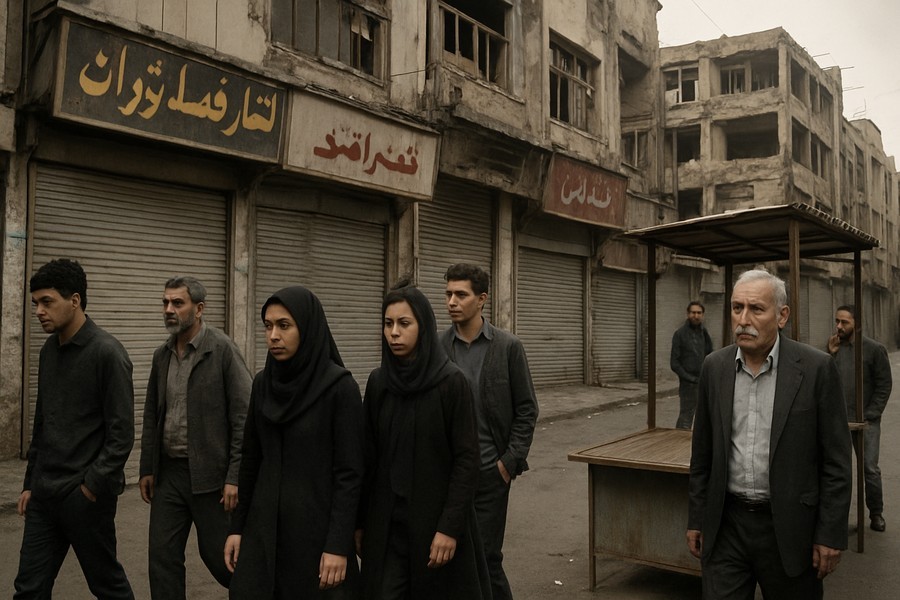
Economic Struggles Threaten Stability in Iran
As the crisis unfolds in Iran, the nation's greatest vulnerability isn't its military strength, but its struggling economy. The current situation in Iran has resulted in a significant financial pinch - from destroyed factories and infrastructure to high inflation rates and a weakening currency.
Severe Economic Downturn
Before the conflict erupted, the Iranian economy was already on shaky ground. Rising inflation and a severe currency devaluation sparked mass demonstrations, which were met with harsh responses from the authorities. The war has only worsened these conditions, with significant destruction of manufacturing plants, energy facilities, bridges, and railroads, leaving many citizens jobless.
The country's currency, the rial, has taken a huge hit since the onset of the war, dropping an additional 8% against the dollar in black market trading. This drop comes on the heels of a 60% loss in value following a 12-day conflict in the previous year.
Meanwhile, the inflation rate continues to soar. The cost of goods has increased by 6% during the war. Prior to the conflict, food prices had already skyrocketed to an annual rate of 64% in one month and further jumped to 105% three months later. This pushed the overall inflation rate to 47.5% on the eve of the war.
The Impact of Inflation
The rampant inflation led the central bank to issue the largest-ever currency denomination, the 10 million rial note, just a month after introducing the 5 million rial note.
However, the official data might be underestimating the true impact of inflation. Residents of major cities, including the capital, have reported that some prices have surged by around 40% since the war began just over a month ago.
A Vulnerable Economy
One insider with close ties to the Iranian establishment revealed that officials recognize the fragile state of the economy. They see it as the nation’s greatest weakness, with the threat of renewed social unrest hanging over the government.
The failure to reach a ceasefire agreement with the U.S. has dashed hopes for relief from sanctions or the release of frozen Iranian assets overseas. Without an infusion of money, authorities may struggle to meet payroll obligations, which could jeopardize the regime's ability to govern effectively.
Repairing the Damage
A government official warned that the country could be heading for a disaster if sanctions aren't lifted. The largest industrial plants that power the economy have been severely damaged and could take months or even years to repair.
Additional Challenges
Adding to the financial burden, there are plans to impose a naval blockade on the Strait of Hormuz, a key source of income for Iran. Last year, revenue from oil exports was estimated to be at least $30 billion, and energy products made up about a quarter of government revenue.
Furthermore, the organization that manages Iran's military response to the war and its domestic repression processes about half of the country's oil exports. This organization stands to profit from a toll on ships crossing the strait. However, a naval blockade could threaten this income source and further weaken the overall economy.
Final Remarks
An expert on geopolitical strategy emphasizes that economic mismanagement in Iran runs deep. He suggests that systemic corruption is a key issue, as it serves to reward loyalists.
He posits that to survive, the regime will either need to reform - which it appears incapable of - or resort to exporting instability abroad through proxies and a push for missile and nuclear proliferation. Without these measures, the regime might fall within the next one to three years, making it one of the most unstable regimes among large developing states.