
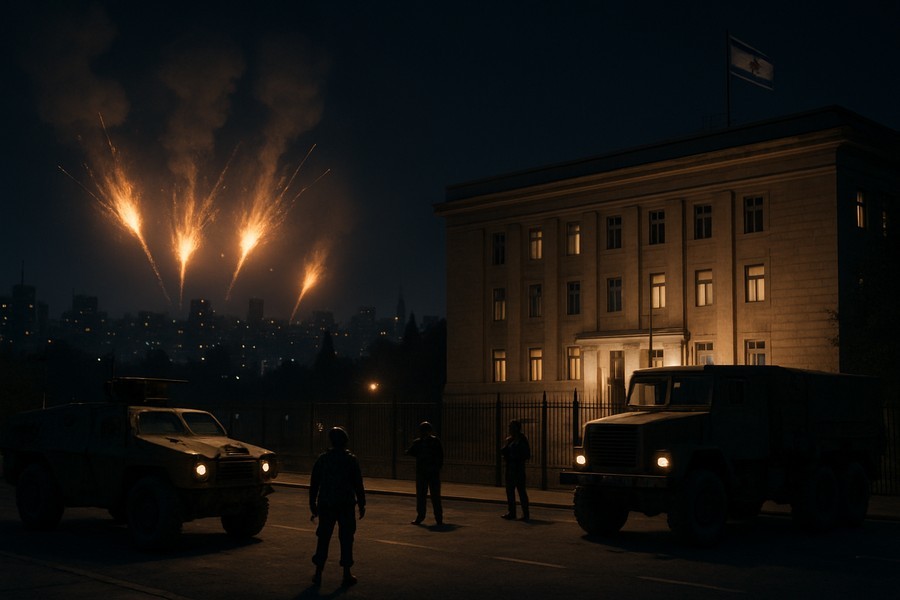
Overnight Operation Ends Life of Iranian Intelligence Head
The leader of Iran's intelligence, Esmail Khatib, has been eliminated in an unexpected overnight operation. The defense minister of Israel confirmed this news. The reaction from Iran is still awaited, but if the claims are true, it would make Khatib the third high-ranking Iranian official to lose his life in a day.
Israel's defense minister asserted that no one in Iran is safe from their operations. "Every individual is in our crosshairs," he stated.
Following the announcement of the deaths of two influential figures - Ali Larijani and Gholamreza Soleimani - Iran retaliated by launching missile attacks on Israel, specifically targeting Tel Aviv.
Despite the recent killings, Iran's foreign minister reassured that these events would not shake the country's leadership. He expressed confidence in the robust political structure of Iran, which includes well-established political, economic, and social institutions.
Attack on Beirut Claims Ten Lives
Not only did Israel target Iran, but it also carried out strikes in central Beirut, resulting in the death of 10 individuals. Israel's military stated that they were targeting Hezbollah militants and their facilities.
Reports of casualties since the start of the war indicate that around 1,300 in Iran, 922 in Lebanon, and 16 in Israel have lost their lives. Additionally, 13 American service members have been reported dead, with approximately 200 injured.
Missile Attack in Tel Aviv
In response to the killing of two leaders in Tehran, Iran's Revolutionary Guard launched a missile attack on the Tel Aviv area, using multiple-warhead missiles, also known as cluster munitions. The attack resulted in the death of a man and a woman in their apartment in Ramat Gan, a suburb of Tel Aviv. The missile attack also caused damage in other parts of central Israel, including a train station in Tel Aviv. It's noteworthy that Iran's missile attacks have been the most lethal in Israel, claiming at least 16 lives since the start of the war.
Loss of Key Iranian Leaders
Ali Larijani, one of the recently slain leaders, had a significant role in Iranian politics. He served as a parliament speaker and was a top adviser to the assassinated supreme leader. Following the supreme leader's killing, there were speculations about Larijani being the successor. Larijani had also been involved in talks with the Trump administration prior to the war.
The other leader, Gholamreza Soleimani, led the Basij forces, a volunteer paramilitary militia, which is a branch of the Revolutionary Guard. Israel holds these forces responsible for suppressing street protests against the Iranian government earlier this year.
Iranian Foreign Minister's Statement
In response to the killings of the top leaders, Iran's foreign minister stated that the government's stability does not depend on a single individual. "The structure of the political system in Iran is solid," he asserted.
Escalating Fears among Iranians
Reports of families fleeing Iran due to increasing fear and security crackdowns have emerged. Individuals have described a sense of fear to openly express their views, even while being outside the country. There have been accounts of stricter security measures, including an internet blackout, increased check posts, and security forces inspecting people's phones.
Further Strikes in Beirut
Israel carried out further strikes in central Beirut, targeting Hezbollah militants and their facilities. The health ministry of Lebanon reported the death of 10 individuals in two attacks. Israel's military also destroyed a building in a residential and commercial district near the Lebanese prime minister's office and several foreign embassies in Beirut. The strikes followed shortly after an evacuation order was issued for the building. Israel also issued new evacuation orders for parts of southern Lebanon. Additionally, the health ministry of Lebanon condemned Israeli strikes that damaged three public hospitals in a major city in the country's south.