
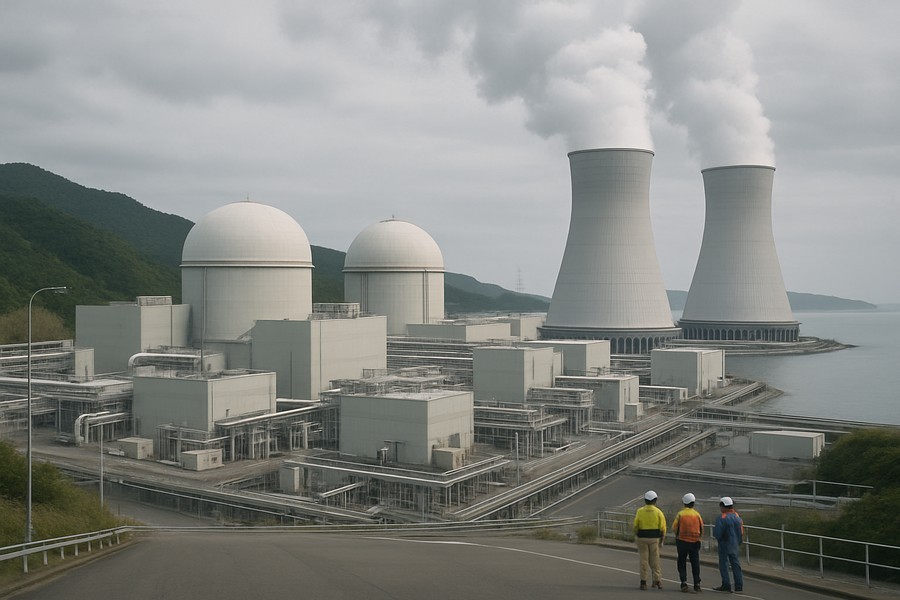
Nuclear Power Back in Action in Japan Despite Fearful Reminders of Fukushima
Japan is once again tapping into nuclear power, with operations now resuming at the biggest nuclear plant in the world. This move comes years after the devastating Fukushima disaster in 2011, which led to the shutdown of all reactors in the country.
The restart of the 6th reactor at a facility located northwest of Tokyo happened despite safety worries raised by local residents. The start-up experienced a slight delay due to an alarm malfunction but is expected to be fully operational for commercial use soon.
Nuclear Energy: A Necessity for Japan?
Historically, Japan has been heavily dependent on imported energy and was one of the early adopters of nuclear power. But the catastrophic Fukushima disaster forced the closure of all 54 reactors in the country. This calamity was triggered by a massive earthquake and tsunami, leading to a severe nuclear meltdown – one of the worst in history.
But now, the country is slowly rebooting its nuclear power usage, though it's still a long journey ahead. The 7th reactor at the same facility is not expected to be ready until 2030, and the other five might be decommissioned. This means the plant will operate at a significantly lower capacity than before, when all seven reactors were functioning and produced 8.2 gigawatts.
The Aftermath of the Fukushima Disaster
The Fukushima disaster, caused by the most powerful earthquake ever recorded in Japan, resulted in radioactive leakage and the evacuation of local communities. Many have not returned despite assurances of safety. Critics argue that the plant's owner and the government were ill-prepared and poorly coordinated in their response. An independent government report labeled it a "man-made disaster".
This event sparked public opposition to nuclear power, leading to the temporary suspension of all of Japan's 54 reactors. Since then, Japan has spent the past decade trying to reenergize those power plants, aiming for net zero emissions by 2050.
The Road to Nuclear Revival
As of now, Japan has restarted 15 out of its 33 operational reactors. Before the 2011 disaster, nuclear power supplied almost 30% of Japan's electricity, and there were plans to increase this to 50% by 2030. However, more modest goals have been set recently, with a target of nuclear power providing 20% of electricity needs by 2040.
However, achieving this may prove challenging. The costs of running reactors have soared, partly due to the implementation of new safety checks that require significant investments from companies wishing to restart their plants. Additionally, the government faces a difficult decision of whether to subsidize these costs or pass them on to consumers.
Challenges and Public Opinion
Furthermore, public trust has been shaken not only by the fear of another disaster like Fukushima but also by a series of scandals. One plant in particular was involved in a couple of incidents where confidential documents were mishandled, further eroding public trust in the nuclear industry.
Public opinion about nuclear energy has been fluctuating. In the immediate aftermath of the Fukushima disaster, many Japanese were in favor of reducing nuclear power usage. However, more recent surveys show that over half of the population supports nuclear power, provided that safety is ensured. Despite this, there are still significant numbers protesting against the restart of nuclear plants, expressing concerns about safety.
Increased Safety Measures
In response to concerns, nuclear safety standards have been significantly improved since the Fukushima disaster. At the plant where operations are resuming, seawalls as high as 15 meters have been erected to defend against large tsunamis, and critical equipment is now protected by watertight doors.
Despite these measures, some experts express concerns that preparations are only for the worst scenarios seen so far and may not be adequate for future, potentially larger disasters.